Quick Answer: Conditioning Semi-Aniline Leather Executive Chairs
Semi-aniline leather requires specialized pH-balanced conditioners (pH 4.5–5.5) applied to clean, dust-free surfaces quarterly. Condition only when leather appears dull or shows water-beading degradation. Apply thin, even coats using microfiber cloths with circular motions. Avoid products with harsh solvents that strip the leather’s semi-protective topcoat. This maintenance preserves the leather’s breathability and color integrity while preventing premature cracking and fading.
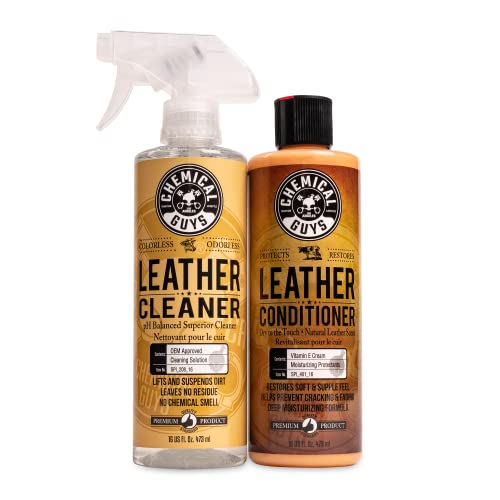
Pros
- Cleaner and conditioner included as a pair
- Listed for both car and home leather
- Two 16 oz containers in the kit
Cons
- Leather type and finish compatibility are not stated
- May need a hidden-area test before full use
This is a two-product leather care kit for cars and home furnishings. It suits owners who want a cleaner and conditioner pair in one package, provided the leather type and finish are checked before full application.
- Format: Leather cleaner and conditioner kit
- Container size: 2 x 16 oz
- Listed uses: Cars and home

Pros
- Two-step cleaner and conditioner system
- Includes two application sponges
- Covers furniture, car interiors, shoes and handbags
Cons
- Finish compatibility is not stated; test a hidden area first
This is a leather care kit for owners who want to clean and condition several leather items with one system. It suits people with mixed leather goods, provided the finish is checked against the product before full application.
- Format: Two-step leather cleaner and conditioner kit
- Included items: Two sponges
- Container size: 8 oz each
- Listed uses: Furniture, car interiors, shoes and handbags
Root Cause Engineering & Mechanical Principles
Semi-aniline leather represents a unique engineering solution in upholstery science—balancing the natural aesthetic of aniline leather with enhanced durability through a minimal protective topcoat (typically 0.5–1.5 microns thick). Unlike full-aniline leather’s complete transparency or pigmented leather’s opaque finish, semi-aniline leather retains the hide’s natural grain and color variation while benefiting from a translucent protective layer that resists fingerprints and minor staining. For detailed technical setup and system integration, reference our analysis on remove stuck office chair cylinders with clamps (2026).
Conditioning semi-aniline leather addresses the mechanical reality that this thin protective coating gradually deteriorates through oxidation, UV exposure, and daily friction. The leather’s finite oil content—primarily lanolin and natural fats—deplete over time, causing the material to lose its suppleness and water-repellent properties. Environmental factors including relative humidity (optimal range 40–60%), temperature fluctuations, and airflow patterns directly influence the rate of moisture loss from the leather’s dermal layer. Proper conditioning replenishes these natural oils while maintaining the delicate balance that prevents over-saturation, which would compromise the leather’s semi-protective topcoat.
| Failure Symptom | Root Cause | Diagnostic Indicator | Remediation Difficulty |
|---|---|---|---|
| Dull, matte appearance with loss of natural sheen | Depletion of natural oils; surface oxidation | Visual inspection; water droplets absorb rather than bead | Low—conditioning restores appearance |
| Fine surface cracking or crazing patterns | Chronic dehydration; insufficient conditioning intervals | Tactile feedback; visible micro-fractures under angled light | Medium—may require intensive conditioning over 4–6 weeks |
| Staining susceptibility; water spots appear permanently | Compromised topcoat; reduced water-repellency | Water droplet test: droplet absorbs within 10 seconds | Medium—topcoat regeneration requires specialized conditioners |
| Color fading or uneven tone distribution | UV degradation; inadequate conditioning maintenance | Comparison against protected areas; chromaticity shift | High—fading is partially irreversible without restoration |
| Stiffness or brittleness in high-use areas | Oil depletion combined with mechanical wear | Flexibility test: leather resists natural movement | Medium—intensive conditioning with rest periods required |
Step-by-Step Diagnostic & Conditioning Procedure
Step 1: Environmental Assessment & Surface Preparation
Begin by evaluating the ambient conditions where your executive chair operates. Ideal conditioning occurs at temperatures between 65–75°F (18–24°C) with relative humidity in the 40–60% range. Excessive heat accelerates solvent evaporation and can damage the leather’s oil balance; conversely, humidity below 35% or above 65% creates environmental stress that negates conditioning benefits.
Thoroughly vacuum the chair’s entire surface using a soft-brush upholstery attachment at low suction (maximum 40 kPa). This removes embedded dust particles, skin cells, and debris that could trap conditioning products and create patchy application. Pay particular attention to seams, piping, and button-tufted areas where particulate matter accumulates. Follow vacuuming with a microfiber cloth dampened (not saturated) with distilled water to remove any residual dust.
Step 2: pH-Balanced Cleansing (Optional but Recommended)
If the leather shows visible soiling or residue, apply a specialized semi-aniline leather cleaner formulated to pH 4.5–5.5. This pH range matches the leather’s natural acidity and prevents topcoat damage. Apply the cleaner using circular motions with a clean microfiber cloth, working in 12×12-inch sections. Allow 3–5 minutes of dwell time, then wipe thoroughly with a separate damp microfiber cloth to remove all cleaner residue. Allow the leather to air-dry completely for 24 hours before conditioning.
Step 3: Water-Beading Assessment
Conduct a water-beading test by placing three drops of distilled water on inconspicuous areas (underside of seat, interior back panel). Properly conditioned semi-aniline leather should cause water droplets to bead and roll off within 5–10 seconds. If droplets absorb immediately or spread across the surface, the leather requires conditioning. Document the test results to establish your baseline conditioning schedule.
Step 4: Conditioner Application & Absorption Protocol
Select a conditioner specifically formulated for semi-aniline leather (verify the product label states “semi-aniline compatible” and maintains pH 4.5–5.5). Dispense a small quantity—approximately the size of a dime—onto a clean microfiber applicator cloth. Beginning with the seat surface, apply conditioner using slow, deliberate circular motions. Work in overlapping 8×8-inch zones, applying consistent pressure (approximately 2–3 pounds of force). The goal is even distribution without over-saturation; the leather should appear slightly darker and gain subtle sheen, not glisten or feel oily.
Progress systematically across the entire chair: seat platform, seat back, armrests, and external panels. Use a clean cloth section for each zone to prevent cross-contamination and ensure uniform conditioning. After completing the entire chair, allow the conditioner 6–8 hours of absorption time without disturbance. Do not sit on the chair or disturb the surface during this period.
Step 5: Buffing & Final Assessment
After the absorption period, use a clean, dry microfiber cloth to gently buff the entire surface with light circular motions. This removes excess conditioner residue and enhances the leather’s natural sheen. The chair should exhibit a subtle, uniform luster—neither matte nor high-gloss. Repeat the water-beading test to confirm the topcoat’s restored water-repellency; droplets should bead and roll off within 5–10 seconds.
Tools, Conditioners & Application Equipment
Successful conditioning requires specialized equipment and products. Standard multipurpose leather conditioners often contain aggressive solvents or silicone-based compounds that compromise semi-aniline leather’s delicate topcoat, causing buildup, discoloration, or film formation.
Essential Tools: Microfiber applicator cloths (at least 3 pieces, 12×12 inches each), soft-brush upholstery vacuum attachment, soft-bristled brush for seam work, and spray bottle for distilled water. Avoid cotton terry cloth, which sheds fibers and can create lint accumulation in the leather’s pores.
Specialized Conditioners: Choose products explicitly formulated for semi-aniline leather. Superior formulations include lanolin or plant-based oils that naturally replenish the leather’s depleted fats while maintaining breathability. Verify the product’s pH specification (4.5–5.5 optimal range), and avoid conditioners containing silicones, waxes, or film-forming agents. Technical assessment reveals that premium semi-aniline conditioners typically contain 8–12% natural oils, minimal surfactants, and pH buffers that stabilize the leather’s protective layer. For detailed technical setup and system integration, reference our analysis on adjust herman miller aeron tilt control cables (2026).
Testing Equipment: Maintain a spray bottle of distilled water for periodic water-beading assessments. Tap water contains minerals and chlorine that interfere with test accuracy; distilled water provides reproducible baseline measurements. A digital hygrometer enables environmental monitoring to optimize conditioning timing.
Preventative Maintenance & Long-Term Reliability Protocols
Conditioning is one component of a comprehensive leather stewardship program. Long-term reliability requires environmental control, usage discipline, and consistent maintenance scheduling.
Environmental Protection: Position your executive chair away from direct sunlight, which accelerates UV degradation of the leather’s topcoat. If the chair cannot be relocated, install UV-filtering window films or window treatments that reduce UV transmission to less than 5%. Maintain interior temperatures between 65–75°F and relative humidity between 40–60%. These parameters align with BIFMA Furniture Durability Standards, which specify environmental conditions for optimal leather preservation in office settings.
Usage Discipline: Avoid placing sharp objects, pens, or rough-textured items on the leather surface. Minimize contact with oils from hands and face; these natural oils differ chemically from applied conditioners and can create patchy or uneven darkening. Establish a policy of wiping hands before extended chair use, particularly during warmer months when perspiration increases.
Conditioning Schedule: Executive chairs in typical office environments (40 hours per week, climate-controlled spaces) require conditioning every 3–4 months. Chairs in high-use areas (executive suites with multiple daily users) or challenging environments (direct sunlight, temperature fluctuations) require quarterly conditioning intervals. If water-beading tests reveal premature absorption (droplets absorb within 5 seconds), accelerate conditioning to a 6–8 week cycle.
Spill Response Protocol: Semi-aniline leather’s thin topcoat makes it vulnerable to staining from beverages, inks, and food residues. Immediately blot spills with an absorbent, lint-free cloth—do not rub. For liquid spills, blot gently and allow air-drying. For oily spills, apply a specialized semi-aniline leather cleaner within 24 hours. Prompt intervention prevents the spill from penetrating the topcoat and staining the underlying leather dermis.
Annual Intensive Assessment: Once annually, conduct a comprehensive evaluation of your chair’s leather condition. Perform the water-beading test across multiple zones. Inspect for crazing, micro-cracks, or color inconsistencies. If the leather fails the water-beading test or shows early crazing, implement an intensive conditioning protocol: condition every 4 weeks for 8–12 weeks to restore the leather’s natural oils and topcoat integrity.
Common Mistakes to Avoid
Over-Conditioning: Excessive conditioning creates oily residue and topcoat buildup that traps dust and accelerates degradation. If you condition more frequently than quarterly or apply conditioner more generously than specified, you’re likely over-conditioning. Signs include persistent stickiness, attracting dust rapidly, or areas that remain slightly darkened weeks after conditioning.
Using Incompatible Products: General-purpose leather conditioners, furniture polish, or automotive leather treatments can compromise semi-aniline leather. These products frequently contain silicones, hard waxes, or aggressive solvents that film over the topcoat or strip its protective oils. Always verify product compatibility with semi-aniline leather before application.
Neglecting Environmental Factors: Conditioning compensates for environmental stress but cannot fully overcome poor conditions. A chair exposed to direct sunlight or maintained at 25% relative humidity will degrade rapidly regardless of conditioning frequency. Address environmental factors as the primary defense; conditioning serves as a secondary protective measure.
Frequently Asked Questions
Q: How often should I condition a semi-aniline leather executive chair?
A: Conditioning intervals depend on usage intensity and environmental conditions. For typical office environments (40 hours per week, climate-controlled), condition every 3–4 months. Monitor water-beading behavior; if droplets absorb within 5 seconds, increase conditioning frequency to 6–8 week intervals. Annual intensive assessment helps optimize your conditioning schedule for your specific environment.
Q: Can I use the same conditioner on semi-aniline leather as on other leather types?
A: No. Semi-aniline leather requires products specifically formulated for its unique topcoat structure. General-purpose conditioners often contain silicones or waxes that build up on semi-aniline’s thin protective layer, causing discoloration, stickiness, or premature degradation. Always purchase conditioners labeled “semi-aniline compatible” and pH 4.5–5.5 to ensure compatibility.
Q: What should I do if my semi-aniline leather chair develops permanent stains or deep cracks? For detailed technical setup and system integration, reference our analysis on calibrate steelcase gesture core equalizer lumbar.
A: Permanent stains penetrating the topcoat and deep crazing are difficult to reverse with standard conditioning. Prompt professional restoration by a leather specialist is recommended. Prevention through environmental control, immediate spill response, and consistent conditioning maintains the leather’s condition and avoids costly restoration work. Once damage is severe, conditioning’s effectiveness diminishes significantly.