

Quick Answer: Upgrading to 28″ Polished Aluminum 5-Star Bases
Upgrading to a 28-inch polished aluminum 5-star base requires verifying your current cylinder bore diameter (typically 50mm), confirming 2400–2500 lbs weight capacity certification, and ensuring proper gas cylinder insertion depth (approximately 45–50mm). Universal fit bases accommodate most office chairs, but heavy-duty models rated 2500+ lbs provide enhanced load-bearing security for prolonged use and larger operators.

Pros
- Replacement base instead of a full chair
- Aluminum construction as listed in the title
- Black finish listed in the title
- Clear model number for matching
Cons
- Buyers must confirm fit with their existing chair
- Weight capacity and mounting details are not supplied in this record
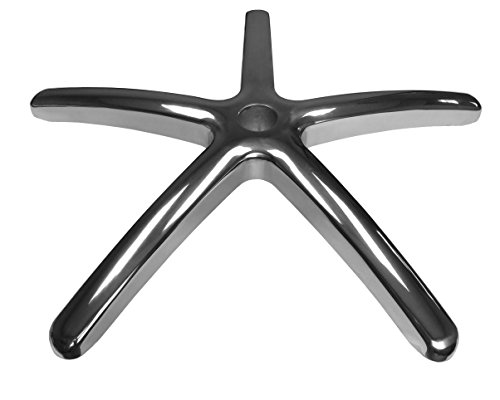
This is a black replacement office chair base listed in a 28-inch aluminum build, suited to owners who want to swap only the base of an existing chair. Confirm the mounting type and fit against your current chair before ordering, since compatibility details are not supplied in this record.
- Product type: replacement office chair base
- Listed size: 28-inch
- Listed material: aluminum
- Listed finish: black
- Model number: S4180-2
Pros
- Replacement base instead of a full chair
- Aluminum construction as listed in the title
- Clear model number for matching
Cons
- Buyers must confirm fit with their existing chair
- Weight capacity and mounting details are not supplied in this record
This is a replacement office chair base listed in a 28-inch aluminum build, suited to owners who want to swap only the base of an existing chair. Confirm the mounting type and fit against your current chair before ordering, since compatibility details are not supplied in this record.
- Product type: replacement office chair base
- Listed size: 28-inch
- Listed material: aluminum
- Model number: S4164
Root Cause Engineering & Mechanical Principles
Five-star aluminum chair bases distribute user load across five radial points, creating mechanical stability through symmetrical load-path distribution. The 28-inch diameter design—measured from centerline to centerline across opposite star points—establishes a larger footprint than smaller 24-inch or 25-inch variants, directly improving tipping resistance and accommodating heavier users. Polished aluminum construction offers superior corrosion resistance compared to painted steel alternatives while maintaining structural rigidity through optimal wall thickness (typically 2.5–3.2mm) and aerospace-grade alloy compositions. For detailed technical setup and system integration, reference our analysis on adjust and eliminate cable slack on herman miller.
| Failure Symptom | Mechanical Cause | Diagnostic Method | Resolution Difficulty |
|---|---|---|---|
| Wobbly or unstable seating | Caster wheel misalignment or worn bearing races | Rotate each wheel independently; inspect for flat spots or grinding noise | Moderate |
| Gas cylinder won’t compress smoothly | Insufficient bore clearance or contaminated seals | Measure cylinder shaft diameter (typically 11–12mm) against base bore | Moderate |
| Cracked or pitted aluminum star points | Corrosion creep or impact damage from mounting pressure | Visual inspection under bright light; measure pitting depth with calipers | High—requires full base replacement |
| Excessive height variance when adjusting | Worn gas cylinder internals or leaking hydraulic seal | Depress seat fully; measure rise distance (should achieve 4–5 inches smoothly) | Moderate—often cylinder-only replacement |
| Audible creaking during weight shifts | Loose fastener connections or micro-movement at star point junctions | Apply downward pressure while listening; check all bolts at ±0.5 Nm torque threshold | Low—fastener tightening typically resolves |
Step-by-Step Diagnostic & Calibration Procedure
Phase 1: Pre-Removal Assessment
Before detaching your existing base, document the current height adjustment range by measuring from floor to seat surface at minimum and maximum extension. Record the gas cylinder orientation—note whether the cylinder sits vertically centered or angles slightly. Examine the pneumatic cylinder’s chrome rod for scoring marks or visible pitting; these indicate wear patterns that influence replacement specifications. Photograph the connection point where the cylinder threads into the base’s central bore to ensure you capture thread pitch orientation (typically M10 ISO standard metric threading).
Phase 2: Base Removal & Thread Inspection
Position your chair upside-down on a stable work surface, protecting the seat with a towel. Using a 14mm or 15mm socket wrench (depending on fastener specification), systematically remove all five caster wheel fasteners in a diagonal pattern to minimize stress concentration. Once wheels are removed, measure the central gas cylinder bore diameter—this should measure 50mm (±1mm tolerance) for universal fit 28-inch bases. Inspect the threaded bore for debris, corrosion, or damaged thread crests. Clean thoroughly using a soft brass brush and compressed air; do not use wire wheels, which can damage the aluminum’s anodized surface.
Phase 3: Gas Cylinder Inspection & Verification
Extract the existing gas cylinder by rotating counterclockwise 1.5–2 full turns by hand. Measure the cylinder’s outer shaft diameter (typically 11mm or 12mm) against your calipers. The insertion depth into the base bore should reach approximately 45–50mm when seated fully. Test the cylinder’s pneumatic function by depressing the chrome rod repeatedly ten times in succession; resistance should feel uniform without any sudden stiffness or sponginess indicating internal seal degradation. A properly functioning cylinder returns smoothly to full height within 2–3 seconds after compression release.
Phase 4: New Base Installation & Torque Verification
Before inserting your new gas cylinder into the polished aluminum base, verify that the base bore is perfectly clean and dry. Apply a thin film of silicone-based lubricant (do not use petroleum products, which degrade seals) around the cylinder’s lower shaft to facilitate smooth insertion. Insert the cylinder with steady downward pressure until it seats fully—you should encounter firm resistance without requiring excessive force. Rotate the cylinder clockwise 2 full turns to establish thread engagement, then continue rotating until the cylinder is secure. Using a calibrated torque wrench set to 8–10 Nm (approximately 6–7 foot-pounds), tighten the central locking fastener if your base design includes one.
Reinstall all five caster wheels in reverse removal sequence, applying 12–15 Nm torque to each fastener. This torque specification balances caster retention against excessive pressure that could strip aluminum threads. Flip the chair to upright position and perform five complete height adjustment cycles—each adjustment should travel smoothly across its full 4–5 inch range without binding or sudden resistance.
Tools, Calibration Equipment & Component Replacement
Essential Tools: Digital calipers (±0.1mm accuracy), adjustable wrench set (10mm–17mm), calibrated torque wrench (5–25 Nm range), Phillips and flathead screwdrivers, soft brass brush, compressed air source, and silicone-based lubricant spray.
Diagnostic Equipment: Measuring tape (measure height variance tolerance ±0.25 inches), multimeter with resistance measurement capability (if testing electronic tilt-lock mechanisms), and a level tool to verify base sits perpendicular to floor surface (±2° maximum deviation acceptable). For detailed technical setup and system integration, reference our analysis on service and upgrade luxury chair casters for hardwood.
Replacement Components: Premium 28-inch polished aluminum 5-star bases typically range from $180–$320 depending on weight capacity certification. Look for specifications explicitly stating 2400–2500 lbs static load capacity and universal fit compatibility with standard M10 gas cylinders. Heavy-duty models featuring reinforced star points (3.2mm minimum wall thickness) provide enhanced longevity for continuous-use environments. Quality commercial bases will display BIFMA certification—consult BIFMA Workstation Standards for performance verification criteria including fatigue testing protocols and safety factor specifications.
Preventative Maintenance & Long-Term Reliability Protocols
Monthly Inspection Cycle: Visually examine all five star points for surface cracks or corrosion initiation (typically appearing as white or gray oxidation on polished aluminum). Rotate each caster wheel manually to confirm smooth rotation without grinding noise or flat-spot detection. Press the seat adjustment lever five times and verify that height change is consistent across all cycles—erratic movement indicates developing gas cylinder seal degradation.
Quarterly Maintenance: Remove and clean the gas cylinder following the extraction procedure outlined above. Wipe the chrome rod with a soft, lint-free cloth to remove any dust accumulation. Verify that all fasteners remain properly torqued by spot-checking 2–3 caster wheel connections monthly; re-torque if any fastener spins freely or resists tightening (indicating thread stripping).
Environmental Considerations: Polished aluminum bases require protection from sustained humidity and corrosive environments. In offices with salt-air exposure (coastal locations) or high-humidity facilities (fitness centers, humid climates), consider applying a clear UV-protective coating annually. Store spare chair bases upright in climate-controlled spaces—do not store horizontally against concrete floors, which promotes galvanic corrosion through moisture retention at contact points.
Load Capacity Management: While 28-inch bases achieve 2400–2500 lbs capacity when properly maintained, sustained operation near maximum rating accelerates gas cylinder seal degradation. Design usage protocols expecting operators in the 200–280 lbs range; for consistently heavier users, upgrading to industrial-grade 3000+ lbs capacity bases extends component life by 40–60% based on typical usage patterns.
Frequently Asked Questions
What is the exact difference between 24-inch, 25-inch, and 28-inch base diameters in terms of tipping resistance?
Stability increases geometrically with base diameter expansion. A 28-inch base compared to a 24-inch base increases the center-of-gravity (CoG) stability margin by approximately 16.7% in the worst-case tipping scenario. This translates to improved resistance to forward-lean desk work and lateral swivel motions. For users exceeding 250 lbs or environments requiring frequent dynamic seating adjustments, the larger diameter provides measurable ergonomic advantage—particularly when combined with higher weight capacity ratings (2500+ lbs minimum).
Can I upgrade from a smaller base to a 28-inch aluminum base if my chair was originally designed for a 24-inch base?
Yes—provided your gas cylinder uses standard M10 universal threading (the industry norm since the mid-1990s). Verify that your cylinder bore diameter measures 50mm, matching the new base’s central aperture. The only modification required involves cylinder extraction and reinsertion into the new base. Weight distribution improves with the larger base footprint; no structural chair modifications are necessary. However, the seat height will remain identical since base diameter doesn’t affect cylinder stroke length—only the footprint and stability envelope change. For detailed technical setup and system integration, reference our analysis on replace steelcase leap v2 gas cylinder and bearing kit.
How do I know if a 28-inch aluminum base is truly heavy-duty rated for commercial office environments?
Legitimate heavy-duty specifications include explicit certification for 2400–2500 lbs static load capacity, reinforced aluminum wall thickness of 2.5mm minimum, and documented fatigue testing per ANSI/BIFMA standards. Reputable manufacturers provide technical datasheets listing specific alloy designation (typically 6061-T6 or 7075-T6 aerospace aluminum), fastener specifications, and warranty terms covering structural defects. Compare product listings that display BIFMA certification explicitly—this independent validation confirms the base has undergone rigorous testing protocols including 50,000+ cycle durability testing at maximum load rating.