Quick Answer: How to Replace Steelcase Leap V2 Gas Cylinder Bearing Kit?
To resolve swivel clicking or axial play on a Steelcase Leap V2, invert the chair, remove the bottom retaining clip, and replace the caged thrust bearing and dual washers with fresh NLGI 2 synthetic grease. For sinking under load, replace the entire Class 4 pneumatic cylinder using a pipe wrench removal tool.
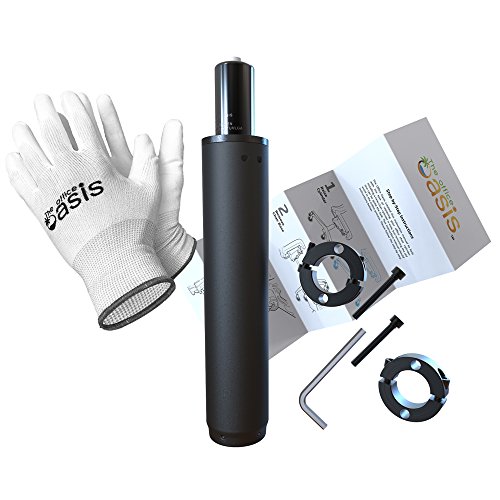
Pros
- Includes a dedicated removal tool
- Step-by-step installation instructions included
- Listed 15.125-inch overall length
- Manufacturer states a 1000 lb maximum support rating
Cons
- Fit must be checked against existing cylinder dimensions
- Durability and load ratings are manufacturer claims, not independent tests
- Replacement may require disassembling part of the chair base
This kit suits a buyer who wants to repair a sinking office or gaming chair by replacing the gas lift cylinder rather than buying a new chair. Confirm the listed column diameter, piston shaft diameter, and stroke against your current cylinder before purchase, and expect the job to involve removing the old cylinder with the included tool.
- Stroke: 4.75 inches (120mm)
- Column diameter: 2 inches (50mm)
- Piston shaft diameter: 1-1/8 inches (28mm)
- Dimensions: 2 x 2 x 15.125 inches
- Weight: 2.5 pounds
- Stated load rating: up to 1000 lbs (manufacturer claim)

Pros
- Includes removal tool and gloves
- Listed 6-inch adjustable stroke
- Lists both minimum and maximum length
- Step-by-step installation instructions included
- Manufacturer states a 1000 lb maximum support rating
Cons
- Listed 1-inch piston diameter conflicts with stated 28mm
- Fit claims are manufacturer statements; confirm dimensions before buying
- Durability and load ratings are manufacturer claims, not independent tests
This kit suits a buyer who wants to replace a worn or sinking gas lift cylinder on a compatible desk or gaming chair. Because the listed piston diameter is inconsistent, measure the existing cylinder and compare it with the listed outer diameter, inner diameter, and length range before installing.
- Outer cylinder diameter: 2 inches (50mm)
- Inner piston diameter: 1 inch (28mm), as listed
- Length range: 11.5 inches (293mm) minimum to 17.5 inches (445mm) maximum
- Adjustable stroke: 6 inches (152mm)
- Stated load rating: up to 1000 lbs (manufacturer claim)
- Dimensions: 2 x 2 x 11.5 inches
Root Cause Engineering & Mechanical Principles
The Steelcase Leap V2 relies on a heavy-duty Class 4 pneumatic gas lift cartridge engineered with internal nitrogen gas pressurized to approximately 200–300 PSI. Over years of cyclic compression in high-end ergonomic workstation seating, the inner nitrile elastomeric seals experience microscopic friction wear. When internal gas pressure leaks past these compromised seals, the piston column drops under body weight, resulting in the classic sinking chair failure mode.
However, when a Leap V2 exhibits metallic clicking, rotational resistance, or perceptible axial wobble during 360-degree swiveling, the culprit is rarely the pressurized cartridge itself. Instead, mechanical failure originates in the thrust bearing assembly housed at the very base of the outer column. This assembly consists of two hardened steel thrust washers sandwiching a caged radial ball bearing race, buffered by an elastomeric cushion bumper and anchored by a retention clip. In accordance with the Business and Institutional Furniture Manufacturers Association (BIFMA) ANSI/BIFMA X5.1 commercial seating standards, this assembly must sustain dynamic axial loads exceeding 300 pounds. Degraded factory grease, foreign grit ingress, or spalled bearing balls create uneven point contact, leading to loud clicking and unseated rotation.
| Failure Symptom | Underlying Root Cause | Diagnostic Inspection | Required Overhaul |
|---|---|---|---|
| Chair sinks continuously under seated load | Loss of internal nitrogen charge past piston seals | Cylinder drops 2–4 inches without lever touch | Full Class 4 Cylinder Replacement |
| Metallic clicking or grinding during swivel | Dry, contaminated, or fractured thrust ball bearings | Audible popping localized to column base | Thrust Bearing Kit Replacement |
| Axial play / chair seat wobbles laterally | Worn lower thrust washers or distorted retaining clip | Seat pan rocks >0.5 inches off vertical axis | Bearing Kit & Washer Rebuild |
| Height lever produces zero vertical travel | Actuator set screw backed out or broken cable cam | Inspect top button stroke vs side lever throw | Actuator Calibration or Cylinder Swap |
Step-by-Step Diagnostic & Replacement Procedure
Phase 1: Diagnostic Assessment & Actuator Identification
Before sourcing replacement components, establish whether you require a simple bearing rebuild or a full pneumatic cartridge replacement, identical to protocols used when replacing gas lift cylinders on luxury office chairs. Next, identify your Leap V2 manufacturing generation. Chairs produced prior to 2008 frequently utilize a side-activated cylinder where a horizontal cable cam triggers a valve pin located on the side of the piston. Post-2008 Leap V2 models feature a top-activated cylinder where the seat control lever depresses a central button on the upper tip of the cylinder rod. Modern universal replacement kits are predominantly top-activated; installing a top-activated cylinder into a pre-2008 side-activated mechanism without an adapter bracket will disable height adjustment.
Phase 2: Overhauling the Thrust Bearing Assembly (10 Minutes)
If height actuation operates normally and your only issue is clicking or wobbling during rotation, overhauling the thrust bearing kit is fast and eliminates the need to separate the stubborn main friction taper:
- Step 1: Stabilize and Invert: Place a moving blanket on your workbench and invert the chair so the 5-star caster base faces upward.
- Step 2: Remove the Retaining Clip: Locate the recessed bottom cavity of the 5-star base where the piston rod protrudes. Use needle-nose pliers or a small flathead screwdriver to slide off the steel retaining E-clip or split ring.
- Step 3: Remove Base and Hardware: Lift the 5-star base straight upward off the central cylinder column. Take careful note of hardware stack order: lower thrust washer, caged ball bearing, upper thrust washer, and rubber bumper cushion.
- Step 4: Clean and Degrease: Wipe the polished piston spindle clean of old, contaminated grease using isopropyl alcohol and lint-free shop rags. Check the spindle surface for scoring or groove wear. Much like servicing chair caster bearings, maintaining strict cleanliness prevents premature bearing degradation.
- Step 5: Pack Grease and Reassemble: Generously pack the new caged thrust bearing with high-pressure NLGI Grade 2 synthetic lithium grease. Slide the rubber cushion onto the spindle first, followed by the upper washer, the lubricated ball bearing cage, and the lower washer. Re-seat the 5-star base and secure the new retaining clip firmly into the spindle groove.
Phase 3: Full Gas Cylinder Replacement (Taper Disengagement)
If the cylinder is sinking or pressure is lost, you must break the high-interference Morse friction tapers holding the cartridge to both the 5-star base and the seat control mechanism:
Step 1: Disengage the 5-Star Base: Spray penetrating lubricant (such as PB Blaster or WD-40 Specialist) into the perimeter seam where the cylinder body seats into the aluminum 5-star base. Allow 5 minutes of dwell time. Hold the base suspended off the floor by 2 inches and strike the bottom rim of the outer cylinder housing firmly with a rubber mallet or a brass hammer. The tapered joint will pop free.
Step 2: Break the Upper Mechanism Taper: The connection between the top of the cylinder column and the Leap V2 cast-aluminum tilt mechanism is an unthreaded Morse friction taper—there are no retaining bolts or rivets. Attach a heavy-duty cylinder removal tool clamp or a 24-inch pipe wrench tightly around the cylinder column approximately 1 inch below the mechanism housing. Rotate the wrench with firm, decisive counterclockwise force while rocking back and forth. The twisting torque breaks the mechanical friction bond without damaging the precision tilt linkage, matching tolerances required when adjusting Steelcase articulating armrests.
Step 3: Install Replacement Cylinder: Insert the upper tapered neck of the new Class 4 cylinder into the Leap V2 mechanism receptacle. Ensure the top activation pin aligns cleanly with the actuator lever fork. Slide the 5-star base onto the lower tapered body. Flip the chair upright onto its casters, sit directly in the center of the seat pan with full body weight, and bounce lightly. Your seated weight permanently press-locks both Morse tapers into full mechanical alignment.
Tools, Greases & Component Specifications
Executing an overhaul on luxury office seating requires matching component engineering specifications to ensure compliance with ergonomic chair lumbar calibration:
- Cylinder Rating: DIN 4550 Class 4 pneumatic cartridge, stroke length 5.0 inches (127 mm), outer housing diameter 50 mm (standard universal taper).
- Lubricant: NLGI Grade 2 synthetic lithium complex grease with extreme pressure (EP) additives. Avoid thin spray oils (WD-40 multi-use) or silicone sprays, which wash away under axial thrust loads.
- Specialized Removal Tool: 2-piece steel collar clamp removal tool or 18–24 inch heavy-duty pipe wrench.
- Hand Tools: Needle-nose pliers, 4-pound deadblow or rubber mallet, flathead screwdriver, and penetrating fluid.
Preventative Maintenance & Long-Term Reliability Protocols
To ensure 7–10 years of silent, reliable operation from your newly overhauled Steelcase Leap V2, adopt these preventative care guidelines:
Every 12 months, invert the chair and inspect the spindle cavity at the base. Wipe away accumulated dust, hair, and oxidized grease with a shop towel before re-applying a dab of NLGI 2 lithium grease directly to the thrust washer perimeter. Never lubricate the chrome gas cylinder shaft with sticky oil; keep the upper piston rod dry and wipe it down with a micro-fiber cloth to prevent grit from cutting the internal hydraulic lip seals.
Frequently Asked Questions
FAQ 1: How do I know whether to replace just the bearing kit or the entire gas cylinder?
If your chair holds its height perfectly throughout the workday but makes metallic clicking, crunching, or popping sounds when you spin around, only the thrust bearing assembly needs replacement. If the chair slowly sinks toward the floor when seated or fails to rise when activating the lever, the sealed nitrogen chamber has leaked and the entire gas cylinder cartridge must be replaced.
FAQ 2: How do I verify if my Steelcase Leap V2 uses a side-activated or top-activated cylinder?
Look underneath the seat pan where the cylinder enters the mechanism. If the height adjustment cable connects to a lever directly depressing a vertical pin on top of the cylinder rod, it is top-activated (most common, post-2008). If a cam lever presses horizontally against a valve button on the side of the cylinder column, it is an older side-activated model requiring an exact side-activation replacement or adapter kit.
FAQ 3: What if the old gas cylinder is completely seized inside the chair mechanism?
Years of heavy seated pressure create extreme friction in Morse tapers. Liberally apply penetrating oil around the junction and let it soak for 15–30 minutes. Clamp a dedicated 2-piece cylinder removal collar tightly against the mechanism base and tighten the jack bolts evenly, or use a 24-inch pipe wrench with a cheater bar to provide enough rotational leverage to break the seizure.
Conclusion
Rebuilding the Steelcase Leap V2 height mechanism is a cost-effective, sustainable alternative to purchasing a new luxury chair. By properly diagnosing whether failure stems from worn thrust bearings or pneumatic seal exhaustion, selecting a BIFMA-compliant Class 4 cylinder, and following proper Morse taper disengagement techniques, you restore factory-grade height travel and smooth 360-degree rotation in under 30 minutes.