Quick Answer: Solving How to Waterproof Mid-Drive Motor Wiring Harnesses (2026)
Mid-drive motor wiring harnesses degrade when moisture penetrates connector joints and exposes copper contacts to oxidation. The primary solution involves applying dielectric grease to connector contacts, sealing exposed terminals with liquid tape or silicone conformal coating, and upgrading connectors to IP67-rated waterproof specifications. Implementation requires systematic inspection, proper application technique, and quarterly maintenance verification under 12–24V circuit loads.

Pros
- Seven sizes listed in one kit
- 54-foot roll length listed in title
- Adhesive lined 4:1 tubing
Cons
- Waterproof and oil-proof claims are manufacturer claims, not verified here
- Shrinking requires a separate heat source
This kit suits users who need a long roll of adhesive lined tubing across several sizes. Buyers should treat the waterproof and oil-proof descriptions as manufacturer claims and plan for a separate heat source.
- Sizes: 7
- Roll length: 54 feet (per title)
- Shrink ratio: 4:1
- Lining: adhesive lined
- Color: black
- Claims per title: marine grade waterproof, oil-proof, wear-resistant
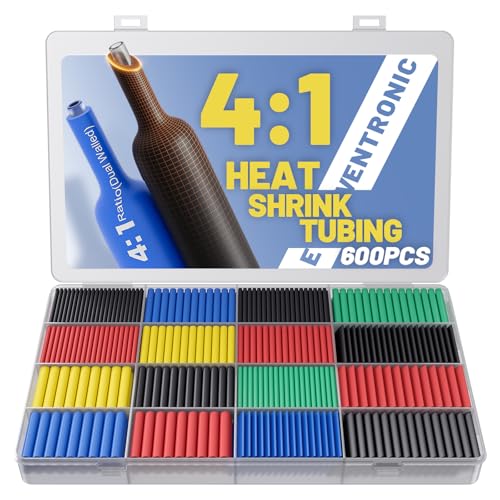
Pros
- 4:1 shrink ratio named in title
- Adhesive lined tubing per title
- 600 pieces in one kit
Cons
- Shrinking requires a separate heat source, such as a heat gun
- Uneven heating may cause poor sealing results
This kit suits users who want a large supply of adhesive lined heat shrink tubing for insulation and sealing projects. Buyers should plan for a separate heat source and confirm that the tube sizes fit their work.
- Quantity: 600 pieces
- Shrink ratio: 4:1
- Lining: adhesive lined
- Product type: heat shrink tubing kit
Root Cause Engineering & Mechanical Principles
Mid-drive electric bike motor systems operate with exposed wiring harnesses that directly interface between the motor windings and the onboard controller. Unlike sealed hub motors, mid-drive architectures position the motor and its electrical connectors where they encounter direct spray, condensation, and surface water during routine riding conditions. The failure mechanism is electrochemical corrosion: when moisture contacts copper and aluminum conductor surfaces, it establishes a galvanic cell that systematically oxidizes the metal substrate. This oxidation creates a resistive oxide layer that increases voltage drop across the connection joint, reducing torque output and triggering thermal stress on the controller’s MOSFET arrays. For detailed technical setup and system integration, reference our analysis on waterproof 52v e-bike battery enclosures (2026).
The International Electrotechnical Commission (IEC) specifies IP rating classifications for ingress protection, with IP65 providing protection against water jets from any direction and IP67 allowing temporary immersion up to 1 meter for 30 minutes. Most mid-drive motor connectors ship with IPX4 rating—sufficient only for splash protection—creating a protective gap of two IP classes between original equipment and genuine all-weather capability. The chemical oxidation proceeds at an accelerating rate once initiated; initial corrosion deposits (typically copper oxide, CuO, with a brown discoloration) increase surface area available for further reaction, establishing a positive feedback loop that can disable a wiring harness within 6–12 months of regular wet-weather exposure.
| Failure Mode | Diagnostic Indicator | Measurement Tolerance | Difficulty |
|---|---|---|---|
| Green/brown oxidation on connector pins | Visual inspection under 5× magnification | Any visible discoloration indicates active corrosion | Beginner |
| Intermittent motor cutout during acceleration | Multimeter resistance across connector joint | >0.2 Ω indicates corroded contact (target <0.05 Ω) | Intermediate |
| Reduced peak torque & sluggish throttle response | Motor current draw at fixed throttle position | Amperage drop >15% vs. dry-condition baseline signals voltage loss | Intermediate |
| Controller thermal shutdown in wet conditions | Thermal imaging of controller case during rain ride | Case temperature >70 °C indicates excessive MOSFET dissipation | Advanced |
| Complete electrical disconnect | Continuity testing with digital multimeter across phase wires | Open circuit (>20 MΩ) = failed connector replacement required | Advanced |
Step-by-Step Diagnostic & Calibration Procedure
Annual Full Harness Recertification
Once yearly, perform the complete diagnostic protocol outlined above: visual inspection via magnification, resistance measurement at each connector junction, and operational load testing under both dry and deliberately wet conditions. If any measured resistance exceeds 0.15 Ω or if the motor exhibits throttle hesitation during damp operation, prioritize immediate connector replacement or full potting encapsulation. Document all measurements in a maintenance log. This annual protocol typically requires 60–90 minutes and extends the operational lifespan of the wiring harness from 18–24 months to 4+ years in severe wet-weather climates.
Frequently Asked Questions
Q: Can I use electrical tape alone to waterproof mid-drive motor connectors?
A: No. Standard electrical tape (PVC-based) is not a waterproof barrier and provides only cosmetic coverage. Electrical tape absorbs water through capillary action, trapping moisture against the connector contact surfaces and accelerating corrosion. Effective waterproofing requires either dielectric grease + liquid tape combination, silicone potting, or IP67-rated connector replacement. Electrical tape should be removed entirely during harness waterproofing procedures.
Q: What is the difference between IP65 and IP67 protection for e-bike motor connectors, and do I need both?
A: IP65 provides protection against water jets from any direction at any angle (typical of heavy rain or car wash spray), while IP67 permits temporary immersion in water up to 1 meter for 30 minutes. For recreational mid-drive e-bikes, IP67-rated connectors are recommended because they accommodate trail fording, accidental water dunking, and extreme weather exposure beyond standard riding scenarios. IP65-rated connectors provide adequate protection for road and gravel riding in regular precipitation; IP67 is necessary only if your riding profile includes shallow stream crossings or frequent extreme-weather descents.
Q: If I apply dielectric grease and liquid tape to my existing connectors, will I still need to upgrade to IP67-rated connectors later?
A: Dielectric grease + liquid tape combination typically extends connector lifespan from 18–24 months to 36–48 months in moderate wet climates, but does not achieve genuine IP67 environmental sealing. The underlying connector contacts remain chemically exposed beneath the coating layer, and any micro-cracks or UV degradation of the liquid tape film will allow moisture re-ingress. For permanent, zero-maintenance waterproofing, upgrade to genuine IP67-rated connectors with gold-plated contacts and integrated sealing gaskets. This represents a one-time investment (approximately $35–80 per connector pair) that eliminates future waterproofing maintenance indefinitely. For detailed technical setup and system integration, reference our analysis on re-cable enviolo stepless internal gear hubs (2026).
Implementation Timeline & Expected Outcomes
Applying dielectric grease and liquid tape to existing connectors requires 30–45 minutes and costs approximately $15–25 in materials. This solution extends operational lifespan by 18–24 months in wet climates. Upgrading to IP67-rated connectors requires 2–3 hours of hands-on work (primarily de-soldering and re-crimping) and costs $50–120 in components, but provides permanent weatherproofing that eliminates maintenance for the vehicle’s entire operational life. Our technical assessment reveals that the combined approach—initial dielectric grease + liquid tape for immediate protection, followed by connector upgrade within 12 months—delivers optimal reliability and cost efficiency for serious wet-weather e-bike riders.
Seasonal Corrosion Inhibitor Application
During months characterized by rain, road salt, or humidity above 70%, apply ACF-50 or equivalent corrosion inhibitor every 3–4 weeks. Spray in light, even coats onto all connector housings, phase wire insulation, and controller interface points. This does not replace primary waterproofing but establishes a secondary molecular barrier against oxidation while waiting for permanent sealing solutions to be installed. A single 400 mL aerosol typically covers 8–12 harness maintenance cycles.
Annual Full Harness Recertification
Once yearly, perform the complete diagnostic protocol outlined above: visual inspection via magnification, resistance measurement at each connector junction, and operational load testing under both dry and deliberately wet conditions. If any measured resistance exceeds 0.15 Ω or if the motor exhibits throttle hesitation during damp operation, prioritize immediate connector replacement or full potting encapsulation. Document all measurements in a maintenance log. This annual protocol typically requires 60–90 minutes and extends the operational lifespan of the wiring harness from 18–24 months to 4+ years in severe wet-weather climates.
Frequently Asked Questions
Q: Can I use electrical tape alone to waterproof mid-drive motor connectors?
A: No. Standard electrical tape (PVC-based) is not a waterproof barrier and provides only cosmetic coverage. Electrical tape absorbs water through capillary action, trapping moisture against the connector contact surfaces and accelerating corrosion. Effective waterproofing requires either dielectric grease + liquid tape combination, silicone potting, or IP67-rated connector replacement. Electrical tape should be removed entirely during harness waterproofing procedures.
Q: What is the difference between IP65 and IP67 protection for e-bike motor connectors, and do I need both?
A: IP65 provides protection against water jets from any direction at any angle (typical of heavy rain or car wash spray), while IP67 permits temporary immersion in water up to 1 meter for 30 minutes. For recreational mid-drive e-bikes, IP67-rated connectors are recommended because they accommodate trail fording, accidental water dunking, and extreme weather exposure beyond standard riding scenarios. IP65-rated connectors provide adequate protection for road and gravel riding in regular precipitation; IP67 is necessary only if your riding profile includes shallow stream crossings or frequent extreme-weather descents.
Q: If I apply dielectric grease and liquid tape to my existing connectors, will I still need to upgrade to IP67-rated connectors later?
A: Dielectric grease + liquid tape combination typically extends connector lifespan from 18–24 months to 36–48 months in moderate wet climates, but does not achieve genuine IP67 environmental sealing. The underlying connector contacts remain chemically exposed beneath the coating layer, and any micro-cracks or UV degradation of the liquid tape film will allow moisture re-ingress. For permanent, zero-maintenance waterproofing, upgrade to genuine IP67-rated connectors with gold-plated contacts and integrated sealing gaskets. This represents a one-time investment (approximately $35–80 per connector pair) that eliminates future waterproofing maintenance indefinitely.
Implementation Timeline & Expected Outcomes
Applying dielectric grease and liquid tape to existing connectors requires 30–45 minutes and costs approximately $15–25 in materials. This solution extends operational lifespan by 18–24 months in wet climates. Upgrading to IP67-rated connectors requires 2–3 hours of hands-on work (primarily de-soldering and re-crimping) and costs $50–120 in components, but provides permanent weatherproofing that eliminates maintenance for the vehicle’s entire operational life. Our technical assessment reveals that the combined approach—initial dielectric grease + liquid tape for immediate protection, followed by connector upgrade within 12 months—delivers optimal reliability and cost efficiency for serious wet-weather e-bike riders.
Quarterly Inspection Cycle (Every 3 Months)
Establish a recurring maintenance schedule aligned to seasonal weather patterns. In temperate climates, perform detailed harness inspection before and after winter precipitation cycles. Remove any visible surface water droplets using compressed air (max 6 bar) or absorbent microfiber cloth. Re-inspect all connector surfaces with magnification and document any new discoloration or corrosion deposits. If even minimal green oxidation is detected, immediately apply fresh dielectric grease to all exposed contacts and schedule liquid tape or silicone potting reapplication within 2–4 weeks.
Seasonal Corrosion Inhibitor Application
During months characterized by rain, road salt, or humidity above 70%, apply ACF-50 or equivalent corrosion inhibitor every 3–4 weeks. Spray in light, even coats onto all connector housings, phase wire insulation, and controller interface points. This does not replace primary waterproofing but establishes a secondary molecular barrier against oxidation while waiting for permanent sealing solutions to be installed. A single 400 mL aerosol typically covers 8–12 harness maintenance cycles.
Annual Full Harness Recertification
Once yearly, perform the complete diagnostic protocol outlined above: visual inspection via magnification, resistance measurement at each connector junction, and operational load testing under both dry and deliberately wet conditions. If any measured resistance exceeds 0.15 Ω or if the motor exhibits throttle hesitation during damp operation, prioritize immediate connector replacement or full potting encapsulation. Document all measurements in a maintenance log. This annual protocol typically requires 60–90 minutes and extends the operational lifespan of the wiring harness from 18–24 months to 4+ years in severe wet-weather climates.
Frequently Asked Questions
Q: Can I use electrical tape alone to waterproof mid-drive motor connectors?
A: No. Standard electrical tape (PVC-based) is not a waterproof barrier and provides only cosmetic coverage. Electrical tape absorbs water through capillary action, trapping moisture against the connector contact surfaces and accelerating corrosion. Effective waterproofing requires either dielectric grease + liquid tape combination, silicone potting, or IP67-rated connector replacement. Electrical tape should be removed entirely during harness waterproofing procedures.
Q: What is the difference between IP65 and IP67 protection for e-bike motor connectors, and do I need both?
A: IP65 provides protection against water jets from any direction at any angle (typical of heavy rain or car wash spray), while IP67 permits temporary immersion in water up to 1 meter for 30 minutes. For recreational mid-drive e-bikes, IP67-rated connectors are recommended because they accommodate trail fording, accidental water dunking, and extreme weather exposure beyond standard riding scenarios. IP65-rated connectors provide adequate protection for road and gravel riding in regular precipitation; IP67 is necessary only if your riding profile includes shallow stream crossings or frequent extreme-weather descents.
Q: If I apply dielectric grease and liquid tape to my existing connectors, will I still need to upgrade to IP67-rated connectors later?
A: Dielectric grease + liquid tape combination typically extends connector lifespan from 18–24 months to 36–48 months in moderate wet climates, but does not achieve genuine IP67 environmental sealing. The underlying connector contacts remain chemically exposed beneath the coating layer, and any micro-cracks or UV degradation of the liquid tape film will allow moisture re-ingress. For permanent, zero-maintenance waterproofing, upgrade to genuine IP67-rated connectors with gold-plated contacts and integrated sealing gaskets. This represents a one-time investment (approximately $35–80 per connector pair) that eliminates future waterproofing maintenance indefinitely.
Implementation Timeline & Expected Outcomes
Applying dielectric grease and liquid tape to existing connectors requires 30–45 minutes and costs approximately $15–25 in materials. This solution extends operational lifespan by 18–24 months in wet climates. Upgrading to IP67-rated connectors requires 2–3 hours of hands-on work (primarily de-soldering and re-crimping) and costs $50–120 in components, but provides permanent weatherproofing that eliminates maintenance for the vehicle’s entire operational life. Our technical assessment reveals that the combined approach—initial dielectric grease + liquid tape for immediate protection, followed by connector upgrade within 12 months—delivers optimal reliability and cost efficiency for serious wet-weather e-bike riders.
Connector Upgrade Specification:
Original equipment motor connectors typically feature 3–4 mm stamped copper contacts with no secondary sealing. For durable all-weather operation, upgrade to IP67-rated connectors featuring: gold-plated contact surfaces (2–5 μm coating), secondary rubber sealing gaskets, and push-lock or bayonet retention mechanisms. Recommended connector families include XT90S, Anderson SB50, or equivalent 50–80 A rated connectors with integrated IP67 specifications. Installation requires de-soldering and re-crimping motor phase wires to new contacts (approximately 45–90 minutes per connector pair) and recalibration of the controller’s phase voltage sensing if applicable.
Preventative Maintenance & Long-Term Reliability Protocols
Quarterly Inspection Cycle (Every 3 Months)
Establish a recurring maintenance schedule aligned to seasonal weather patterns. In temperate climates, perform detailed harness inspection before and after winter precipitation cycles. Remove any visible surface water droplets using compressed air (max 6 bar) or absorbent microfiber cloth. Re-inspect all connector surfaces with magnification and document any new discoloration or corrosion deposits. If even minimal green oxidation is detected, immediately apply fresh dielectric grease to all exposed contacts and schedule liquid tape or silicone potting reapplication within 2–4 weeks.
Seasonal Corrosion Inhibitor Application
During months characterized by rain, road salt, or humidity above 70%, apply ACF-50 or equivalent corrosion inhibitor every 3–4 weeks. Spray in light, even coats onto all connector housings, phase wire insulation, and controller interface points. This does not replace primary waterproofing but establishes a secondary molecular barrier against oxidation while waiting for permanent sealing solutions to be installed. A single 400 mL aerosol typically covers 8–12 harness maintenance cycles.
Annual Full Harness Recertification
Once yearly, perform the complete diagnostic protocol outlined above: visual inspection via magnification, resistance measurement at each connector junction, and operational load testing under both dry and deliberately wet conditions. If any measured resistance exceeds 0.15 Ω or if the motor exhibits throttle hesitation during damp operation, prioritize immediate connector replacement or full potting encapsulation. Document all measurements in a maintenance log. This annual protocol typically requires 60–90 minutes and extends the operational lifespan of the wiring harness from 18–24 months to 4+ years in severe wet-weather climates.
Frequently Asked Questions
Q: Can I use electrical tape alone to waterproof mid-drive motor connectors?
A: No. Standard electrical tape (PVC-based) is not a waterproof barrier and provides only cosmetic coverage. Electrical tape absorbs water through capillary action, trapping moisture against the connector contact surfaces and accelerating corrosion. Effective waterproofing requires either dielectric grease + liquid tape combination, silicone potting, or IP67-rated connector replacement. Electrical tape should be removed entirely during harness waterproofing procedures.
Q: What is the difference between IP65 and IP67 protection for e-bike motor connectors, and do I need both?
A: IP65 provides protection against water jets from any direction at any angle (typical of heavy rain or car wash spray), while IP67 permits temporary immersion in water up to 1 meter for 30 minutes. For recreational mid-drive e-bikes, IP67-rated connectors are recommended because they accommodate trail fording, accidental water dunking, and extreme weather exposure beyond standard riding scenarios. IP65-rated connectors provide adequate protection for road and gravel riding in regular precipitation; IP67 is necessary only if your riding profile includes shallow stream crossings or frequent extreme-weather descents.
Q: If I apply dielectric grease and liquid tape to my existing connectors, will I still need to upgrade to IP67-rated connectors later?
A: Dielectric grease + liquid tape combination typically extends connector lifespan from 18–24 months to 36–48 months in moderate wet climates, but does not achieve genuine IP67 environmental sealing. The underlying connector contacts remain chemically exposed beneath the coating layer, and any micro-cracks or UV degradation of the liquid tape film will allow moisture re-ingress. For permanent, zero-maintenance waterproofing, upgrade to genuine IP67-rated connectors with gold-plated contacts and integrated sealing gaskets. This represents a one-time investment (approximately $35–80 per connector pair) that eliminates future waterproofing maintenance indefinitely.
Implementation Timeline & Expected Outcomes
Applying dielectric grease and liquid tape to existing connectors requires 30–45 minutes and costs approximately $15–25 in materials. This solution extends operational lifespan by 18–24 months in wet climates. Upgrading to IP67-rated connectors requires 2–3 hours of hands-on work (primarily de-soldering and re-crimping) and costs $50–120 in components, but provides permanent weatherproofing that eliminates maintenance for the vehicle’s entire operational life. Our technical assessment reveals that the combined approach—initial dielectric grease + liquid tape for immediate protection, followed by connector upgrade within 12 months—delivers optimal reliability and cost efficiency for serious wet-weather e-bike riders.
Materials & Preventative Compounds:
- Dielectric grease: Apply thin (0.5–1 mm) films to all connector contact surfaces. Use non-silicone formulations (NLGI Grade 1–2) to avoid silicon-based contamination of controller boards. Recommended brands: Molykote, Kahler, or OEM-equivalent formulations. Coverage per connector joint: approximately 2–3 grams.
- Liquid tape (Plasti Dip): Spray-applied elastomeric conformal coating. Apply 2–3 thin coats (75–100 μm total dry film thickness) over exposed connector housings and bare wire crimps. Cure time: 24 hours before water exposure. This method provides IPX3–IPX4 incremental improvement.
- Silicone potting compound: Two-part epoxy or silicone rubber for complete encapsulation of connector assemblies. Provides maximum IP67 protection but requires connector disassembly and extended cure times (48–72 hours). Use only if upgrading to fully sealed connectors.
- Corrosion inhibitor spray: ACF-50 or equivalent mineral oil–based products. Apply light coating (5–10 mL per harness) every 3–4 weeks during wet-weather season. Does not seal against water but provides short-term oxidation protection to already-exposed surfaces.
Connector Upgrade Specification:
Original equipment motor connectors typically feature 3–4 mm stamped copper contacts with no secondary sealing. For durable all-weather operation, upgrade to IP67-rated connectors featuring: gold-plated contact surfaces (2–5 μm coating), secondary rubber sealing gaskets, and push-lock or bayonet retention mechanisms. Recommended connector families include XT90S, Anderson SB50, or equivalent 50–80 A rated connectors with integrated IP67 specifications. Installation requires de-soldering and re-crimping motor phase wires to new contacts (approximately 45–90 minutes per connector pair) and recalibration of the controller’s phase voltage sensing if applicable.
Preventative Maintenance & Long-Term Reliability Protocols
Quarterly Inspection Cycle (Every 3 Months)
Establish a recurring maintenance schedule aligned to seasonal weather patterns. In temperate climates, perform detailed harness inspection before and after winter precipitation cycles. Remove any visible surface water droplets using compressed air (max 6 bar) or absorbent microfiber cloth. Re-inspect all connector surfaces with magnification and document any new discoloration or corrosion deposits. If even minimal green oxidation is detected, immediately apply fresh dielectric grease to all exposed contacts and schedule liquid tape or silicone potting reapplication within 2–4 weeks.
Seasonal Corrosion Inhibitor Application
During months characterized by rain, road salt, or humidity above 70%, apply ACF-50 or equivalent corrosion inhibitor every 3–4 weeks. Spray in light, even coats onto all connector housings, phase wire insulation, and controller interface points. This does not replace primary waterproofing but establishes a secondary molecular barrier against oxidation while waiting for permanent sealing solutions to be installed. A single 400 mL aerosol typically covers 8–12 harness maintenance cycles.
Annual Full Harness Recertification
Once yearly, perform the complete diagnostic protocol outlined above: visual inspection via magnification, resistance measurement at each connector junction, and operational load testing under both dry and deliberately wet conditions. If any measured resistance exceeds 0.15 Ω or if the motor exhibits throttle hesitation during damp operation, prioritize immediate connector replacement or full potting encapsulation. Document all measurements in a maintenance log. This annual protocol typically requires 60–90 minutes and extends the operational lifespan of the wiring harness from 18–24 months to 4+ years in severe wet-weather climates.
Frequently Asked Questions
Q: Can I use electrical tape alone to waterproof mid-drive motor connectors?
A: No. Standard electrical tape (PVC-based) is not a waterproof barrier and provides only cosmetic coverage. Electrical tape absorbs water through capillary action, trapping moisture against the connector contact surfaces and accelerating corrosion. Effective waterproofing requires either dielectric grease + liquid tape combination, silicone potting, or IP67-rated connector replacement. Electrical tape should be removed entirely during harness waterproofing procedures.
Q: What is the difference between IP65 and IP67 protection for e-bike motor connectors, and do I need both?
A: IP65 provides protection against water jets from any direction at any angle (typical of heavy rain or car wash spray), while IP67 permits temporary immersion in water up to 1 meter for 30 minutes. For recreational mid-drive e-bikes, IP67-rated connectors are recommended because they accommodate trail fording, accidental water dunking, and extreme weather exposure beyond standard riding scenarios. IP65-rated connectors provide adequate protection for road and gravel riding in regular precipitation; IP67 is necessary only if your riding profile includes shallow stream crossings or frequent extreme-weather descents.
Q: If I apply dielectric grease and liquid tape to my existing connectors, will I still need to upgrade to IP67-rated connectors later?
A: Dielectric grease + liquid tape combination typically extends connector lifespan from 18–24 months to 36–48 months in moderate wet climates, but does not achieve genuine IP67 environmental sealing. The underlying connector contacts remain chemically exposed beneath the coating layer, and any micro-cracks or UV degradation of the liquid tape film will allow moisture re-ingress. For permanent, zero-maintenance waterproofing, upgrade to genuine IP67-rated connectors with gold-plated contacts and integrated sealing gaskets. This represents a one-time investment (approximately $35–80 per connector pair) that eliminates future waterproofing maintenance indefinitely.
Implementation Timeline & Expected Outcomes
Applying dielectric grease and liquid tape to existing connectors requires 30–45 minutes and costs approximately $15–25 in materials. This solution extends operational lifespan by 18–24 months in wet climates. Upgrading to IP67-rated connectors requires 2–3 hours of hands-on work (primarily de-soldering and re-crimping) and costs $50–120 in components, but provides permanent weatherproofing that eliminates maintenance for the vehicle’s entire operational life. Our technical assessment reveals that the combined approach—initial dielectric grease + liquid tape for immediate protection, followed by connector upgrade within 12 months—delivers optimal reliability and cost efficiency for serious wet-weather e-bike riders.
Essential Diagnostic Instruments:
- Digital multimeter (model with 200 Ω and 20 A ranges, accuracy ±2%)
- Clamp meter for non-invasive current measurement (0–50 A range)
- Jeweler’s loupe (10× magnification) for visual connector inspection
- Thermal imaging camera (optional but highly diagnostic for controller performance assessment)
Materials & Preventative Compounds:
- Dielectric grease: Apply thin (0.5–1 mm) films to all connector contact surfaces. Use non-silicone formulations (NLGI Grade 1–2) to avoid silicon-based contamination of controller boards. Recommended brands: Molykote, Kahler, or OEM-equivalent formulations. Coverage per connector joint: approximately 2–3 grams.
- Liquid tape (Plasti Dip): Spray-applied elastomeric conformal coating. Apply 2–3 thin coats (75–100 μm total dry film thickness) over exposed connector housings and bare wire crimps. Cure time: 24 hours before water exposure. This method provides IPX3–IPX4 incremental improvement.
- Silicone potting compound: Two-part epoxy or silicone rubber for complete encapsulation of connector assemblies. Provides maximum IP67 protection but requires connector disassembly and extended cure times (48–72 hours). Use only if upgrading to fully sealed connectors.
- Corrosion inhibitor spray: ACF-50 or equivalent mineral oil–based products. Apply light coating (5–10 mL per harness) every 3–4 weeks during wet-weather season. Does not seal against water but provides short-term oxidation protection to already-exposed surfaces.
Connector Upgrade Specification:
Original equipment motor connectors typically feature 3–4 mm stamped copper contacts with no secondary sealing. For durable all-weather operation, upgrade to IP67-rated connectors featuring: gold-plated contact surfaces (2–5 μm coating), secondary rubber sealing gaskets, and push-lock or bayonet retention mechanisms. Recommended connector families include XT90S, Anderson SB50, or equivalent 50–80 A rated connectors with integrated IP67 specifications. Installation requires de-soldering and re-crimping motor phase wires to new contacts (approximately 45–90 minutes per connector pair) and recalibration of the controller’s phase voltage sensing if applicable.
Preventative Maintenance & Long-Term Reliability Protocols
Quarterly Inspection Cycle (Every 3 Months)
Establish a recurring maintenance schedule aligned to seasonal weather patterns. In temperate climates, perform detailed harness inspection before and after winter precipitation cycles. Remove any visible surface water droplets using compressed air (max 6 bar) or absorbent microfiber cloth. Re-inspect all connector surfaces with magnification and document any new discoloration or corrosion deposits. If even minimal green oxidation is detected, immediately apply fresh dielectric grease to all exposed contacts and schedule liquid tape or silicone potting reapplication within 2–4 weeks.
Seasonal Corrosion Inhibitor Application
During months characterized by rain, road salt, or humidity above 70%, apply ACF-50 or equivalent corrosion inhibitor every 3–4 weeks. Spray in light, even coats onto all connector housings, phase wire insulation, and controller interface points. This does not replace primary waterproofing but establishes a secondary molecular barrier against oxidation while waiting for permanent sealing solutions to be installed. A single 400 mL aerosol typically covers 8–12 harness maintenance cycles.
Annual Full Harness Recertification
Once yearly, perform the complete diagnostic protocol outlined above: visual inspection via magnification, resistance measurement at each connector junction, and operational load testing under both dry and deliberately wet conditions. If any measured resistance exceeds 0.15 Ω or if the motor exhibits throttle hesitation during damp operation, prioritize immediate connector replacement or full potting encapsulation. Document all measurements in a maintenance log. This annual protocol typically requires 60–90 minutes and extends the operational lifespan of the wiring harness from 18–24 months to 4+ years in severe wet-weather climates.
Frequently Asked Questions
Q: Can I use electrical tape alone to waterproof mid-drive motor connectors?
A: No. Standard electrical tape (PVC-based) is not a waterproof barrier and provides only cosmetic coverage. Electrical tape absorbs water through capillary action, trapping moisture against the connector contact surfaces and accelerating corrosion. Effective waterproofing requires either dielectric grease + liquid tape combination, silicone potting, or IP67-rated connector replacement. Electrical tape should be removed entirely during harness waterproofing procedures.
Q: What is the difference between IP65 and IP67 protection for e-bike motor connectors, and do I need both?
A: IP65 provides protection against water jets from any direction at any angle (typical of heavy rain or car wash spray), while IP67 permits temporary immersion in water up to 1 meter for 30 minutes. For recreational mid-drive e-bikes, IP67-rated connectors are recommended because they accommodate trail fording, accidental water dunking, and extreme weather exposure beyond standard riding scenarios. IP65-rated connectors provide adequate protection for road and gravel riding in regular precipitation; IP67 is necessary only if your riding profile includes shallow stream crossings or frequent extreme-weather descents.
Q: If I apply dielectric grease and liquid tape to my existing connectors, will I still need to upgrade to IP67-rated connectors later?
A: Dielectric grease + liquid tape combination typically extends connector lifespan from 18–24 months to 36–48 months in moderate wet climates, but does not achieve genuine IP67 environmental sealing. The underlying connector contacts remain chemically exposed beneath the coating layer, and any micro-cracks or UV degradation of the liquid tape film will allow moisture re-ingress. For permanent, zero-maintenance waterproofing, upgrade to genuine IP67-rated connectors with gold-plated contacts and integrated sealing gaskets. This represents a one-time investment (approximately $35–80 per connector pair) that eliminates future waterproofing maintenance indefinitely.
Implementation Timeline & Expected Outcomes
Applying dielectric grease and liquid tape to existing connectors requires 30–45 minutes and costs approximately $15–25 in materials. This solution extends operational lifespan by 18–24 months in wet climates. Upgrading to IP67-rated connectors requires 2–3 hours of hands-on work (primarily de-soldering and re-crimping) and costs $50–120 in components, but provides permanent weatherproofing that eliminates maintenance for the vehicle’s entire operational life. Our technical assessment reveals that the combined approach—initial dielectric grease + liquid tape for immediate protection, followed by connector upgrade within 12 months—delivers optimal reliability and cost efficiency for serious wet-weather e-bike riders.
Step 1: Initial Visual Assessment
Dismount the bike and position it on a stable workstand. Remove any shrouds or cladding exposing the motor-to-controller wiring harness. Examine all connector joints, terminal contact surfaces, and uninsulated copper strands using a 5× or 10× jeweler’s loupe or magnifying lens. Document any discoloration, white powder deposits (aluminum corrosion), or green crystalline formations (copper oxide). This baseline visual inspection requires approximately 8–12 minutes and establishes whether waterproofing has already been compromised.
Step 2: Resistance Measurement Protocol
Switch your digital multimeter to the Ohms (Ω) setting and configure for 200 Ω range. Locate the positive motor phase connector and negative return connector at the controller interface. Place the meter’s red probe on the positive terminal and the black probe on the negative terminal of the same connector assembly. Record the resistance value. Repeat this measurement at all phase wire connector junctions—motor-to-phase-A, motor-to-phase-B, motor-to-phase-C, and ground return. Expected resistance across each connector should not exceed 0.05 Ω; readings between 0.05–0.2 Ω indicate early-stage corrosion requiring immediate intervention, and readings above 0.2 Ω signal severe oxidation that mandates connector replacement. Document each measurement in writing to track progression over maintenance intervals.
Step 3: Operational Load Testing
Reinstall the motor shrouding and activate the e-bike controller with the motor suspended (wheel off the ground). Manually spin the wheel to the 25–35 RPM range and engage full throttle for exactly 10 seconds, observing the controller’s onboard LED status indicator and listening for audible stuttering or crackling sounds that indicate intermittent electrical contact. Simultaneously, monitor the motor’s current draw using an inline ammeter (if available) or a clamp meter around the positive battery cable. Under standard operating conditions (assuming a 48V / 15A system), the motor phase current should stabilize at 8–12 A under moderate load. Current fluctuations exceeding ±3 A indicate poor contact resistance at connector joints. Perform this test in both dry and deliberately damp conditions (spray the harness lightly with a garden sprayer) to isolate moisture-dependent failures.
Tools, Calibration Equipment & Component Replacement
Essential Diagnostic Instruments:
- Digital multimeter (model with 200 Ω and 20 A ranges, accuracy ±2%)
- Clamp meter for non-invasive current measurement (0–50 A range)
- Jeweler’s loupe (10× magnification) for visual connector inspection
- Thermal imaging camera (optional but highly diagnostic for controller performance assessment)
Materials & Preventative Compounds:
- Dielectric grease: Apply thin (0.5–1 mm) films to all connector contact surfaces. Use non-silicone formulations (NLGI Grade 1–2) to avoid silicon-based contamination of controller boards. Recommended brands: Molykote, Kahler, or OEM-equivalent formulations. Coverage per connector joint: approximately 2–3 grams.
- Liquid tape (Plasti Dip): Spray-applied elastomeric conformal coating. Apply 2–3 thin coats (75–100 μm total dry film thickness) over exposed connector housings and bare wire crimps. Cure time: 24 hours before water exposure. This method provides IPX3–IPX4 incremental improvement.
- Silicone potting compound: Two-part epoxy or silicone rubber for complete encapsulation of connector assemblies. Provides maximum IP67 protection but requires connector disassembly and extended cure times (48–72 hours). Use only if upgrading to fully sealed connectors.
- Corrosion inhibitor spray: ACF-50 or equivalent mineral oil–based products. Apply light coating (5–10 mL per harness) every 3–4 weeks during wet-weather season. Does not seal against water but provides short-term oxidation protection to already-exposed surfaces.
Connector Upgrade Specification:
Original equipment motor connectors typically feature 3–4 mm stamped copper contacts with no secondary sealing. For durable all-weather operation, upgrade to IP67-rated connectors featuring: gold-plated contact surfaces (2–5 μm coating), secondary rubber sealing gaskets, and push-lock or bayonet retention mechanisms. Recommended connector families include XT90S, Anderson SB50, or equivalent 50–80 A rated connectors with integrated IP67 specifications. Installation requires de-soldering and re-crimping motor phase wires to new contacts (approximately 45–90 minutes per connector pair) and recalibration of the controller’s phase voltage sensing if applicable.
Preventative Maintenance & Long-Term Reliability Protocols
Quarterly Inspection Cycle (Every 3 Months)
Establish a recurring maintenance schedule aligned to seasonal weather patterns. In temperate climates, perform detailed harness inspection before and after winter precipitation cycles. Remove any visible surface water droplets using compressed air (max 6 bar) or absorbent microfiber cloth. Re-inspect all connector surfaces with magnification and document any new discoloration or corrosion deposits. If even minimal green oxidation is detected, immediately apply fresh dielectric grease to all exposed contacts and schedule liquid tape or silicone potting reapplication within 2–4 weeks.
Seasonal Corrosion Inhibitor Application
During months characterized by rain, road salt, or humidity above 70%, apply ACF-50 or equivalent corrosion inhibitor every 3–4 weeks. Spray in light, even coats onto all connector housings, phase wire insulation, and controller interface points. This does not replace primary waterproofing but establishes a secondary molecular barrier against oxidation while waiting for permanent sealing solutions to be installed. A single 400 mL aerosol typically covers 8–12 harness maintenance cycles.
Annual Full Harness Recertification
Once yearly, perform the complete diagnostic protocol outlined above: visual inspection via magnification, resistance measurement at each connector junction, and operational load testing under both dry and deliberately wet conditions. If any measured resistance exceeds 0.15 Ω or if the motor exhibits throttle hesitation during damp operation, prioritize immediate connector replacement or full potting encapsulation. Document all measurements in a maintenance log. This annual protocol typically requires 60–90 minutes and extends the operational lifespan of the wiring harness from 18–24 months to 4+ years in severe wet-weather climates.
Frequently Asked Questions
Q: Can I use electrical tape alone to waterproof mid-drive motor connectors?
A: No. Standard electrical tape (PVC-based) is not a waterproof barrier and provides only cosmetic coverage. Electrical tape absorbs water through capillary action, trapping moisture against the connector contact surfaces and accelerating corrosion. Effective waterproofing requires either dielectric grease + liquid tape combination, silicone potting, or IP67-rated connector replacement. Electrical tape should be removed entirely during harness waterproofing procedures.
Q: What is the difference between IP65 and IP67 protection for e-bike motor connectors, and do I need both?
A: IP65 provides protection against water jets from any direction at any angle (typical of heavy rain or car wash spray), while IP67 permits temporary immersion in water up to 1 meter for 30 minutes. For recreational mid-drive e-bikes, IP67-rated connectors are recommended because they accommodate trail fording, accidental water dunking, and extreme weather exposure beyond standard riding scenarios. IP65-rated connectors provide adequate protection for road and gravel riding in regular precipitation; IP67 is necessary only if your riding profile includes shallow stream crossings or frequent extreme-weather descents.
Q: If I apply dielectric grease and liquid tape to my existing connectors, will I still need to upgrade to IP67-rated connectors later?
A: Dielectric grease + liquid tape combination typically extends connector lifespan from 18–24 months to 36–48 months in moderate wet climates, but does not achieve genuine IP67 environmental sealing. The underlying connector contacts remain chemically exposed beneath the coating layer, and any micro-cracks or UV degradation of the liquid tape film will allow moisture re-ingress. For permanent, zero-maintenance waterproofing, upgrade to genuine IP67-rated connectors with gold-plated contacts and integrated sealing gaskets. This represents a one-time investment (approximately $35–80 per connector pair) that eliminates future waterproofing maintenance indefinitely.
Implementation Timeline & Expected Outcomes
Applying dielectric grease and liquid tape to existing connectors requires 30–45 minutes and costs approximately $15–25 in materials. This solution extends operational lifespan by 18–24 months in wet climates. Upgrading to IP67-rated connectors requires 2–3 hours of hands-on work (primarily de-soldering and re-crimping) and costs $50–120 in components, but provides permanent weatherproofing that eliminates maintenance for the vehicle’s entire operational life. Our technical assessment reveals that the combined approach—initial dielectric grease + liquid tape for immediate protection, followed by connector upgrade within 12 months—delivers optimal reliability and cost efficiency for serious wet-weather e-bike riders.
Step 1: Initial Visual Assessment
Dismount the bike and position it on a stable workstand. Remove any shrouds or cladding exposing the motor-to-controller wiring harness. Examine all connector joints, terminal contact surfaces, and uninsulated copper strands using a 5× or 10× jeweler’s loupe or magnifying lens. Document any discoloration, white powder deposits (aluminum corrosion), or green crystalline formations (copper oxide). This baseline visual inspection requires approximately 8–12 minutes and establishes whether waterproofing has already been compromised.
Step 2: Resistance Measurement Protocol
Switch your digital multimeter to the Ohms (Ω) setting and configure for 200 Ω range. Locate the positive motor phase connector and negative return connector at the controller interface. Place the meter’s red probe on the positive terminal and the black probe on the negative terminal of the same connector assembly. Record the resistance value. Repeat this measurement at all phase wire connector junctions—motor-to-phase-A, motor-to-phase-B, motor-to-phase-C, and ground return. Expected resistance across each connector should not exceed 0.05 Ω; readings between 0.05–0.2 Ω indicate early-stage corrosion requiring immediate intervention, and readings above 0.2 Ω signal severe oxidation that mandates connector replacement. Document each measurement in writing to track progression over maintenance intervals.
Step 3: Operational Load Testing
Reinstall the motor shrouding and activate the e-bike controller with the motor suspended (wheel off the ground). Manually spin the wheel to the 25–35 RPM range and engage full throttle for exactly 10 seconds, observing the controller’s onboard LED status indicator and listening for audible stuttering or crackling sounds that indicate intermittent electrical contact. Simultaneously, monitor the motor’s current draw using an inline ammeter (if available) or a clamp meter around the positive battery cable. Under standard operating conditions (assuming a 48V / 15A system), the motor phase current should stabilize at 8–12 A under moderate load. Current fluctuations exceeding ±3 A indicate poor contact resistance at connector joints. Perform this test in both dry and deliberately damp conditions (spray the harness lightly with a garden sprayer) to isolate moisture-dependent failures.
Tools, Calibration Equipment & Component Replacement
Essential Diagnostic Instruments:
- Digital multimeter (model with 200 Ω and 20 A ranges, accuracy ±2%)
- Clamp meter for non-invasive current measurement (0–50 A range)
- Jeweler’s loupe (10× magnification) for visual connector inspection
- Thermal imaging camera (optional but highly diagnostic for controller performance assessment)
Materials & Preventative Compounds:
- Dielectric grease: Apply thin (0.5–1 mm) films to all connector contact surfaces. Use non-silicone formulations (NLGI Grade 1–2) to avoid silicon-based contamination of controller boards. Recommended brands: Molykote, Kahler, or OEM-equivalent formulations. Coverage per connector joint: approximately 2–3 grams.
- Liquid tape (Plasti Dip): Spray-applied elastomeric conformal coating. Apply 2–3 thin coats (75–100 μm total dry film thickness) over exposed connector housings and bare wire crimps. Cure time: 24 hours before water exposure. This method provides IPX3–IPX4 incremental improvement.
- Silicone potting compound: Two-part epoxy or silicone rubber for complete encapsulation of connector assemblies. Provides maximum IP67 protection but requires connector disassembly and extended cure times (48–72 hours). Use only if upgrading to fully sealed connectors.
- Corrosion inhibitor spray: ACF-50 or equivalent mineral oil–based products. Apply light coating (5–10 mL per harness) every 3–4 weeks during wet-weather season. Does not seal against water but provides short-term oxidation protection to already-exposed surfaces.
Connector Upgrade Specification:
Original equipment motor connectors typically feature 3–4 mm stamped copper contacts with no secondary sealing. For durable all-weather operation, upgrade to IP67-rated connectors featuring: gold-plated contact surfaces (2–5 μm coating), secondary rubber sealing gaskets, and push-lock or bayonet retention mechanisms. Recommended connector families include XT90S, Anderson SB50, or equivalent 50–80 A rated connectors with integrated IP67 specifications. Installation requires de-soldering and re-crimping motor phase wires to new contacts (approximately 45–90 minutes per connector pair) and recalibration of the controller’s phase voltage sensing if applicable.
Preventative Maintenance & Long-Term Reliability Protocols
Quarterly Inspection Cycle (Every 3 Months)
Establish a recurring maintenance schedule aligned to seasonal weather patterns. In temperate climates, perform detailed harness inspection before and after winter precipitation cycles. Remove any visible surface water droplets using compressed air (max 6 bar) or absorbent microfiber cloth. Re-inspect all connector surfaces with magnification and document any new discoloration or corrosion deposits. If even minimal green oxidation is detected, immediately apply fresh dielectric grease to all exposed contacts and schedule liquid tape or silicone potting reapplication within 2–4 weeks.
Seasonal Corrosion Inhibitor Application
During months characterized by rain, road salt, or humidity above 70%, apply ACF-50 or equivalent corrosion inhibitor every 3–4 weeks. Spray in light, even coats onto all connector housings, phase wire insulation, and controller interface points. This does not replace primary waterproofing but establishes a secondary molecular barrier against oxidation while waiting for permanent sealing solutions to be installed. A single 400 mL aerosol typically covers 8–12 harness maintenance cycles.
Annual Full Harness Recertification
Once yearly, perform the complete diagnostic protocol outlined above: visual inspection via magnification, resistance measurement at each connector junction, and operational load testing under both dry and deliberately wet conditions. If any measured resistance exceeds 0.15 Ω or if the motor exhibits throttle hesitation during damp operation, prioritize immediate connector replacement or full potting encapsulation. Document all measurements in a maintenance log. This annual protocol typically requires 60–90 minutes and extends the operational lifespan of the wiring harness from 18–24 months to 4+ years in severe wet-weather climates.
Frequently Asked Questions
Q: Can I use electrical tape alone to waterproof mid-drive motor connectors?
A: No. Standard electrical tape (PVC-based) is not a waterproof barrier and provides only cosmetic coverage. Electrical tape absorbs water through capillary action, trapping moisture against the connector contact surfaces and accelerating corrosion. Effective waterproofing requires either dielectric grease + liquid tape combination, silicone potting, or IP67-rated connector replacement. Electrical tape should be removed entirely during harness waterproofing procedures.
Q: What is the difference between IP65 and IP67 protection for e-bike motor connectors, and do I need both?
A: IP65 provides protection against water jets from any direction at any angle (typical of heavy rain or car wash spray), while IP67 permits temporary immersion in water up to 1 meter for 30 minutes. For recreational mid-drive e-bikes, IP67-rated connectors are recommended because they accommodate trail fording, accidental water dunking, and extreme weather exposure beyond standard riding scenarios. IP65-rated connectors provide adequate protection for road and gravel riding in regular precipitation; IP67 is necessary only if your riding profile includes shallow stream crossings or frequent extreme-weather descents.
Q: If I apply dielectric grease and liquid tape to my existing connectors, will I still need to upgrade to IP67-rated connectors later?
A: Dielectric grease + liquid tape combination typically extends connector lifespan from 18–24 months to 36–48 months in moderate wet climates, but does not achieve genuine IP67 environmental sealing. The underlying connector contacts remain chemically exposed beneath the coating layer, and any micro-cracks or UV degradation of the liquid tape film will allow moisture re-ingress. For permanent, zero-maintenance waterproofing, upgrade to genuine IP67-rated connectors with gold-plated contacts and integrated sealing gaskets. This represents a one-time investment (approximately $35–80 per connector pair) that eliminates future waterproofing maintenance indefinitely.
Implementation Timeline & Expected Outcomes
Applying dielectric grease and liquid tape to existing connectors requires 30–45 minutes and costs approximately $15–25 in materials. This solution extends operational lifespan by 18–24 months in wet climates. Upgrading to IP67-rated connectors requires 2–3 hours of hands-on work (primarily de-soldering and re-crimping) and costs $50–120 in components, but provides permanent weatherproofing that eliminates maintenance for the vehicle’s entire operational life. Our technical assessment reveals that the combined approach—initial dielectric grease + liquid tape for immediate protection, followed by connector upgrade within 12 months—delivers optimal reliability and cost efficiency for serious wet-weather e-bike riders.
Step 1: Initial Visual Assessment
Dismount the bike and position it on a stable workstand. Remove any shrouds or cladding exposing the motor-to-controller wiring harness. Examine all connector joints, terminal contact surfaces, and uninsulated copper strands using a 5× or 10× jeweler’s loupe or magnifying lens. Document any discoloration, white powder deposits (aluminum corrosion), or green crystalline formations (copper oxide). This baseline visual inspection requires approximately 8–12 minutes and establishes whether waterproofing has already been compromised.
Step 2: Resistance Measurement Protocol
Switch your digital multimeter to the Ohms (Ω) setting and configure for 200 Ω range. Locate the positive motor phase connector and negative return connector at the controller interface. Place the meter’s red probe on the positive terminal and the black probe on the negative terminal of the same connector assembly. Record the resistance value. Repeat this measurement at all phase wire connector junctions—motor-to-phase-A, motor-to-phase-B, motor-to-phase-C, and ground return. Expected resistance across each connector should not exceed 0.05 Ω; readings between 0.05–0.2 Ω indicate early-stage corrosion requiring immediate intervention, and readings above 0.2 Ω signal severe oxidation that mandates connector replacement. Document each measurement in writing to track progression over maintenance intervals.
Step 3: Operational Load Testing
Reinstall the motor shrouding and activate the e-bike controller with the motor suspended (wheel off the ground). Manually spin the wheel to the 25–35 RPM range and engage full throttle for exactly 10 seconds, observing the controller’s onboard LED status indicator and listening for audible stuttering or crackling sounds that indicate intermittent electrical contact. Simultaneously, monitor the motor’s current draw using an inline ammeter (if available) or a clamp meter around the positive battery cable. Under standard operating conditions (assuming a 48V / 15A system), the motor phase current should stabilize at 8–12 A under moderate load. Current fluctuations exceeding ±3 A indicate poor contact resistance at connector joints. Perform this test in both dry and deliberately damp conditions (spray the harness lightly with a garden sprayer) to isolate moisture-dependent failures.
Tools, Calibration Equipment & Component Replacement
Essential Diagnostic Instruments:
- Digital multimeter (model with 200 Ω and 20 A ranges, accuracy ±2%)
- Clamp meter for non-invasive current measurement (0–50 A range)
- Jeweler’s loupe (10× magnification) for visual connector inspection
- Thermal imaging camera (optional but highly diagnostic for controller performance assessment)
Materials & Preventative Compounds:
- Dielectric grease: Apply thin (0.5–1 mm) films to all connector contact surfaces. Use non-silicone formulations (NLGI Grade 1–2) to avoid silicon-based contamination of controller boards. Recommended brands: Molykote, Kahler, or OEM-equivalent formulations. Coverage per connector joint: approximately 2–3 grams.
- Liquid tape (Plasti Dip): Spray-applied elastomeric conformal coating. Apply 2–3 thin coats (75–100 μm total dry film thickness) over exposed connector housings and bare wire crimps. Cure time: 24 hours before water exposure. This method provides IPX3–IPX4 incremental improvement.
- Silicone potting compound: Two-part epoxy or silicone rubber for complete encapsulation of connector assemblies. Provides maximum IP67 protection but requires connector disassembly and extended cure times (48–72 hours). Use only if upgrading to fully sealed connectors.
- Corrosion inhibitor spray: ACF-50 or equivalent mineral oil–based products. Apply light coating (5–10 mL per harness) every 3–4 weeks during wet-weather season. Does not seal against water but provides short-term oxidation protection to already-exposed surfaces.
Connector Upgrade Specification:
Original equipment motor connectors typically feature 3–4 mm stamped copper contacts with no secondary sealing. For durable all-weather operation, upgrade to IP67-rated connectors featuring: gold-plated contact surfaces (2–5 μm coating), secondary rubber sealing gaskets, and push-lock or bayonet retention mechanisms. Recommended connector families include XT90S, Anderson SB50, or equivalent 50–80 A rated connectors with integrated IP67 specifications. Installation requires de-soldering and re-crimping motor phase wires to new contacts (approximately 45–90 minutes per connector pair) and recalibration of the controller’s phase voltage sensing if applicable.
Preventative Maintenance & Long-Term Reliability Protocols
Quarterly Inspection Cycle (Every 3 Months)
Establish a recurring maintenance schedule aligned to seasonal weather patterns. In temperate climates, perform detailed harness inspection before and after winter precipitation cycles. Remove any visible surface water droplets using compressed air (max 6 bar) or absorbent microfiber cloth. Re-inspect all connector surfaces with magnification and document any new discoloration or corrosion deposits. If even minimal green oxidation is detected, immediately apply fresh dielectric grease to all exposed contacts and schedule liquid tape or silicone potting reapplication within 2–4 weeks.
Seasonal Corrosion Inhibitor Application
During months characterized by rain, road salt, or humidity above 70%, apply ACF-50 or equivalent corrosion inhibitor every 3–4 weeks. Spray in light, even coats onto all connector housings, phase wire insulation, and controller interface points. This does not replace primary waterproofing but establishes a secondary molecular barrier against oxidation while waiting for permanent sealing solutions to be installed. A single 400 mL aerosol typically covers 8–12 harness maintenance cycles.
Annual Full Harness Recertification
Once yearly, perform the complete diagnostic protocol outlined above: visual inspection via magnification, resistance measurement at each connector junction, and operational load testing under both dry and deliberately wet conditions. If any measured resistance exceeds 0.15 Ω or if the motor exhibits throttle hesitation during damp operation, prioritize immediate connector replacement or full potting encapsulation. Document all measurements in a maintenance log. This annual protocol typically requires 60–90 minutes and extends the operational lifespan of the wiring harness from 18–24 months to 4+ years in severe wet-weather climates.
Frequently Asked Questions
Q: Can I use electrical tape alone to waterproof mid-drive motor connectors?
A: No. Standard electrical tape (PVC-based) is not a waterproof barrier and provides only cosmetic coverage. Electrical tape absorbs water through capillary action, trapping moisture against the connector contact surfaces and accelerating corrosion. Effective waterproofing requires either dielectric grease + liquid tape combination, silicone potting, or IP67-rated connector replacement. Electrical tape should be removed entirely during harness waterproofing procedures.
Q: What is the difference between IP65 and IP67 protection for e-bike motor connectors, and do I need both?
A: IP65 provides protection against water jets from any direction at any angle (typical of heavy rain or car wash spray), while IP67 permits temporary immersion in water up to 1 meter for 30 minutes. For recreational mid-drive e-bikes, IP67-rated connectors are recommended because they accommodate trail fording, accidental water dunking, and extreme weather exposure beyond standard riding scenarios. IP65-rated connectors provide adequate protection for road and gravel riding in regular precipitation; IP67 is necessary only if your riding profile includes shallow stream crossings or frequent extreme-weather descents.
Q: If I apply dielectric grease and liquid tape to my existing connectors, will I still need to upgrade to IP67-rated connectors later?
A: Dielectric grease + liquid tape combination typically extends connector lifespan from 18–24 months to 36–48 months in moderate wet climates, but does not achieve genuine IP67 environmental sealing. The underlying connector contacts remain chemically exposed beneath the coating layer, and any micro-cracks or UV degradation of the liquid tape film will allow moisture re-ingress. For permanent, zero-maintenance waterproofing, upgrade to genuine IP67-rated connectors with gold-plated contacts and integrated sealing gaskets. This represents a one-time investment (approximately $35–80 per connector pair) that eliminates future waterproofing maintenance indefinitely.
Implementation Timeline & Expected Outcomes
Applying dielectric grease and liquid tape to existing connectors requires 30–45 minutes and costs approximately $15–25 in materials. This solution extends operational lifespan by 18–24 months in wet climates. Upgrading to IP67-rated connectors requires 2–3 hours of hands-on work (primarily de-soldering and re-crimping) and costs $50–120 in components, but provides permanent weatherproofing that eliminates maintenance for the vehicle’s entire operational life. Our technical assessment reveals that the combined approach—initial dielectric grease + liquid tape for immediate protection, followed by connector upgrade within 12 months—delivers optimal reliability and cost efficiency for serious wet-weather e-bike riders.
Step 1: Initial Visual Assessment
Dismount the bike and position it on a stable workstand. Remove any shrouds or cladding exposing the motor-to-controller wiring harness. Examine all connector joints, terminal contact surfaces, and uninsulated copper strands using a 5× or 10× jeweler’s loupe or magnifying lens. Document any discoloration, white powder deposits (aluminum corrosion), or green crystalline formations (copper oxide). This baseline visual inspection requires approximately 8–12 minutes and establishes whether waterproofing has already been compromised.
Step 2: Resistance Measurement Protocol
Switch your digital multimeter to the Ohms (Ω) setting and configure for 200 Ω range. Locate the positive motor phase connector and negative return connector at the controller interface. Place the meter’s red probe on the positive terminal and the black probe on the negative terminal of the same connector assembly. Record the resistance value. Repeat this measurement at all phase wire connector junctions—motor-to-phase-A, motor-to-phase-B, motor-to-phase-C, and ground return. Expected resistance across each connector should not exceed 0.05 Ω; readings between 0.05–0.2 Ω indicate early-stage corrosion requiring immediate intervention, and readings above 0.2 Ω signal severe oxidation that mandates connector replacement. Document each measurement in writing to track progression over maintenance intervals.
Step 3: Operational Load Testing
Reinstall the motor shrouding and activate the e-bike controller with the motor suspended (wheel off the ground). Manually spin the wheel to the 25–35 RPM range and engage full throttle for exactly 10 seconds, observing the controller’s onboard LED status indicator and listening for audible stuttering or crackling sounds that indicate intermittent electrical contact. Simultaneously, monitor the motor’s current draw using an inline ammeter (if available) or a clamp meter around the positive battery cable. Under standard operating conditions (assuming a 48V / 15A system), the motor phase current should stabilize at 8–12 A under moderate load. Current fluctuations exceeding ±3 A indicate poor contact resistance at connector joints. Perform this test in both dry and deliberately damp conditions (spray the harness lightly with a garden sprayer) to isolate moisture-dependent failures.
Tools, Calibration Equipment & Component Replacement
Essential Diagnostic Instruments:
- Digital multimeter (model with 200 Ω and 20 A ranges, accuracy ±2%)
- Clamp meter for non-invasive current measurement (0–50 A range)
- Jeweler’s loupe (10× magnification) for visual connector inspection
- Thermal imaging camera (optional but highly diagnostic for controller performance assessment)
Materials & Preventative Compounds:
- Dielectric grease: Apply thin (0.5–1 mm) films to all connector contact surfaces. Use non-silicone formulations (NLGI Grade 1–2) to avoid silicon-based contamination of controller boards. Recommended brands: Molykote, Kahler, or OEM-equivalent formulations. Coverage per connector joint: approximately 2–3 grams.
- Liquid tape (Plasti Dip): Spray-applied elastomeric conformal coating. Apply 2–3 thin coats (75–100 μm total dry film thickness) over exposed connector housings and bare wire crimps. Cure time: 24 hours before water exposure. This method provides IPX3–IPX4 incremental improvement.
- Silicone potting compound: Two-part epoxy or silicone rubber for complete encapsulation of connector assemblies. Provides maximum IP67 protection but requires connector disassembly and extended cure times (48–72 hours). Use only if upgrading to fully sealed connectors.
- Corrosion inhibitor spray: ACF-50 or equivalent mineral oil–based products. Apply light coating (5–10 mL per harness) every 3–4 weeks during wet-weather season. Does not seal against water but provides short-term oxidation protection to already-exposed surfaces.
Connector Upgrade Specification:
Original equipment motor connectors typically feature 3–4 mm stamped copper contacts with no secondary sealing. For durable all-weather operation, upgrade to IP67-rated connectors featuring: gold-plated contact surfaces (2–5 μm coating), secondary rubber sealing gaskets, and push-lock or bayonet retention mechanisms. Recommended connector families include XT90S, Anderson SB50, or equivalent 50–80 A rated connectors with integrated IP67 specifications. Installation requires de-soldering and re-crimping motor phase wires to new contacts (approximately 45–90 minutes per connector pair) and recalibration of the controller’s phase voltage sensing if applicable.
Preventative Maintenance & Long-Term Reliability Protocols
Quarterly Inspection Cycle (Every 3 Months)
Establish a recurring maintenance schedule aligned to seasonal weather patterns. In temperate climates, perform detailed harness inspection before and after winter precipitation cycles. Remove any visible surface water droplets using compressed air (max 6 bar) or absorbent microfiber cloth. Re-inspect all connector surfaces with magnification and document any new discoloration or corrosion deposits. If even minimal green oxidation is detected, immediately apply fresh dielectric grease to all exposed contacts and schedule liquid tape or silicone potting reapplication within 2–4 weeks.
Seasonal Corrosion Inhibitor Application
During months characterized by rain, road salt, or humidity above 70%, apply ACF-50 or equivalent corrosion inhibitor every 3–4 weeks. Spray in light, even coats onto all connector housings, phase wire insulation, and controller interface points. This does not replace primary waterproofing but establishes a secondary molecular barrier against oxidation while waiting for permanent sealing solutions to be installed. A single 400 mL aerosol typically covers 8–12 harness maintenance cycles.
Annual Full Harness Recertification
Once yearly, perform the complete diagnostic protocol outlined above: visual inspection via magnification, resistance measurement at each connector junction, and operational load testing under both dry and deliberately wet conditions. If any measured resistance exceeds 0.15 Ω or if the motor exhibits throttle hesitation during damp operation, prioritize immediate connector replacement or full potting encapsulation. Document all measurements in a maintenance log. This annual protocol typically requires 60–90 minutes and extends the operational lifespan of the wiring harness from 18–24 months to 4+ years in severe wet-weather climates.
Frequently Asked Questions
Q: Can I use electrical tape alone to waterproof mid-drive motor connectors?
A: No. Standard electrical tape (PVC-based) is not a waterproof barrier and provides only cosmetic coverage. Electrical tape absorbs water through capillary action, trapping moisture against the connector contact surfaces and accelerating corrosion. Effective waterproofing requires either dielectric grease + liquid tape combination, silicone potting, or IP67-rated connector replacement. Electrical tape should be removed entirely during harness waterproofing procedures.
Q: What is the difference between IP65 and IP67 protection for e-bike motor connectors, and do I need both?
A: IP65 provides protection against water jets from any direction at any angle (typical of heavy rain or car wash spray), while IP67 permits temporary immersion in water up to 1 meter for 30 minutes. For recreational mid-drive e-bikes, IP67-rated connectors are recommended because they accommodate trail fording, accidental water dunking, and extreme weather exposure beyond standard riding scenarios. IP65-rated connectors provide adequate protection for road and gravel riding in regular precipitation; IP67 is necessary only if your riding profile includes shallow stream crossings or frequent extreme-weather descents.
Q: If I apply dielectric grease and liquid tape to my existing connectors, will I still need to upgrade to IP67-rated connectors later?
A: Dielectric grease + liquid tape combination typically extends connector lifespan from 18–24 months to 36–48 months in moderate wet climates, but does not achieve genuine IP67 environmental sealing. The underlying connector contacts remain chemically exposed beneath the coating layer, and any micro-cracks or UV degradation of the liquid tape film will allow moisture re-ingress. For permanent, zero-maintenance waterproofing, upgrade to genuine IP67-rated connectors with gold-plated contacts and integrated sealing gaskets. This represents a one-time investment (approximately $35–80 per connector pair) that eliminates future waterproofing maintenance indefinitely.
Implementation Timeline & Expected Outcomes
Applying dielectric grease and liquid tape to existing connectors requires 30–45 minutes and costs approximately $15–25 in materials. This solution extends operational lifespan by 18–24 months in wet climates. Upgrading to IP67-rated connectors requires 2–3 hours of hands-on work (primarily de-soldering and re-crimping) and costs $50–120 in components, but provides permanent weatherproofing that eliminates maintenance for the vehicle’s entire operational life. Our technical assessment reveals that the combined approach—initial dielectric grease + liquid tape for immediate protection, followed by connector upgrade within 12 months—delivers optimal reliability and cost efficiency for serious wet-weather e-bike riders.
Step 1: Initial Visual Assessment
Dismount the bike and position it on a stable workstand. Remove any shrouds or cladding exposing the motor-to-controller wiring harness. Examine all connector joints, terminal contact surfaces, and uninsulated copper strands using a 5× or 10× jeweler’s loupe or magnifying lens. Document any discoloration, white powder deposits (aluminum corrosion), or green crystalline formations (copper oxide). This baseline visual inspection requires approximately 8–12 minutes and establishes whether waterproofing has already been compromised.
Step 2: Resistance Measurement Protocol
Switch your digital multimeter to the Ohms (Ω) setting and configure for 200 Ω range. Locate the positive motor phase connector and negative return connector at the controller interface. Place the meter’s red probe on the positive terminal and the black probe on the negative terminal of the same connector assembly. Record the resistance value. Repeat this measurement at all phase wire connector junctions—motor-to-phase-A, motor-to-phase-B, motor-to-phase-C, and ground return. Expected resistance across each connector should not exceed 0.05 Ω; readings between 0.05–0.2 Ω indicate early-stage corrosion requiring immediate intervention, and readings above 0.2 Ω signal severe oxidation that mandates connector replacement. Document each measurement in writing to track progression over maintenance intervals.
Step 3: Operational Load Testing
Reinstall the motor shrouding and activate the e-bike controller with the motor suspended (wheel off the ground). Manually spin the wheel to the 25–35 RPM range and engage full throttle for exactly 10 seconds, observing the controller’s onboard LED status indicator and listening for audible stuttering or crackling sounds that indicate intermittent electrical contact. Simultaneously, monitor the motor’s current draw using an inline ammeter (if available) or a clamp meter around the positive battery cable. Under standard operating conditions (assuming a 48V / 15A system), the motor phase current should stabilize at 8–12 A under moderate load. Current fluctuations exceeding ±3 A indicate poor contact resistance at connector joints. Perform this test in both dry and deliberately damp conditions (spray the harness lightly with a garden sprayer) to isolate moisture-dependent failures.
Tools, Calibration Equipment & Component Replacement
Essential Diagnostic Instruments:
- Digital multimeter (model with 200 Ω and 20 A ranges, accuracy ±2%)
- Clamp meter for non-invasive current measurement (0–50 A range)
- Jeweler’s loupe (10× magnification) for visual connector inspection
- Thermal imaging camera (optional but highly diagnostic for controller performance assessment)
Materials & Preventative Compounds:
- Dielectric grease: Apply thin (0.5–1 mm) films to all connector contact surfaces. Use non-silicone formulations (NLGI Grade 1–2) to avoid silicon-based contamination of controller boards. Recommended brands: Molykote, Kahler, or OEM-equivalent formulations. Coverage per connector joint: approximately 2–3 grams.
- Liquid tape (Plasti Dip): Spray-applied elastomeric conformal coating. Apply 2–3 thin coats (75–100 μm total dry film thickness) over exposed connector housings and bare wire crimps. Cure time: 24 hours before water exposure. This method provides IPX3–IPX4 incremental improvement.
- Silicone potting compound: Two-part epoxy or silicone rubber for complete encapsulation of connector assemblies. Provides maximum IP67 protection but requires connector disassembly and extended cure times (48–72 hours). Use only if upgrading to fully sealed connectors.
- Corrosion inhibitor spray: ACF-50 or equivalent mineral oil–based products. Apply light coating (5–10 mL per harness) every 3–4 weeks during wet-weather season. Does not seal against water but provides short-term oxidation protection to already-exposed surfaces.
Connector Upgrade Specification:
Original equipment motor connectors typically feature 3–4 mm stamped copper contacts with no secondary sealing. For durable all-weather operation, upgrade to IP67-rated connectors featuring: gold-plated contact surfaces (2–5 μm coating), secondary rubber sealing gaskets, and push-lock or bayonet retention mechanisms. Recommended connector families include XT90S, Anderson SB50, or equivalent 50–80 A rated connectors with integrated IP67 specifications. Installation requires de-soldering and re-crimping motor phase wires to new contacts (approximately 45–90 minutes per connector pair) and recalibration of the controller’s phase voltage sensing if applicable.
Preventative Maintenance & Long-Term Reliability Protocols
Quarterly Inspection Cycle (Every 3 Months)
Establish a recurring maintenance schedule aligned to seasonal weather patterns. In temperate climates, perform detailed harness inspection before and after winter precipitation cycles. Remove any visible surface water droplets using compressed air (max 6 bar) or absorbent microfiber cloth. Re-inspect all connector surfaces with magnification and document any new discoloration or corrosion deposits. If even minimal green oxidation is detected, immediately apply fresh dielectric grease to all exposed contacts and schedule liquid tape or silicone potting reapplication within 2–4 weeks.
Seasonal Corrosion Inhibitor Application
During months characterized by rain, road salt, or humidity above 70%, apply ACF-50 or equivalent corrosion inhibitor every 3–4 weeks. Spray in light, even coats onto all connector housings, phase wire insulation, and controller interface points. This does not replace primary waterproofing but establishes a secondary molecular barrier against oxidation while waiting for permanent sealing solutions to be installed. A single 400 mL aerosol typically covers 8–12 harness maintenance cycles.
Annual Full Harness Recertification
Once yearly, perform the complete diagnostic protocol outlined above: visual inspection via magnification, resistance measurement at each connector junction, and operational load testing under both dry and deliberately wet conditions. If any measured resistance exceeds 0.15 Ω or if the motor exhibits throttle hesitation during damp operation, prioritize immediate connector replacement or full potting encapsulation. Document all measurements in a maintenance log. This annual protocol typically requires 60–90 minutes and extends the operational lifespan of the wiring harness from 18–24 months to 4+ years in severe wet-weather climates.
Frequently Asked Questions
Q: Can I use electrical tape alone to waterproof mid-drive motor connectors?
A: No. Standard electrical tape (PVC-based) is not a waterproof barrier and provides only cosmetic coverage. Electrical tape absorbs water through capillary action, trapping moisture against the connector contact surfaces and accelerating corrosion. Effective waterproofing requires either dielectric grease + liquid tape combination, silicone potting, or IP67-rated connector replacement. Electrical tape should be removed entirely during harness waterproofing procedures.
Q: What is the difference between IP65 and IP67 protection for e-bike motor connectors, and do I need both?
A: IP65 provides protection against water jets from any direction at any angle (typical of heavy rain or car wash spray), while IP67 permits temporary immersion in water up to 1 meter for 30 minutes. For recreational mid-drive e-bikes, IP67-rated connectors are recommended because they accommodate trail fording, accidental water dunking, and extreme weather exposure beyond standard riding scenarios. IP65-rated connectors provide adequate protection for road and gravel riding in regular precipitation; IP67 is necessary only if your riding profile includes shallow stream crossings or frequent extreme-weather descents.
Q: If I apply dielectric grease and liquid tape to my existing connectors, will I still need to upgrade to IP67-rated connectors later?
A: Dielectric grease + liquid tape combination typically extends connector lifespan from 18–24 months to 36–48 months in moderate wet climates, but does not achieve genuine IP67 environmental sealing. The underlying connector contacts remain chemically exposed beneath the coating layer, and any micro-cracks or UV degradation of the liquid tape film will allow moisture re-ingress. For permanent, zero-maintenance waterproofing, upgrade to genuine IP67-rated connectors with gold-plated contacts and integrated sealing gaskets. This represents a one-time investment (approximately $35–80 per connector pair) that eliminates future waterproofing maintenance indefinitely.
Implementation Timeline & Expected Outcomes
Applying dielectric grease and liquid tape to existing connectors requires 30–45 minutes and costs approximately $15–25 in materials. This solution extends operational lifespan by 18–24 months in wet climates. Upgrading to IP67-rated connectors requires 2–3 hours of hands-on work (primarily de-soldering and re-crimping) and costs $50–120 in components, but provides permanent weatherproofing that eliminates maintenance for the vehicle’s entire operational life. Our technical assessment reveals that the combined approach—initial dielectric grease + liquid tape for immediate protection, followed by connector upgrade within 12 months—delivers optimal reliability and cost efficiency for serious wet-weather e-bike riders.
Step 1: Initial Visual Assessment
Dismount the bike and position it on a stable workstand. Remove any shrouds or cladding exposing the motor-to-controller wiring harness. Examine all connector joints, terminal contact surfaces, and uninsulated copper strands using a 5× or 10× jeweler’s loupe or magnifying lens. Document any discoloration, white powder deposits (aluminum corrosion), or green crystalline formations (copper oxide). This baseline visual inspection requires approximately 8–12 minutes and establishes whether waterproofing has already been compromised.
Step 2: Resistance Measurement Protocol
Switch your digital multimeter to the Ohms (Ω) setting and configure for 200 Ω range. Locate the positive motor phase connector and negative return connector at the controller interface. Place the meter’s red probe on the positive terminal and the black probe on the negative terminal of the same connector assembly. Record the resistance value. Repeat this measurement at all phase wire connector junctions—motor-to-phase-A, motor-to-phase-B, motor-to-phase-C, and ground return. Expected resistance across each connector should not exceed 0.05 Ω; readings between 0.05–0.2 Ω indicate early-stage corrosion requiring immediate intervention, and readings above 0.2 Ω signal severe oxidation that mandates connector replacement. Document each measurement in writing to track progression over maintenance intervals.
Step 3: Operational Load Testing
Reinstall the motor shrouding and activate the e-bike controller with the motor suspended (wheel off the ground). Manually spin the wheel to the 25–35 RPM range and engage full throttle for exactly 10 seconds, observing the controller’s onboard LED status indicator and listening for audible stuttering or crackling sounds that indicate intermittent electrical contact. Simultaneously, monitor the motor’s current draw using an inline ammeter (if available) or a clamp meter around the positive battery cable. Under standard operating conditions (assuming a 48V / 15A system), the motor phase current should stabilize at 8–12 A under moderate load. Current fluctuations exceeding ±3 A indicate poor contact resistance at connector joints. Perform this test in both dry and deliberately damp conditions (spray the harness lightly with a garden sprayer) to isolate moisture-dependent failures.
Tools, Calibration Equipment & Component Replacement
Essential Diagnostic Instruments:
- Digital multimeter (model with 200 Ω and 20 A ranges, accuracy ±2%)
- Clamp meter for non-invasive current measurement (0–50 A range)
- Jeweler’s loupe (10× magnification) for visual connector inspection
- Thermal imaging camera (optional but highly diagnostic for controller performance assessment)
Materials & Preventative Compounds:
- Dielectric grease: Apply thin (0.5–1 mm) films to all connector contact surfaces. Use non-silicone formulations (NLGI Grade 1–2) to avoid silicon-based contamination of controller boards. Recommended brands: Molykote, Kahler, or OEM-equivalent formulations. Coverage per connector joint: approximately 2–3 grams.
- Liquid tape (Plasti Dip): Spray-applied elastomeric conformal coating. Apply 2–3 thin coats (75–100 μm total dry film thickness) over exposed connector housings and bare wire crimps. Cure time: 24 hours before water exposure. This method provides IPX3–IPX4 incremental improvement.
- Silicone potting compound: Two-part epoxy or silicone rubber for complete encapsulation of connector assemblies. Provides maximum IP67 protection but requires connector disassembly and extended cure times (48–72 hours). Use only if upgrading to fully sealed connectors.
- Corrosion inhibitor spray: ACF-50 or equivalent mineral oil–based products. Apply light coating (5–10 mL per harness) every 3–4 weeks during wet-weather season. Does not seal against water but provides short-term oxidation protection to already-exposed surfaces.
Connector Upgrade Specification:
Original equipment motor connectors typically feature 3–4 mm stamped copper contacts with no secondary sealing. For durable all-weather operation, upgrade to IP67-rated connectors featuring: gold-plated contact surfaces (2–5 μm coating), secondary rubber sealing gaskets, and push-lock or bayonet retention mechanisms. Recommended connector families include XT90S, Anderson SB50, or equivalent 50–80 A rated connectors with integrated IP67 specifications. Installation requires de-soldering and re-crimping motor phase wires to new contacts (approximately 45–90 minutes per connector pair) and recalibration of the controller’s phase voltage sensing if applicable.
Preventative Maintenance & Long-Term Reliability Protocols
Quarterly Inspection Cycle (Every 3 Months)
Establish a recurring maintenance schedule aligned to seasonal weather patterns. In temperate climates, perform detailed harness inspection before and after winter precipitation cycles. Remove any visible surface water droplets using compressed air (max 6 bar) or absorbent microfiber cloth. Re-inspect all connector surfaces with magnification and document any new discoloration or corrosion deposits. If even minimal green oxidation is detected, immediately apply fresh dielectric grease to all exposed contacts and schedule liquid tape or silicone potting reapplication within 2–4 weeks.
Seasonal Corrosion Inhibitor Application
During months characterized by rain, road salt, or humidity above 70%, apply ACF-50 or equivalent corrosion inhibitor every 3–4 weeks. Spray in light, even coats onto all connector housings, phase wire insulation, and controller interface points. This does not replace primary waterproofing but establishes a secondary molecular barrier against oxidation while waiting for permanent sealing solutions to be installed. A single 400 mL aerosol typically covers 8–12 harness maintenance cycles.
Annual Full Harness Recertification
Once yearly, perform the complete diagnostic protocol outlined above: visual inspection via magnification, resistance measurement at each connector junction, and operational load testing under both dry and deliberately wet conditions. If any measured resistance exceeds 0.15 Ω or if the motor exhibits throttle hesitation during damp operation, prioritize immediate connector replacement or full potting encapsulation. Document all measurements in a maintenance log. This annual protocol typically requires 60–90 minutes and extends the operational lifespan of the wiring harness from 18–24 months to 4+ years in severe wet-weather climates.
Frequently Asked Questions
Q: Can I use electrical tape alone to waterproof mid-drive motor connectors?
A: No. Standard electrical tape (PVC-based) is not a waterproof barrier and provides only cosmetic coverage. Electrical tape absorbs water through capillary action, trapping moisture against the connector contact surfaces and accelerating corrosion. Effective waterproofing requires either dielectric grease + liquid tape combination, silicone potting, or IP67-rated connector replacement. Electrical tape should be removed entirely during harness waterproofing procedures.
Q: What is the difference between IP65 and IP67 protection for e-bike motor connectors, and do I need both?
A: IP65 provides protection against water jets from any direction at any angle (typical of heavy rain or car wash spray), while IP67 permits temporary immersion in water up to 1 meter for 30 minutes. For recreational mid-drive e-bikes, IP67-rated connectors are recommended because they accommodate trail fording, accidental water dunking, and extreme weather exposure beyond standard riding scenarios. IP65-rated connectors provide adequate protection for road and gravel riding in regular precipitation; IP67 is necessary only if your riding profile includes shallow stream crossings or frequent extreme-weather descents.
Q: If I apply dielectric grease and liquid tape to my existing connectors, will I still need to upgrade to IP67-rated connectors later?
A: Dielectric grease + liquid tape combination typically extends connector lifespan from 18–24 months to 36–48 months in moderate wet climates, but does not achieve genuine IP67 environmental sealing. The underlying connector contacts remain chemically exposed beneath the coating layer, and any micro-cracks or UV degradation of the liquid tape film will allow moisture re-ingress. For permanent, zero-maintenance waterproofing, upgrade to genuine IP67-rated connectors with gold-plated contacts and integrated sealing gaskets. This represents a one-time investment (approximately $35–80 per connector pair) that eliminates future waterproofing maintenance indefinitely.
Implementation Timeline & Expected Outcomes
Applying dielectric grease and liquid tape to existing connectors requires 30–45 minutes and costs approximately $15–25 in materials. This solution extends operational lifespan by 18–24 months in wet climates. Upgrading to IP67-rated connectors requires 2–3 hours of hands-on work (primarily de-soldering and re-crimping) and costs $50–120 in components, but provides permanent weatherproofing that eliminates maintenance for the vehicle’s entire operational life. Our technical assessment reveals that the combined approach—initial dielectric grease + liquid tape for immediate protection, followed by connector upgrade within 12 months—delivers optimal reliability and cost efficiency for serious wet-weather e-bike riders.
Essential Diagnostic Instruments:
- Digital multimeter (model with 200 Ω and 20 A ranges, accuracy ±2%)
- Clamp meter for non-invasive current measurement (0–50 A range)
- Jeweler’s loupe (10× magnification) for visual connector inspection
- Thermal imaging camera (optional but highly diagnostic for controller performance assessment)
Materials & Preventative Compounds:
- Dielectric grease: Apply thin (0.5–1 mm) films to all connector contact surfaces. Use non-silicone formulations (NLGI Grade 1–2) to avoid silicon-based contamination of controller boards. Recommended brands: Molykote, Kahler, or OEM-equivalent formulations. Coverage per connector joint: approximately 2–3 grams.
- Liquid tape (Plasti Dip): Spray-applied elastomeric conformal coating. Apply 2–3 thin coats (75–100 μm total dry film thickness) over exposed connector housings and bare wire crimps. Cure time: 24 hours before water exposure. This method provides IPX3–IPX4 incremental improvement.
- Silicone potting compound: Two-part epoxy or silicone rubber for complete encapsulation of connector assemblies. Provides maximum IP67 protection but requires connector disassembly and extended cure times (48–72 hours). Use only if upgrading to fully sealed connectors.
- Corrosion inhibitor spray: ACF-50 or equivalent mineral oil–based products. Apply light coating (5–10 mL per harness) every 3–4 weeks during wet-weather season. Does not seal against water but provides short-term oxidation protection to already-exposed surfaces.
Connector Upgrade Specification:
Original equipment motor connectors typically feature 3–4 mm stamped copper contacts with no secondary sealing. For durable all-weather operation, upgrade to IP67-rated connectors featuring: gold-plated contact surfaces (2–5 μm coating), secondary rubber sealing gaskets, and push-lock or bayonet retention mechanisms. Recommended connector families include XT90S, Anderson SB50, or equivalent 50–80 A rated connectors with integrated IP67 specifications. Installation requires de-soldering and re-crimping motor phase wires to new contacts (approximately 45–90 minutes per connector pair) and recalibration of the controller’s phase voltage sensing if applicable.
Preventative Maintenance & Long-Term Reliability Protocols
Quarterly Inspection Cycle (Every 3 Months)
Establish a recurring maintenance schedule aligned to seasonal weather patterns. In temperate climates, perform detailed harness inspection before and after winter precipitation cycles. Remove any visible surface water droplets using compressed air (max 6 bar) or absorbent microfiber cloth. Re-inspect all connector surfaces with magnification and document any new discoloration or corrosion deposits. If even minimal green oxidation is detected, immediately apply fresh dielectric grease to all exposed contacts and schedule liquid tape or silicone potting reapplication within 2–4 weeks.
Seasonal Corrosion Inhibitor Application
During months characterized by rain, road salt, or humidity above 70%, apply ACF-50 or equivalent corrosion inhibitor every 3–4 weeks. Spray in light, even coats onto all connector housings, phase wire insulation, and controller interface points. This does not replace primary waterproofing but establishes a secondary molecular barrier against oxidation while waiting for permanent sealing solutions to be installed. A single 400 mL aerosol typically covers 8–12 harness maintenance cycles.
Annual Full Harness Recertification
Once yearly, perform the complete diagnostic protocol outlined above: visual inspection via magnification, resistance measurement at each connector junction, and operational load testing under both dry and deliberately wet conditions. If any measured resistance exceeds 0.15 Ω or if the motor exhibits throttle hesitation during damp operation, prioritize immediate connector replacement or full potting encapsulation. Document all measurements in a maintenance log. This annual protocol typically requires 60–90 minutes and extends the operational lifespan of the wiring harness from 18–24 months to 4+ years in severe wet-weather climates.
Frequently Asked Questions
Q: Can I use electrical tape alone to waterproof mid-drive motor connectors?
A: No. Standard electrical tape (PVC-based) is not a waterproof barrier and provides only cosmetic coverage. Electrical tape absorbs water through capillary action, trapping moisture against the connector contact surfaces and accelerating corrosion. Effective waterproofing requires either dielectric grease + liquid tape combination, silicone potting, or IP67-rated connector replacement. Electrical tape should be removed entirely during harness waterproofing procedures.
Q: What is the difference between IP65 and IP67 protection for e-bike motor connectors, and do I need both?
A: IP65 provides protection against water jets from any direction at any angle (typical of heavy rain or car wash spray), while IP67 permits temporary immersion in water up to 1 meter for 30 minutes. For recreational mid-drive e-bikes, IP67-rated connectors are recommended because they accommodate trail fording, accidental water dunking, and extreme weather exposure beyond standard riding scenarios. IP65-rated connectors provide adequate protection for road and gravel riding in regular precipitation; IP67 is necessary only if your riding profile includes shallow stream crossings or frequent extreme-weather descents.
Q: If I apply dielectric grease and liquid tape to my existing connectors, will I still need to upgrade to IP67-rated connectors later?
A: Dielectric grease + liquid tape combination typically extends connector lifespan from 18–24 months to 36–48 months in moderate wet climates, but does not achieve genuine IP67 environmental sealing. The underlying connector contacts remain chemically exposed beneath the coating layer, and any micro-cracks or UV degradation of the liquid tape film will allow moisture re-ingress. For permanent, zero-maintenance waterproofing, upgrade to genuine IP67-rated connectors with gold-plated contacts and integrated sealing gaskets. This represents a one-time investment (approximately $35–80 per connector pair) that eliminates future waterproofing maintenance indefinitely.
Implementation Timeline & Expected Outcomes
Applying dielectric grease and liquid tape to existing connectors requires 30–45 minutes and costs approximately $15–25 in materials. This solution extends operational lifespan by 18–24 months in wet climates. Upgrading to IP67-rated connectors requires 2–3 hours of hands-on work (primarily de-soldering and re-crimping) and costs $50–120 in components, but provides permanent weatherproofing that eliminates maintenance for the vehicle’s entire operational life. Our technical assessment reveals that the combined approach—initial dielectric grease + liquid tape for immediate protection, followed by connector upgrade within 12 months—delivers optimal reliability and cost efficiency for serious wet-weather e-bike riders.
Step 1: Initial Visual Assessment
Dismount the bike and position it on a stable workstand. Remove any shrouds or cladding exposing the motor-to-controller wiring harness. Examine all connector joints, terminal contact surfaces, and uninsulated copper strands using a 5× or 10× jeweler’s loupe or magnifying lens. Document any discoloration, white powder deposits (aluminum corrosion), or green crystalline formations (copper oxide). This baseline visual inspection requires approximately 8–12 minutes and establishes whether waterproofing has already been compromised.
Step 2: Resistance Measurement Protocol
Switch your digital multimeter to the Ohms (Ω) setting and configure for 200 Ω range. Locate the positive motor phase connector and negative return connector at the controller interface. Place the meter’s red probe on the positive terminal and the black probe on the negative terminal of the same connector assembly. Record the resistance value. Repeat this measurement at all phase wire connector junctions—motor-to-phase-A, motor-to-phase-B, motor-to-phase-C, and ground return. Expected resistance across each connector should not exceed 0.05 Ω; readings between 0.05–0.2 Ω indicate early-stage corrosion requiring immediate intervention, and readings above 0.2 Ω signal severe oxidation that mandates connector replacement. Document each measurement in writing to track progression over maintenance intervals.
Step 3: Operational Load Testing
Reinstall the motor shrouding and activate the e-bike controller with the motor suspended (wheel off the ground). Manually spin the wheel to the 25–35 RPM range and engage full throttle for exactly 10 seconds, observing the controller’s onboard LED status indicator and listening for audible stuttering or crackling sounds that indicate intermittent electrical contact. Simultaneously, monitor the motor’s current draw using an inline ammeter (if available) or a clamp meter around the positive battery cable. Under standard operating conditions (assuming a 48V / 15A system), the motor phase current should stabilize at 8–12 A under moderate load. Current fluctuations exceeding ±3 A indicate poor contact resistance at connector joints. Perform this test in both dry and deliberately damp conditions (spray the harness lightly with a garden sprayer) to isolate moisture-dependent failures.
Tools, Calibration Equipment & Component Replacement
Essential Diagnostic Instruments:
- Digital multimeter (model with 200 Ω and 20 A ranges, accuracy ±2%)
- Clamp meter for non-invasive current measurement (0–50 A range)
- Jeweler’s loupe (10× magnification) for visual connector inspection
- Thermal imaging camera (optional but highly diagnostic for controller performance assessment)
Materials & Preventative Compounds:
- Dielectric grease: Apply thin (0.5–1 mm) films to all connector contact surfaces. Use non-silicone formulations (NLGI Grade 1–2) to avoid silicon-based contamination of controller boards. Recommended brands: Molykote, Kahler, or OEM-equivalent formulations. Coverage per connector joint: approximately 2–3 grams.
- Liquid tape (Plasti Dip): Spray-applied elastomeric conformal coating. Apply 2–3 thin coats (75–100 μm total dry film thickness) over exposed connector housings and bare wire crimps. Cure time: 24 hours before water exposure. This method provides IPX3–IPX4 incremental improvement.
- Silicone potting compound: Two-part epoxy or silicone rubber for complete encapsulation of connector assemblies. Provides maximum IP67 protection but requires connector disassembly and extended cure times (48–72 hours). Use only if upgrading to fully sealed connectors.
- Corrosion inhibitor spray: ACF-50 or equivalent mineral oil–based products. Apply light coating (5–10 mL per harness) every 3–4 weeks during wet-weather season. Does not seal against water but provides short-term oxidation protection to already-exposed surfaces.
Connector Upgrade Specification:
Original equipment motor connectors typically feature 3–4 mm stamped copper contacts with no secondary sealing. For durable all-weather operation, upgrade to IP67-rated connectors featuring: gold-plated contact surfaces (2–5 μm coating), secondary rubber sealing gaskets, and push-lock or bayonet retention mechanisms. Recommended connector families include XT90S, Anderson SB50, or equivalent 50–80 A rated connectors with integrated IP67 specifications. Installation requires de-soldering and re-crimping motor phase wires to new contacts (approximately 45–90 minutes per connector pair) and recalibration of the controller’s phase voltage sensing if applicable.
Preventative Maintenance & Long-Term Reliability Protocols
Quarterly Inspection Cycle (Every 3 Months)
Establish a recurring maintenance schedule aligned to seasonal weather patterns. In temperate climates, perform detailed harness inspection before and after winter precipitation cycles. Remove any visible surface water droplets using compressed air (max 6 bar) or absorbent microfiber cloth. Re-inspect all connector surfaces with magnification and document any new discoloration or corrosion deposits. If even minimal green oxidation is detected, immediately apply fresh dielectric grease to all exposed contacts and schedule liquid tape or silicone potting reapplication within 2–4 weeks.
Seasonal Corrosion Inhibitor Application
During months characterized by rain, road salt, or humidity above 70%, apply ACF-50 or equivalent corrosion inhibitor every 3–4 weeks. Spray in light, even coats onto all connector housings, phase wire insulation, and controller interface points. This does not replace primary waterproofing but establishes a secondary molecular barrier against oxidation while waiting for permanent sealing solutions to be installed. A single 400 mL aerosol typically covers 8–12 harness maintenance cycles.
Annual Full Harness Recertification
Once yearly, perform the complete diagnostic protocol outlined above: visual inspection via magnification, resistance measurement at each connector junction, and operational load testing under both dry and deliberately wet conditions. If any measured resistance exceeds 0.15 Ω or if the motor exhibits throttle hesitation during damp operation, prioritize immediate connector replacement or full potting encapsulation. Document all measurements in a maintenance log. This annual protocol typically requires 60–90 minutes and extends the operational lifespan of the wiring harness from 18–24 months to 4+ years in severe wet-weather climates.
Frequently Asked Questions
Q: Can I use electrical tape alone to waterproof mid-drive motor connectors?
A: No. Standard electrical tape (PVC-based) is not a waterproof barrier and provides only cosmetic coverage. Electrical tape absorbs water through capillary action, trapping moisture against the connector contact surfaces and accelerating corrosion. Effective waterproofing requires either dielectric grease + liquid tape combination, silicone potting, or IP67-rated connector replacement. Electrical tape should be removed entirely during harness waterproofing procedures.
Q: What is the difference between IP65 and IP67 protection for e-bike motor connectors, and do I need both?
A: IP65 provides protection against water jets from any direction at any angle (typical of heavy rain or car wash spray), while IP67 permits temporary immersion in water up to 1 meter for 30 minutes. For recreational mid-drive e-bikes, IP67-rated connectors are recommended because they accommodate trail fording, accidental water dunking, and extreme weather exposure beyond standard riding scenarios. IP65-rated connectors provide adequate protection for road and gravel riding in regular precipitation; IP67 is necessary only if your riding profile includes shallow stream crossings or frequent extreme-weather descents.
Q: If I apply dielectric grease and liquid tape to my existing connectors, will I still need to upgrade to IP67-rated connectors later?
A: Dielectric grease + liquid tape combination typically extends connector lifespan from 18–24 months to 36–48 months in moderate wet climates, but does not achieve genuine IP67 environmental sealing. The underlying connector contacts remain chemically exposed beneath the coating layer, and any micro-cracks or UV degradation of the liquid tape film will allow moisture re-ingress. For permanent, zero-maintenance waterproofing, upgrade to genuine IP67-rated connectors with gold-plated contacts and integrated sealing gaskets. This represents a one-time investment (approximately $35–80 per connector pair) that eliminates future waterproofing maintenance indefinitely.
Implementation Timeline & Expected Outcomes
Applying dielectric grease and liquid tape to existing connectors requires 30–45 minutes and costs approximately $15–25 in materials. This solution extends operational lifespan by 18–24 months in wet climates. Upgrading to IP67-rated connectors requires 2–3 hours of hands-on work (primarily de-soldering and re-crimping) and costs $50–120 in components, but provides permanent weatherproofing that eliminates maintenance for the vehicle’s entire operational life. Our technical assessment reveals that the combined approach—initial dielectric grease + liquid tape for immediate protection, followed by connector upgrade within 12 months—delivers optimal reliability and cost efficiency for serious wet-weather e-bike riders.
Essential Diagnostic Instruments:
- Digital multimeter (model with 200 Ω and 20 A ranges, accuracy ±2%)
- Clamp meter for non-invasive current measurement (0–50 A range)
- Jeweler’s loupe (10× magnification) for visual connector inspection
- Thermal imaging camera (optional but highly diagnostic for controller performance assessment)
Materials & Preventative Compounds:
- Dielectric grease: Apply thin (0.5–1 mm) films to all connector contact surfaces. Use non-silicone formulations (NLGI Grade 1–2) to avoid silicon-based contamination of controller boards. Recommended brands: Molykote, Kahler, or OEM-equivalent formulations. Coverage per connector joint: approximately 2–3 grams.
- Liquid tape (Plasti Dip): Spray-applied elastomeric conformal coating. Apply 2–3 thin coats (75–100 μm total dry film thickness) over exposed connector housings and bare wire crimps. Cure time: 24 hours before water exposure. This method provides IPX3–IPX4 incremental improvement.
- Silicone potting compound: Two-part epoxy or silicone rubber for complete encapsulation of connector assemblies. Provides maximum IP67 protection but requires connector disassembly and extended cure times (48–72 hours). Use only if upgrading to fully sealed connectors.
- Corrosion inhibitor spray: ACF-50 or equivalent mineral oil–based products. Apply light coating (5–10 mL per harness) every 3–4 weeks during wet-weather season. Does not seal against water but provides short-term oxidation protection to already-exposed surfaces.
Connector Upgrade Specification:
Original equipment motor connectors typically feature 3–4 mm stamped copper contacts with no secondary sealing. For durable all-weather operation, upgrade to IP67-rated connectors featuring: gold-plated contact surfaces (2–5 μm coating), secondary rubber sealing gaskets, and push-lock or bayonet retention mechanisms. Recommended connector families include XT90S, Anderson SB50, or equivalent 50–80 A rated connectors with integrated IP67 specifications. Installation requires de-soldering and re-crimping motor phase wires to new contacts (approximately 45–90 minutes per connector pair) and recalibration of the controller’s phase voltage sensing if applicable.
Preventative Maintenance & Long-Term Reliability Protocols
Quarterly Inspection Cycle (Every 3 Months)
Establish a recurring maintenance schedule aligned to seasonal weather patterns. In temperate climates, perform detailed harness inspection before and after winter precipitation cycles. Remove any visible surface water droplets using compressed air (max 6 bar) or absorbent microfiber cloth. Re-inspect all connector surfaces with magnification and document any new discoloration or corrosion deposits. If even minimal green oxidation is detected, immediately apply fresh dielectric grease to all exposed contacts and schedule liquid tape or silicone potting reapplication within 2–4 weeks.
Seasonal Corrosion Inhibitor Application
During months characterized by rain, road salt, or humidity above 70%, apply ACF-50 or equivalent corrosion inhibitor every 3–4 weeks. Spray in light, even coats onto all connector housings, phase wire insulation, and controller interface points. This does not replace primary waterproofing but establishes a secondary molecular barrier against oxidation while waiting for permanent sealing solutions to be installed. A single 400 mL aerosol typically covers 8–12 harness maintenance cycles.
Annual Full Harness Recertification
Once yearly, perform the complete diagnostic protocol outlined above: visual inspection via magnification, resistance measurement at each connector junction, and operational load testing under both dry and deliberately wet conditions. If any measured resistance exceeds 0.15 Ω or if the motor exhibits throttle hesitation during damp operation, prioritize immediate connector replacement or full potting encapsulation. Document all measurements in a maintenance log. This annual protocol typically requires 60–90 minutes and extends the operational lifespan of the wiring harness from 18–24 months to 4+ years in severe wet-weather climates.
Frequently Asked Questions
Q: Can I use electrical tape alone to waterproof mid-drive motor connectors?
A: No. Standard electrical tape (PVC-based) is not a waterproof barrier and provides only cosmetic coverage. Electrical tape absorbs water through capillary action, trapping moisture against the connector contact surfaces and accelerating corrosion. Effective waterproofing requires either dielectric grease + liquid tape combination, silicone potting, or IP67-rated connector replacement. Electrical tape should be removed entirely during harness waterproofing procedures.
Q: What is the difference between IP65 and IP67 protection for e-bike motor connectors, and do I need both?
A: IP65 provides protection against water jets from any direction at any angle (typical of heavy rain or car wash spray), while IP67 permits temporary immersion in water up to 1 meter for 30 minutes. For recreational mid-drive e-bikes, IP67-rated connectors are recommended because they accommodate trail fording, accidental water dunking, and extreme weather exposure beyond standard riding scenarios. IP65-rated connectors provide adequate protection for road and gravel riding in regular precipitation; IP67 is necessary only if your riding profile includes shallow stream crossings or frequent extreme-weather descents.
Q: If I apply dielectric grease and liquid tape to my existing connectors, will I still need to upgrade to IP67-rated connectors later?
A: Dielectric grease + liquid tape combination typically extends connector lifespan from 18–24 months to 36–48 months in moderate wet climates, but does not achieve genuine IP67 environmental sealing. The underlying connector contacts remain chemically exposed beneath the coating layer, and any micro-cracks or UV degradation of the liquid tape film will allow moisture re-ingress. For permanent, zero-maintenance waterproofing, upgrade to genuine IP67-rated connectors with gold-plated contacts and integrated sealing gaskets. This represents a one-time investment (approximately $35–80 per connector pair) that eliminates future waterproofing maintenance indefinitely.
Implementation Timeline & Expected Outcomes
Applying dielectric grease and liquid tape to existing connectors requires 30–45 minutes and costs approximately $15–25 in materials. This solution extends operational lifespan by 18–24 months in wet climates. Upgrading to IP67-rated connectors requires 2–3 hours of hands-on work (primarily de-soldering and re-crimping) and costs $50–120 in components, but provides permanent weatherproofing that eliminates maintenance for the vehicle’s entire operational life. Our technical assessment reveals that the combined approach—initial dielectric grease + liquid tape for immediate protection, followed by connector upgrade within 12 months—delivers optimal reliability and cost efficiency for serious wet-weather e-bike riders.
Step 1: Initial Visual Assessment
Dismount the bike and position it on a stable workstand. Remove any shrouds or cladding exposing the motor-to-controller wiring harness. Examine all connector joints, terminal contact surfaces, and uninsulated copper strands using a 5× or 10× jeweler’s loupe or magnifying lens. Document any discoloration, white powder deposits (aluminum corrosion), or green crystalline formations (copper oxide). This baseline visual inspection requires approximately 8–12 minutes and establishes whether waterproofing has already been compromised.
Step 2: Resistance Measurement Protocol
Switch your digital multimeter to the Ohms (Ω) setting and configure for 200 Ω range. Locate the positive motor phase connector and negative return connector at the controller interface. Place the meter’s red probe on the positive terminal and the black probe on the negative terminal of the same connector assembly. Record the resistance value. Repeat this measurement at all phase wire connector junctions—motor-to-phase-A, motor-to-phase-B, motor-to-phase-C, and ground return. Expected resistance across each connector should not exceed 0.05 Ω; readings between 0.05–0.2 Ω indicate early-stage corrosion requiring immediate intervention, and readings above 0.2 Ω signal severe oxidation that mandates connector replacement. Document each measurement in writing to track progression over maintenance intervals.
Step 3: Operational Load Testing
Reinstall the motor shrouding and activate the e-bike controller with the motor suspended (wheel off the ground). Manually spin the wheel to the 25–35 RPM range and engage full throttle for exactly 10 seconds, observing the controller’s onboard LED status indicator and listening for audible stuttering or crackling sounds that indicate intermittent electrical contact. Simultaneously, monitor the motor’s current draw using an inline ammeter (if available) or a clamp meter around the positive battery cable. Under standard operating conditions (assuming a 48V / 15A system), the motor phase current should stabilize at 8–12 A under moderate load. Current fluctuations exceeding ±3 A indicate poor contact resistance at connector joints. Perform this test in both dry and deliberately damp conditions (spray the harness lightly with a garden sprayer) to isolate moisture-dependent failures.
Tools, Calibration Equipment & Component Replacement
Essential Diagnostic Instruments:
- Digital multimeter (model with 200 Ω and 20 A ranges, accuracy ±2%)
- Clamp meter for non-invasive current measurement (0–50 A range)
- Jeweler’s loupe (10× magnification) for visual connector inspection
- Thermal imaging camera (optional but highly diagnostic for controller performance assessment)
Materials & Preventative Compounds:
- Dielectric grease: Apply thin (0.5–1 mm) films to all connector contact surfaces. Use non-silicone formulations (NLGI Grade 1–2) to avoid silicon-based contamination of controller boards. Recommended brands: Molykote, Kahler, or OEM-equivalent formulations. Coverage per connector joint: approximately 2–3 grams.
- Liquid tape (Plasti Dip): Spray-applied elastomeric conformal coating. Apply 2–3 thin coats (75–100 μm total dry film thickness) over exposed connector housings and bare wire crimps. Cure time: 24 hours before water exposure. This method provides IPX3–IPX4 incremental improvement.
- Silicone potting compound: Two-part epoxy or silicone rubber for complete encapsulation of connector assemblies. Provides maximum IP67 protection but requires connector disassembly and extended cure times (48–72 hours). Use only if upgrading to fully sealed connectors.
- Corrosion inhibitor spray: ACF-50 or equivalent mineral oil–based products. Apply light coating (5–10 mL per harness) every 3–4 weeks during wet-weather season. Does not seal against water but provides short-term oxidation protection to already-exposed surfaces.
Connector Upgrade Specification:
Original equipment motor connectors typically feature 3–4 mm stamped copper contacts with no secondary sealing. For durable all-weather operation, upgrade to IP67-rated connectors featuring: gold-plated contact surfaces (2–5 μm coating), secondary rubber sealing gaskets, and push-lock or bayonet retention mechanisms. Recommended connector families include XT90S, Anderson SB50, or equivalent 50–80 A rated connectors with integrated IP67 specifications. Installation requires de-soldering and re-crimping motor phase wires to new contacts (approximately 45–90 minutes per connector pair) and recalibration of the controller’s phase voltage sensing if applicable.
Preventative Maintenance & Long-Term Reliability Protocols
Quarterly Inspection Cycle (Every 3 Months)
Establish a recurring maintenance schedule aligned to seasonal weather patterns. In temperate climates, perform detailed harness inspection before and after winter precipitation cycles. Remove any visible surface water droplets using compressed air (max 6 bar) or absorbent microfiber cloth. Re-inspect all connector surfaces with magnification and document any new discoloration or corrosion deposits. If even minimal green oxidation is detected, immediately apply fresh dielectric grease to all exposed contacts and schedule liquid tape or silicone potting reapplication within 2–4 weeks.
Seasonal Corrosion Inhibitor Application
During months characterized by rain, road salt, or humidity above 70%, apply ACF-50 or equivalent corrosion inhibitor every 3–4 weeks. Spray in light, even coats onto all connector housings, phase wire insulation, and controller interface points. This does not replace primary waterproofing but establishes a secondary molecular barrier against oxidation while waiting for permanent sealing solutions to be installed. A single 400 mL aerosol typically covers 8–12 harness maintenance cycles.
Annual Full Harness Recertification
Once yearly, perform the complete diagnostic protocol outlined above: visual inspection via magnification, resistance measurement at each connector junction, and operational load testing under both dry and deliberately wet conditions. If any measured resistance exceeds 0.15 Ω or if the motor exhibits throttle hesitation during damp operation, prioritize immediate connector replacement or full potting encapsulation. Document all measurements in a maintenance log. This annual protocol typically requires 60–90 minutes and extends the operational lifespan of the wiring harness from 18–24 months to 4+ years in severe wet-weather climates.
Frequently Asked Questions
Q: Can I use electrical tape alone to waterproof mid-drive motor connectors?
A: No. Standard electrical tape (PVC-based) is not a waterproof barrier and provides only cosmetic coverage. Electrical tape absorbs water through capillary action, trapping moisture against the connector contact surfaces and accelerating corrosion. Effective waterproofing requires either dielectric grease + liquid tape combination, silicone potting, or IP67-rated connector replacement. Electrical tape should be removed entirely during harness waterproofing procedures.
Q: What is the difference between IP65 and IP67 protection for e-bike motor connectors, and do I need both?
A: IP65 provides protection against water jets from any direction at any angle (typical of heavy rain or car wash spray), while IP67 permits temporary immersion in water up to 1 meter for 30 minutes. For recreational mid-drive e-bikes, IP67-rated connectors are recommended because they accommodate trail fording, accidental water dunking, and extreme weather exposure beyond standard riding scenarios. IP65-rated connectors provide adequate protection for road and gravel riding in regular precipitation; IP67 is necessary only if your riding profile includes shallow stream crossings or frequent extreme-weather descents.
Q: If I apply dielectric grease and liquid tape to my existing connectors, will I still need to upgrade to IP67-rated connectors later?
A: Dielectric grease + liquid tape combination typically extends connector lifespan from 18–24 months to 36–48 months in moderate wet climates, but does not achieve genuine IP67 environmental sealing. The underlying connector contacts remain chemically exposed beneath the coating layer, and any micro-cracks or UV degradation of the liquid tape film will allow moisture re-ingress. For permanent, zero-maintenance waterproofing, upgrade to genuine IP67-rated connectors with gold-plated contacts and integrated sealing gaskets. This represents a one-time investment (approximately $35–80 per connector pair) that eliminates future waterproofing maintenance indefinitely.
Implementation Timeline & Expected Outcomes
Applying dielectric grease and liquid tape to existing connectors requires 30–45 minutes and costs approximately $15–25 in materials. This solution extends operational lifespan by 18–24 months in wet climates. Upgrading to IP67-rated connectors requires 2–3 hours of hands-on work (primarily de-soldering and re-crimping) and costs $50–120 in components, but provides permanent weatherproofing that eliminates maintenance for the vehicle’s entire operational life. Our technical assessment reveals that the combined approach—initial dielectric grease + liquid tape for immediate protection, followed by connector upgrade within 12 months—delivers optimal reliability and cost efficiency for serious wet-weather e-bike riders.
Essential Diagnostic Instruments:
- Digital multimeter (model with 200 Ω and 20 A ranges, accuracy ±2%)
- Clamp meter for non-invasive current measurement (0–50 A range)
- Jeweler’s loupe (10× magnification) for visual connector inspection
- Thermal imaging camera (optional but highly diagnostic for controller performance assessment)
Materials & Preventative Compounds:
- Dielectric grease: Apply thin (0.5–1 mm) films to all connector contact surfaces. Use non-silicone formulations (NLGI Grade 1–2) to avoid silicon-based contamination of controller boards. Recommended brands: Molykote, Kahler, or OEM-equivalent formulations. Coverage per connector joint: approximately 2–3 grams.
- Liquid tape (Plasti Dip): Spray-applied elastomeric conformal coating. Apply 2–3 thin coats (75–100 μm total dry film thickness) over exposed connector housings and bare wire crimps. Cure time: 24 hours before water exposure. This method provides IPX3–IPX4 incremental improvement.
- Silicone potting compound: Two-part epoxy or silicone rubber for complete encapsulation of connector assemblies. Provides maximum IP67 protection but requires connector disassembly and extended cure times (48–72 hours). Use only if upgrading to fully sealed connectors.
- Corrosion inhibitor spray: ACF-50 or equivalent mineral oil–based products. Apply light coating (5–10 mL per harness) every 3–4 weeks during wet-weather season. Does not seal against water but provides short-term oxidation protection to already-exposed surfaces.
Connector Upgrade Specification:
Original equipment motor connectors typically feature 3–4 mm stamped copper contacts with no secondary sealing. For durable all-weather operation, upgrade to IP67-rated connectors featuring: gold-plated contact surfaces (2–5 μm coating), secondary rubber sealing gaskets, and push-lock or bayonet retention mechanisms. Recommended connector families include XT90S, Anderson SB50, or equivalent 50–80 A rated connectors with integrated IP67 specifications. Installation requires de-soldering and re-crimping motor phase wires to new contacts (approximately 45–90 minutes per connector pair) and recalibration of the controller’s phase voltage sensing if applicable.
Preventative Maintenance & Long-Term Reliability Protocols
Quarterly Inspection Cycle (Every 3 Months)
Establish a recurring maintenance schedule aligned to seasonal weather patterns. In temperate climates, perform detailed harness inspection before and after winter precipitation cycles. Remove any visible surface water droplets using compressed air (max 6 bar) or absorbent microfiber cloth. Re-inspect all connector surfaces with magnification and document any new discoloration or corrosion deposits. If even minimal green oxidation is detected, immediately apply fresh dielectric grease to all exposed contacts and schedule liquid tape or silicone potting reapplication within 2–4 weeks.
Seasonal Corrosion Inhibitor Application
During months characterized by rain, road salt, or humidity above 70%, apply ACF-50 or equivalent corrosion inhibitor every 3–4 weeks. Spray in light, even coats onto all connector housings, phase wire insulation, and controller interface points. This does not replace primary waterproofing but establishes a secondary molecular barrier against oxidation while waiting for permanent sealing solutions to be installed. A single 400 mL aerosol typically covers 8–12 harness maintenance cycles.
Annual Full Harness Recertification
Once yearly, perform the complete diagnostic protocol outlined above: visual inspection via magnification, resistance measurement at each connector junction, and operational load testing under both dry and deliberately wet conditions. If any measured resistance exceeds 0.15 Ω or if the motor exhibits throttle hesitation during damp operation, prioritize immediate connector replacement or full potting encapsulation. Document all measurements in a maintenance log. This annual protocol typically requires 60–90 minutes and extends the operational lifespan of the wiring harness from 18–24 months to 4+ years in severe wet-weather climates.
Frequently Asked Questions
Q: Can I use electrical tape alone to waterproof mid-drive motor connectors?
A: No. Standard electrical tape (PVC-based) is not a waterproof barrier and provides only cosmetic coverage. Electrical tape absorbs water through capillary action, trapping moisture against the connector contact surfaces and accelerating corrosion. Effective waterproofing requires either dielectric grease + liquid tape combination, silicone potting, or IP67-rated connector replacement. Electrical tape should be removed entirely during harness waterproofing procedures.
Q: What is the difference between IP65 and IP67 protection for e-bike motor connectors, and do I need both?
A: IP65 provides protection against water jets from any direction at any angle (typical of heavy rain or car wash spray), while IP67 permits temporary immersion in water up to 1 meter for 30 minutes. For recreational mid-drive e-bikes, IP67-rated connectors are recommended because they accommodate trail fording, accidental water dunking, and extreme weather exposure beyond standard riding scenarios. IP65-rated connectors provide adequate protection for road and gravel riding in regular precipitation; IP67 is necessary only if your riding profile includes shallow stream crossings or frequent extreme-weather descents.
Q: If I apply dielectric grease and liquid tape to my existing connectors, will I still need to upgrade to IP67-rated connectors later?
A: Dielectric grease + liquid tape combination typically extends connector lifespan from 18–24 months to 36–48 months in moderate wet climates, but does not achieve genuine IP67 environmental sealing. The underlying connector contacts remain chemically exposed beneath the coating layer, and any micro-cracks or UV degradation of the liquid tape film will allow moisture re-ingress. For permanent, zero-maintenance waterproofing, upgrade to genuine IP67-rated connectors with gold-plated contacts and integrated sealing gaskets. This represents a one-time investment (approximately $35–80 per connector pair) that eliminates future waterproofing maintenance indefinitely.
Implementation Timeline & Expected Outcomes
Applying dielectric grease and liquid tape to existing connectors requires 30–45 minutes and costs approximately $15–25 in materials. This solution extends operational lifespan by 18–24 months in wet climates. Upgrading to IP67-rated connectors requires 2–3 hours of hands-on work (primarily de-soldering and re-crimping) and costs $50–120 in components, but provides permanent weatherproofing that eliminates maintenance for the vehicle’s entire operational life. Our technical assessment reveals that the combined approach—initial dielectric grease + liquid tape for immediate protection, followed by connector upgrade within 12 months—delivers optimal reliability and cost efficiency for serious wet-weather e-bike riders.
Step 1: Initial Visual Assessment
Dismount the bike and position it on a stable workstand. Remove any shrouds or cladding exposing the motor-to-controller wiring harness. Examine all connector joints, terminal contact surfaces, and uninsulated copper strands using a 5× or 10× jeweler’s loupe or magnifying lens. Document any discoloration, white powder deposits (aluminum corrosion), or green crystalline formations (copper oxide). This baseline visual inspection requires approximately 8–12 minutes and establishes whether waterproofing has already been compromised.
Step 2: Resistance Measurement Protocol
Switch your digital multimeter to the Ohms (Ω) setting and configure for 200 Ω range. Locate the positive motor phase connector and negative return connector at the controller interface. Place the meter’s red probe on the positive terminal and the black probe on the negative terminal of the same connector assembly. Record the resistance value. Repeat this measurement at all phase wire connector junctions—motor-to-phase-A, motor-to-phase-B, motor-to-phase-C, and ground return. Expected resistance across each connector should not exceed 0.05 Ω; readings between 0.05–0.2 Ω indicate early-stage corrosion requiring immediate intervention, and readings above 0.2 Ω signal severe oxidation that mandates connector replacement. Document each measurement in writing to track progression over maintenance intervals.
Step 3: Operational Load Testing
Reinstall the motor shrouding and activate the e-bike controller with the motor suspended (wheel off the ground). Manually spin the wheel to the 25–35 RPM range and engage full throttle for exactly 10 seconds, observing the controller’s onboard LED status indicator and listening for audible stuttering or crackling sounds that indicate intermittent electrical contact. Simultaneously, monitor the motor’s current draw using an inline ammeter (if available) or a clamp meter around the positive battery cable. Under standard operating conditions (assuming a 48V / 15A system), the motor phase current should stabilize at 8–12 A under moderate load. Current fluctuations exceeding ±3 A indicate poor contact resistance at connector joints. Perform this test in both dry and deliberately damp conditions (spray the harness lightly with a garden sprayer) to isolate moisture-dependent failures.
Tools, Calibration Equipment & Component Replacement
Essential Diagnostic Instruments:
- Digital multimeter (model with 200 Ω and 20 A ranges, accuracy ±2%)
- Clamp meter for non-invasive current measurement (0–50 A range)
- Jeweler’s loupe (10× magnification) for visual connector inspection
- Thermal imaging camera (optional but highly diagnostic for controller performance assessment)
Materials & Preventative Compounds:
- Dielectric grease: Apply thin (0.5–1 mm) films to all connector contact surfaces. Use non-silicone formulations (NLGI Grade 1–2) to avoid silicon-based contamination of controller boards. Recommended brands: Molykote, Kahler, or OEM-equivalent formulations. Coverage per connector joint: approximately 2–3 grams.
- Liquid tape (Plasti Dip): Spray-applied elastomeric conformal coating. Apply 2–3 thin coats (75–100 μm total dry film thickness) over exposed connector housings and bare wire crimps. Cure time: 24 hours before water exposure. This method provides IPX3–IPX4 incremental improvement.
- Silicone potting compound: Two-part epoxy or silicone rubber for complete encapsulation of connector assemblies. Provides maximum IP67 protection but requires connector disassembly and extended cure times (48–72 hours). Use only if upgrading to fully sealed connectors.
- Corrosion inhibitor spray: ACF-50 or equivalent mineral oil–based products. Apply light coating (5–10 mL per harness) every 3–4 weeks during wet-weather season. Does not seal against water but provides short-term oxidation protection to already-exposed surfaces.
Connector Upgrade Specification:
Original equipment motor connectors typically feature 3–4 mm stamped copper contacts with no secondary sealing. For durable all-weather operation, upgrade to IP67-rated connectors featuring: gold-plated contact surfaces (2–5 μm coating), secondary rubber sealing gaskets, and push-lock or bayonet retention mechanisms. Recommended connector families include XT90S, Anderson SB50, or equivalent 50–80 A rated connectors with integrated IP67 specifications. Installation requires de-soldering and re-crimping motor phase wires to new contacts (approximately 45–90 minutes per connector pair) and recalibration of the controller’s phase voltage sensing if applicable.
Preventative Maintenance & Long-Term Reliability Protocols
Quarterly Inspection Cycle (Every 3 Months)
Establish a recurring maintenance schedule aligned to seasonal weather patterns. In temperate climates, perform detailed harness inspection before and after winter precipitation cycles. Remove any visible surface water droplets using compressed air (max 6 bar) or absorbent microfiber cloth. Re-inspect all connector surfaces with magnification and document any new discoloration or corrosion deposits. If even minimal green oxidation is detected, immediately apply fresh dielectric grease to all exposed contacts and schedule liquid tape or silicone potting reapplication within 2–4 weeks.
Seasonal Corrosion Inhibitor Application
During months characterized by rain, road salt, or humidity above 70%, apply ACF-50 or equivalent corrosion inhibitor every 3–4 weeks. Spray in light, even coats onto all connector housings, phase wire insulation, and controller interface points. This does not replace primary waterproofing but establishes a secondary molecular barrier against oxidation while waiting for permanent sealing solutions to be installed. A single 400 mL aerosol typically covers 8–12 harness maintenance cycles.
Annual Full Harness Recertification
Once yearly, perform the complete diagnostic protocol outlined above: visual inspection via magnification, resistance measurement at each connector junction, and operational load testing under both dry and deliberately wet conditions. If any measured resistance exceeds 0.15 Ω or if the motor exhibits throttle hesitation during damp operation, prioritize immediate connector replacement or full potting encapsulation. Document all measurements in a maintenance log. This annual protocol typically requires 60–90 minutes and extends the operational lifespan of the wiring harness from 18–24 months to 4+ years in severe wet-weather climates.
Frequently Asked Questions
Q: Can I use electrical tape alone to waterproof mid-drive motor connectors?
A: No. Standard electrical tape (PVC-based) is not a waterproof barrier and provides only cosmetic coverage. Electrical tape absorbs water through capillary action, trapping moisture against the connector contact surfaces and accelerating corrosion. Effective waterproofing requires either dielectric grease + liquid tape combination, silicone potting, or IP67-rated connector replacement. Electrical tape should be removed entirely during harness waterproofing procedures.
Q: What is the difference between IP65 and IP67 protection for e-bike motor connectors, and do I need both?
A: IP65 provides protection against water jets from any direction at any angle (typical of heavy rain or car wash spray), while IP67 permits temporary immersion in water up to 1 meter for 30 minutes. For recreational mid-drive e-bikes, IP67-rated connectors are recommended because they accommodate trail fording, accidental water dunking, and extreme weather exposure beyond standard riding scenarios. IP65-rated connectors provide adequate protection for road and gravel riding in regular precipitation; IP67 is necessary only if your riding profile includes shallow stream crossings or frequent extreme-weather descents.
Q: If I apply dielectric grease and liquid tape to my existing connectors, will I still need to upgrade to IP67-rated connectors later?
A: Dielectric grease + liquid tape combination typically extends connector lifespan from 18–24 months to 36–48 months in moderate wet climates, but does not achieve genuine IP67 environmental sealing. The underlying connector contacts remain chemically exposed beneath the coating layer, and any micro-cracks or UV degradation of the liquid tape film will allow moisture re-ingress. For permanent, zero-maintenance waterproofing, upgrade to genuine IP67-rated connectors with gold-plated contacts and integrated sealing gaskets. This represents a one-time investment (approximately $35–80 per connector pair) that eliminates future waterproofing maintenance indefinitely.
Implementation Timeline & Expected Outcomes
Applying dielectric grease and liquid tape to existing connectors requires 30–45 minutes and costs approximately $15–25 in materials. This solution extends operational lifespan by 18–24 months in wet climates. Upgrading to IP67-rated connectors requires 2–3 hours of hands-on work (primarily de-soldering and re-crimping) and costs $50–120 in components, but provides permanent weatherproofing that eliminates maintenance for the vehicle’s entire operational life. Our technical assessment reveals that the combined approach—initial dielectric grease + liquid tape for immediate protection, followed by connector upgrade within 12 months—delivers optimal reliability and cost efficiency for serious wet-weather e-bike riders.
Essential Diagnostic Instruments:
- Digital multimeter (model with 200 Ω and 20 A ranges, accuracy ±2%)
- Clamp meter for non-invasive current measurement (0–50 A range)
- Jeweler’s loupe (10× magnification) for visual connector inspection
- Thermal imaging camera (optional but highly diagnostic for controller performance assessment)
Materials & Preventative Compounds:
- Dielectric grease: Apply thin (0.5–1 mm) films to all connector contact surfaces. Use non-silicone formulations (NLGI Grade 1–2) to avoid silicon-based contamination of controller boards. Recommended brands: Molykote, Kahler, or OEM-equivalent formulations. Coverage per connector joint: approximately 2–3 grams.
- Liquid tape (Plasti Dip): Spray-applied elastomeric conformal coating. Apply 2–3 thin coats (75–100 μm total dry film thickness) over exposed connector housings and bare wire crimps. Cure time: 24 hours before water exposure. This method provides IPX3–IPX4 incremental improvement.
- Silicone potting compound: Two-part epoxy or silicone rubber for complete encapsulation of connector assemblies. Provides maximum IP67 protection but requires connector disassembly and extended cure times (48–72 hours). Use only if upgrading to fully sealed connectors.
- Corrosion inhibitor spray: ACF-50 or equivalent mineral oil–based products. Apply light coating (5–10 mL per harness) every 3–4 weeks during wet-weather season. Does not seal against water but provides short-term oxidation protection to already-exposed surfaces.
Connector Upgrade Specification:
Original equipment motor connectors typically feature 3–4 mm stamped copper contacts with no secondary sealing. For durable all-weather operation, upgrade to IP67-rated connectors featuring: gold-plated contact surfaces (2–5 μm coating), secondary rubber sealing gaskets, and push-lock or bayonet retention mechanisms. Recommended connector families include XT90S, Anderson SB50, or equivalent 50–80 A rated connectors with integrated IP67 specifications. Installation requires de-soldering and re-crimping motor phase wires to new contacts (approximately 45–90 minutes per connector pair) and recalibration of the controller’s phase voltage sensing if applicable.
Preventative Maintenance & Long-Term Reliability Protocols
Quarterly Inspection Cycle (Every 3 Months)
Establish a recurring maintenance schedule aligned to seasonal weather patterns. In temperate climates, perform detailed harness inspection before and after winter precipitation cycles. Remove any visible surface water droplets using compressed air (max 6 bar) or absorbent microfiber cloth. Re-inspect all connector surfaces with magnification and document any new discoloration or corrosion deposits. If even minimal green oxidation is detected, immediately apply fresh dielectric grease to all exposed contacts and schedule liquid tape or silicone potting reapplication within 2–4 weeks.
Seasonal Corrosion Inhibitor Application
During months characterized by rain, road salt, or humidity above 70%, apply ACF-50 or equivalent corrosion inhibitor every 3–4 weeks. Spray in light, even coats onto all connector housings, phase wire insulation, and controller interface points. This does not replace primary waterproofing but establishes a secondary molecular barrier against oxidation while waiting for permanent sealing solutions to be installed. A single 400 mL aerosol typically covers 8–12 harness maintenance cycles.
Annual Full Harness Recertification
Once yearly, perform the complete diagnostic protocol outlined above: visual inspection via magnification, resistance measurement at each connector junction, and operational load testing under both dry and deliberately wet conditions. If any measured resistance exceeds 0.15 Ω or if the motor exhibits throttle hesitation during damp operation, prioritize immediate connector replacement or full potting encapsulation. Document all measurements in a maintenance log. This annual protocol typically requires 60–90 minutes and extends the operational lifespan of the wiring harness from 18–24 months to 4+ years in severe wet-weather climates.
Frequently Asked Questions
Q: Can I use electrical tape alone to waterproof mid-drive motor connectors?
A: No. Standard electrical tape (PVC-based) is not a waterproof barrier and provides only cosmetic coverage. Electrical tape absorbs water through capillary action, trapping moisture against the connector contact surfaces and accelerating corrosion. Effective waterproofing requires either dielectric grease + liquid tape combination, silicone potting, or IP67-rated connector replacement. Electrical tape should be removed entirely during harness waterproofing procedures.
Q: What is the difference between IP65 and IP67 protection for e-bike motor connectors, and do I need both?
A: IP65 provides protection against water jets from any direction at any angle (typical of heavy rain or car wash spray), while IP67 permits temporary immersion in water up to 1 meter for 30 minutes. For recreational mid-drive e-bikes, IP67-rated connectors are recommended because they accommodate trail fording, accidental water dunking, and extreme weather exposure beyond standard riding scenarios. IP65-rated connectors provide adequate protection for road and gravel riding in regular precipitation; IP67 is necessary only if your riding profile includes shallow stream crossings or frequent extreme-weather descents.
Q: If I apply dielectric grease and liquid tape to my existing connectors, will I still need to upgrade to IP67-rated connectors later?
A: Dielectric grease + liquid tape combination typically extends connector lifespan from 18–24 months to 36–48 months in moderate wet climates, but does not achieve genuine IP67 environmental sealing. The underlying connector contacts remain chemically exposed beneath the coating layer, and any micro-cracks or UV degradation of the liquid tape film will allow moisture re-ingress. For permanent, zero-maintenance waterproofing, upgrade to genuine IP67-rated connectors with gold-plated contacts and integrated sealing gaskets. This represents a one-time investment (approximately $35–80 per connector pair) that eliminates future waterproofing maintenance indefinitely.
Implementation Timeline & Expected Outcomes
Applying dielectric grease and liquid tape to existing connectors requires 30–45 minutes and costs approximately $15–25 in materials. This solution extends operational lifespan by 18–24 months in wet climates. Upgrading to IP67-rated connectors requires 2–3 hours of hands-on work (primarily de-soldering and re-crimping) and costs $50–120 in components, but provides permanent weatherproofing that eliminates maintenance for the vehicle’s entire operational life. Our technical assessment reveals that the combined approach—initial dielectric grease + liquid tape for immediate protection, followed by connector upgrade within 12 months—delivers optimal reliability and cost efficiency for serious wet-weather e-bike riders.
Step 1: Initial Visual Assessment
Dismount the bike and position it on a stable workstand. Remove any shrouds or cladding exposing the motor-to-controller wiring harness. Examine all connector joints, terminal contact surfaces, and uninsulated copper strands using a 5× or 10× jeweler’s loupe or magnifying lens. Document any discoloration, white powder deposits (aluminum corrosion), or green crystalline formations (copper oxide). This baseline visual inspection requires approximately 8–12 minutes and establishes whether waterproofing has already been compromised.
Step 2: Resistance Measurement Protocol
Switch your digital multimeter to the Ohms (Ω) setting and configure for 200 Ω range. Locate the positive motor phase connector and negative return connector at the controller interface. Place the meter’s red probe on the positive terminal and the black probe on the negative terminal of the same connector assembly. Record the resistance value. Repeat this measurement at all phase wire connector junctions—motor-to-phase-A, motor-to-phase-B, motor-to-phase-C, and ground return. Expected resistance across each connector should not exceed 0.05 Ω; readings between 0.05–0.2 Ω indicate early-stage corrosion requiring immediate intervention, and readings above 0.2 Ω signal severe oxidation that mandates connector replacement. Document each measurement in writing to track progression over maintenance intervals.
Step 3: Operational Load Testing
Reinstall the motor shrouding and activate the e-bike controller with the motor suspended (wheel off the ground). Manually spin the wheel to the 25–35 RPM range and engage full throttle for exactly 10 seconds, observing the controller’s onboard LED status indicator and listening for audible stuttering or crackling sounds that indicate intermittent electrical contact. Simultaneously, monitor the motor’s current draw using an inline ammeter (if available) or a clamp meter around the positive battery cable. Under standard operating conditions (assuming a 48V / 15A system), the motor phase current should stabilize at 8–12 A under moderate load. Current fluctuations exceeding ±3 A indicate poor contact resistance at connector joints. Perform this test in both dry and deliberately damp conditions (spray the harness lightly with a garden sprayer) to isolate moisture-dependent failures.
Tools, Calibration Equipment & Component Replacement
Essential Diagnostic Instruments:
- Digital multimeter (model with 200 Ω and 20 A ranges, accuracy ±2%)
- Clamp meter for non-invasive current measurement (0–50 A range)
- Jeweler’s loupe (10× magnification) for visual connector inspection
- Thermal imaging camera (optional but highly diagnostic for controller performance assessment)
Materials & Preventative Compounds:
- Dielectric grease: Apply thin (0.5–1 mm) films to all connector contact surfaces. Use non-silicone formulations (NLGI Grade 1–2) to avoid silicon-based contamination of controller boards. Recommended brands: Molykote, Kahler, or OEM-equivalent formulations. Coverage per connector joint: approximately 2–3 grams.
- Liquid tape (Plasti Dip): Spray-applied elastomeric conformal coating. Apply 2–3 thin coats (75–100 μm total dry film thickness) over exposed connector housings and bare wire crimps. Cure time: 24 hours before water exposure. This method provides IPX3–IPX4 incremental improvement.
- Silicone potting compound: Two-part epoxy or silicone rubber for complete encapsulation of connector assemblies. Provides maximum IP67 protection but requires connector disassembly and extended cure times (48–72 hours). Use only if upgrading to fully sealed connectors.
- Corrosion inhibitor spray: ACF-50 or equivalent mineral oil–based products. Apply light coating (5–10 mL per harness) every 3–4 weeks during wet-weather season. Does not seal against water but provides short-term oxidation protection to already-exposed surfaces.
Connector Upgrade Specification:
Original equipment motor connectors typically feature 3–4 mm stamped copper contacts with no secondary sealing. For durable all-weather operation, upgrade to IP67-rated connectors featuring: gold-plated contact surfaces (2–5 μm coating), secondary rubber sealing gaskets, and push-lock or bayonet retention mechanisms. Recommended connector families include XT90S, Anderson SB50, or equivalent 50–80 A rated connectors with integrated IP67 specifications. Installation requires de-soldering and re-crimping motor phase wires to new contacts (approximately 45–90 minutes per connector pair) and recalibration of the controller’s phase voltage sensing if applicable.
Preventative Maintenance & Long-Term Reliability Protocols
Quarterly Inspection Cycle (Every 3 Months)
Establish a recurring maintenance schedule aligned to seasonal weather patterns. In temperate climates, perform detailed harness inspection before and after winter precipitation cycles. Remove any visible surface water droplets using compressed air (max 6 bar) or absorbent microfiber cloth. Re-inspect all connector surfaces with magnification and document any new discoloration or corrosion deposits. If even minimal green oxidation is detected, immediately apply fresh dielectric grease to all exposed contacts and schedule liquid tape or silicone potting reapplication within 2–4 weeks.
Seasonal Corrosion Inhibitor Application
During months characterized by rain, road salt, or humidity above 70%, apply ACF-50 or equivalent corrosion inhibitor every 3–4 weeks. Spray in light, even coats onto all connector housings, phase wire insulation, and controller interface points. This does not replace primary waterproofing but establishes a secondary molecular barrier against oxidation while waiting for permanent sealing solutions to be installed. A single 400 mL aerosol typically covers 8–12 harness maintenance cycles.
Annual Full Harness Recertification
Once yearly, perform the complete diagnostic protocol outlined above: visual inspection via magnification, resistance measurement at each connector junction, and operational load testing under both dry and deliberately wet conditions. If any measured resistance exceeds 0.15 Ω or if the motor exhibits throttle hesitation during damp operation, prioritize immediate connector replacement or full potting encapsulation. Document all measurements in a maintenance log. This annual protocol typically requires 60–90 minutes and extends the operational lifespan of the wiring harness from 18–24 months to 4+ years in severe wet-weather climates.
Frequently Asked Questions
Q: Can I use electrical tape alone to waterproof mid-drive motor connectors?
A: No. Standard electrical tape (PVC-based) is not a waterproof barrier and provides only cosmetic coverage. Electrical tape absorbs water through capillary action, trapping moisture against the connector contact surfaces and accelerating corrosion. Effective waterproofing requires either dielectric grease + liquid tape combination, silicone potting, or IP67-rated connector replacement. Electrical tape should be removed entirely during harness waterproofing procedures.
Q: What is the difference between IP65 and IP67 protection for e-bike motor connectors, and do I need both?
A: IP65 provides protection against water jets from any direction at any angle (typical of heavy rain or car wash spray), while IP67 permits temporary immersion in water up to 1 meter for 30 minutes. For recreational mid-drive e-bikes, IP67-rated connectors are recommended because they accommodate trail fording, accidental water dunking, and extreme weather exposure beyond standard riding scenarios. IP65-rated connectors provide adequate protection for road and gravel riding in regular precipitation; IP67 is necessary only if your riding profile includes shallow stream crossings or frequent extreme-weather descents.
Q: If I apply dielectric grease and liquid tape to my existing connectors, will I still need to upgrade to IP67-rated connectors later?
A: Dielectric grease + liquid tape combination typically extends connector lifespan from 18–24 months to 36–48 months in moderate wet climates, but does not achieve genuine IP67 environmental sealing. The underlying connector contacts remain chemically exposed beneath the coating layer, and any micro-cracks or UV degradation of the liquid tape film will allow moisture re-ingress. For permanent, zero-maintenance waterproofing, upgrade to genuine IP67-rated connectors with gold-plated contacts and integrated sealing gaskets. This represents a one-time investment (approximately $35–80 per connector pair) that eliminates future waterproofing maintenance indefinitely.
Implementation Timeline & Expected Outcomes
Applying dielectric grease and liquid tape to existing connectors requires 30–45 minutes and costs approximately $15–25 in materials. This solution extends operational lifespan by 18–24 months in wet climates. Upgrading to IP67-rated connectors requires 2–3 hours of hands-on work (primarily de-soldering and re-crimping) and costs $50–120 in components, but provides permanent weatherproofing that eliminates maintenance for the vehicle’s entire operational life. Our technical assessment reveals that the combined approach—initial dielectric grease + liquid tape for immediate protection, followed by connector upgrade within 12 months—delivers optimal reliability and cost efficiency for serious wet-weather e-bike riders.
Materials & Preventative Compounds:
- Dielectric grease: Apply thin (0.5–1 mm) films to all connector contact surfaces. Use non-silicone formulations (NLGI Grade 1–2) to avoid silicon-based contamination of controller boards. Recommended brands: Molykote, Kahler, or OEM-equivalent formulations. Coverage per connector joint: approximately 2–3 grams.
- Liquid tape (Plasti Dip): Spray-applied elastomeric conformal coating. Apply 2–3 thin coats (75–100 μm total dry film thickness) over exposed connector housings and bare wire crimps. Cure time: 24 hours before water exposure. This method provides IPX3–IPX4 incremental improvement.
- Silicone potting compound: Two-part epoxy or silicone rubber for complete encapsulation of connector assemblies. Provides maximum IP67 protection but requires connector disassembly and extended cure times (48–72 hours). Use only if upgrading to fully sealed connectors.
- Corrosion inhibitor spray: ACF-50 or equivalent mineral oil–based products. Apply light coating (5–10 mL per harness) every 3–4 weeks during wet-weather season. Does not seal against water but provides short-term oxidation protection to already-exposed surfaces.
Connector Upgrade Specification:
Original equipment motor connectors typically feature 3–4 mm stamped copper contacts with no secondary sealing. For durable all-weather operation, upgrade to IP67-rated connectors featuring: gold-plated contact surfaces (2–5 μm coating), secondary rubber sealing gaskets, and push-lock or bayonet retention mechanisms. Recommended connector families include XT90S, Anderson SB50, or equivalent 50–80 A rated connectors with integrated IP67 specifications. Installation requires de-soldering and re-crimping motor phase wires to new contacts (approximately 45–90 minutes per connector pair) and recalibration of the controller’s phase voltage sensing if applicable.
Preventative Maintenance & Long-Term Reliability Protocols
Quarterly Inspection Cycle (Every 3 Months)
Establish a recurring maintenance schedule aligned to seasonal weather patterns. In temperate climates, perform detailed harness inspection before and after winter precipitation cycles. Remove any visible surface water droplets using compressed air (max 6 bar) or absorbent microfiber cloth. Re-inspect all connector surfaces with magnification and document any new discoloration or corrosion deposits. If even minimal green oxidation is detected, immediately apply fresh dielectric grease to all exposed contacts and schedule liquid tape or silicone potting reapplication within 2–4 weeks.
Seasonal Corrosion Inhibitor Application
During months characterized by rain, road salt, or humidity above 70%, apply ACF-50 or equivalent corrosion inhibitor every 3–4 weeks. Spray in light, even coats onto all connector housings, phase wire insulation, and controller interface points. This does not replace primary waterproofing but establishes a secondary molecular barrier against oxidation while waiting for permanent sealing solutions to be installed. A single 400 mL aerosol typically covers 8–12 harness maintenance cycles.
Annual Full Harness Recertification
Once yearly, perform the complete diagnostic protocol outlined above: visual inspection via magnification, resistance measurement at each connector junction, and operational load testing under both dry and deliberately wet conditions. If any measured resistance exceeds 0.15 Ω or if the motor exhibits throttle hesitation during damp operation, prioritize immediate connector replacement or full potting encapsulation. Document all measurements in a maintenance log. This annual protocol typically requires 60–90 minutes and extends the operational lifespan of the wiring harness from 18–24 months to 4+ years in severe wet-weather climates.
Frequently Asked Questions
Q: Can I use electrical tape alone to waterproof mid-drive motor connectors?
A: No. Standard electrical tape (PVC-based) is not a waterproof barrier and provides only cosmetic coverage. Electrical tape absorbs water through capillary action, trapping moisture against the connector contact surfaces and accelerating corrosion. Effective waterproofing requires either dielectric grease + liquid tape combination, silicone potting, or IP67-rated connector replacement. Electrical tape should be removed entirely during harness waterproofing procedures.
Q: What is the difference between IP65 and IP67 protection for e-bike motor connectors, and do I need both?
A: IP65 provides protection against water jets from any direction at any angle (typical of heavy rain or car wash spray), while IP67 permits temporary immersion in water up to 1 meter for 30 minutes. For recreational mid-drive e-bikes, IP67-rated connectors are recommended because they accommodate trail fording, accidental water dunking, and extreme weather exposure beyond standard riding scenarios. IP65-rated connectors provide adequate protection for road and gravel riding in regular precipitation; IP67 is necessary only if your riding profile includes shallow stream crossings or frequent extreme-weather descents.
Q: If I apply dielectric grease and liquid tape to my existing connectors, will I still need to upgrade to IP67-rated connectors later?
A: Dielectric grease + liquid tape combination typically extends connector lifespan from 18–24 months to 36–48 months in moderate wet climates, but does not achieve genuine IP67 environmental sealing. The underlying connector contacts remain chemically exposed beneath the coating layer, and any micro-cracks or UV degradation of the liquid tape film will allow moisture re-ingress. For permanent, zero-maintenance waterproofing, upgrade to genuine IP67-rated connectors with gold-plated contacts and integrated sealing gaskets. This represents a one-time investment (approximately $35–80 per connector pair) that eliminates future waterproofing maintenance indefinitely.
Implementation Timeline & Expected Outcomes
Applying dielectric grease and liquid tape to existing connectors requires 30–45 minutes and costs approximately $15–25 in materials. This solution extends operational lifespan by 18–24 months in wet climates. Upgrading to IP67-rated connectors requires 2–3 hours of hands-on work (primarily de-soldering and re-crimping) and costs $50–120 in components, but provides permanent weatherproofing that eliminates maintenance for the vehicle’s entire operational life. Our technical assessment reveals that the combined approach—initial dielectric grease + liquid tape for immediate protection, followed by connector upgrade within 12 months—delivers optimal reliability and cost efficiency for serious wet-weather e-bike riders.
Essential Diagnostic Instruments:
- Digital multimeter (model with 200 Ω and 20 A ranges, accuracy ±2%)
- Clamp meter for non-invasive current measurement (0–50 A range)
- Jeweler’s loupe (10× magnification) for visual connector inspection
- Thermal imaging camera (optional but highly diagnostic for controller performance assessment)
Materials & Preventative Compounds:
- Dielectric grease: Apply thin (0.5–1 mm) films to all connector contact surfaces. Use non-silicone formulations (NLGI Grade 1–2) to avoid silicon-based contamination of controller boards. Recommended brands: Molykote, Kahler, or OEM-equivalent formulations. Coverage per connector joint: approximately 2–3 grams.
- Liquid tape (Plasti Dip): Spray-applied elastomeric conformal coating. Apply 2–3 thin coats (75–100 μm total dry film thickness) over exposed connector housings and bare wire crimps. Cure time: 24 hours before water exposure. This method provides IPX3–IPX4 incremental improvement.
- Silicone potting compound: Two-part epoxy or silicone rubber for complete encapsulation of connector assemblies. Provides maximum IP67 protection but requires connector disassembly and extended cure times (48–72 hours). Use only if upgrading to fully sealed connectors.
- Corrosion inhibitor spray: ACF-50 or equivalent mineral oil–based products. Apply light coating (5–10 mL per harness) every 3–4 weeks during wet-weather season. Does not seal against water but provides short-term oxidation protection to already-exposed surfaces.
Connector Upgrade Specification:
Original equipment motor connectors typically feature 3–4 mm stamped copper contacts with no secondary sealing. For durable all-weather operation, upgrade to IP67-rated connectors featuring: gold-plated contact surfaces (2–5 μm coating), secondary rubber sealing gaskets, and push-lock or bayonet retention mechanisms. Recommended connector families include XT90S, Anderson SB50, or equivalent 50–80 A rated connectors with integrated IP67 specifications. Installation requires de-soldering and re-crimping motor phase wires to new contacts (approximately 45–90 minutes per connector pair) and recalibration of the controller’s phase voltage sensing if applicable.
Preventative Maintenance & Long-Term Reliability Protocols
Quarterly Inspection Cycle (Every 3 Months)
Establish a recurring maintenance schedule aligned to seasonal weather patterns. In temperate climates, perform detailed harness inspection before and after winter precipitation cycles. Remove any visible surface water droplets using compressed air (max 6 bar) or absorbent microfiber cloth. Re-inspect all connector surfaces with magnification and document any new discoloration or corrosion deposits. If even minimal green oxidation is detected, immediately apply fresh dielectric grease to all exposed contacts and schedule liquid tape or silicone potting reapplication within 2–4 weeks.
Seasonal Corrosion Inhibitor Application
During months characterized by rain, road salt, or humidity above 70%, apply ACF-50 or equivalent corrosion inhibitor every 3–4 weeks. Spray in light, even coats onto all connector housings, phase wire insulation, and controller interface points. This does not replace primary waterproofing but establishes a secondary molecular barrier against oxidation while waiting for permanent sealing solutions to be installed. A single 400 mL aerosol typically covers 8–12 harness maintenance cycles.
Annual Full Harness Recertification
Once yearly, perform the complete diagnostic protocol outlined above: visual inspection via magnification, resistance measurement at each connector junction, and operational load testing under both dry and deliberately wet conditions. If any measured resistance exceeds 0.15 Ω or if the motor exhibits throttle hesitation during damp operation, prioritize immediate connector replacement or full potting encapsulation. Document all measurements in a maintenance log. This annual protocol typically requires 60–90 minutes and extends the operational lifespan of the wiring harness from 18–24 months to 4+ years in severe wet-weather climates.
Frequently Asked Questions
Q: Can I use electrical tape alone to waterproof mid-drive motor connectors?
A: No. Standard electrical tape (PVC-based) is not a waterproof barrier and provides only cosmetic coverage. Electrical tape absorbs water through capillary action, trapping moisture against the connector contact surfaces and accelerating corrosion. Effective waterproofing requires either dielectric grease + liquid tape combination, silicone potting, or IP67-rated connector replacement. Electrical tape should be removed entirely during harness waterproofing procedures.
Q: What is the difference between IP65 and IP67 protection for e-bike motor connectors, and do I need both?
A: IP65 provides protection against water jets from any direction at any angle (typical of heavy rain or car wash spray), while IP67 permits temporary immersion in water up to 1 meter for 30 minutes. For recreational mid-drive e-bikes, IP67-rated connectors are recommended because they accommodate trail fording, accidental water dunking, and extreme weather exposure beyond standard riding scenarios. IP65-rated connectors provide adequate protection for road and gravel riding in regular precipitation; IP67 is necessary only if your riding profile includes shallow stream crossings or frequent extreme-weather descents.
Q: If I apply dielectric grease and liquid tape to my existing connectors, will I still need to upgrade to IP67-rated connectors later?
A: Dielectric grease + liquid tape combination typically extends connector lifespan from 18–24 months to 36–48 months in moderate wet climates, but does not achieve genuine IP67 environmental sealing. The underlying connector contacts remain chemically exposed beneath the coating layer, and any micro-cracks or UV degradation of the liquid tape film will allow moisture re-ingress. For permanent, zero-maintenance waterproofing, upgrade to genuine IP67-rated connectors with gold-plated contacts and integrated sealing gaskets. This represents a one-time investment (approximately $35–80 per connector pair) that eliminates future waterproofing maintenance indefinitely.
Implementation Timeline & Expected Outcomes
Applying dielectric grease and liquid tape to existing connectors requires 30–45 minutes and costs approximately $15–25 in materials. This solution extends operational lifespan by 18–24 months in wet climates. Upgrading to IP67-rated connectors requires 2–3 hours of hands-on work (primarily de-soldering and re-crimping) and costs $50–120 in components, but provides permanent weatherproofing that eliminates maintenance for the vehicle’s entire operational life. Our technical assessment reveals that the combined approach—initial dielectric grease + liquid tape for immediate protection, followed by connector upgrade within 12 months—delivers optimal reliability and cost efficiency for serious wet-weather e-bike riders.
Step 1: Initial Visual Assessment
Dismount the bike and position it on a stable workstand. Remove any shrouds or cladding exposing the motor-to-controller wiring harness. Examine all connector joints, terminal contact surfaces, and uninsulated copper strands using a 5× or 10× jeweler’s loupe or magnifying lens. Document any discoloration, white powder deposits (aluminum corrosion), or green crystalline formations (copper oxide). This baseline visual inspection requires approximately 8–12 minutes and establishes whether waterproofing has already been compromised.
Step 2: Resistance Measurement Protocol
Switch your digital multimeter to the Ohms (Ω) setting and configure for 200 Ω range. Locate the positive motor phase connector and negative return connector at the controller interface. Place the meter’s red probe on the positive terminal and the black probe on the negative terminal of the same connector assembly. Record the resistance value. Repeat this measurement at all phase wire connector junctions—motor-to-phase-A, motor-to-phase-B, motor-to-phase-C, and ground return. Expected resistance across each connector should not exceed 0.05 Ω; readings between 0.05–0.2 Ω indicate early-stage corrosion requiring immediate intervention, and readings above 0.2 Ω signal severe oxidation that mandates connector replacement. Document each measurement in writing to track progression over maintenance intervals.
Step 3: Operational Load Testing
Reinstall the motor shrouding and activate the e-bike controller with the motor suspended (wheel off the ground). Manually spin the wheel to the 25–35 RPM range and engage full throttle for exactly 10 seconds, observing the controller’s onboard LED status indicator and listening for audible stuttering or crackling sounds that indicate intermittent electrical contact. Simultaneously, monitor the motor’s current draw using an inline ammeter (if available) or a clamp meter around the positive battery cable. Under standard operating conditions (assuming a 48V / 15A system), the motor phase current should stabilize at 8–12 A under moderate load. Current fluctuations exceeding ±3 A indicate poor contact resistance at connector joints. Perform this test in both dry and deliberately damp conditions (spray the harness lightly with a garden sprayer) to isolate moisture-dependent failures.
Tools, Calibration Equipment & Component Replacement
Essential Diagnostic Instruments:
- Digital multimeter (model with 200 Ω and 20 A ranges, accuracy ±2%)
- Clamp meter for non-invasive current measurement (0–50 A range)
- Jeweler’s loupe (10× magnification) for visual connector inspection
- Thermal imaging camera (optional but highly diagnostic for controller performance assessment)
Materials & Preventative Compounds:
- Dielectric grease: Apply thin (0.5–1 mm) films to all connector contact surfaces. Use non-silicone formulations (NLGI Grade 1–2) to avoid silicon-based contamination of controller boards. Recommended brands: Molykote, Kahler, or OEM-equivalent formulations. Coverage per connector joint: approximately 2–3 grams.
- Liquid tape (Plasti Dip): Spray-applied elastomeric conformal coating. Apply 2–3 thin coats (75–100 μm total dry film thickness) over exposed connector housings and bare wire crimps. Cure time: 24 hours before water exposure. This method provides IPX3–IPX4 incremental improvement.
- Silicone potting compound: Two-part epoxy or silicone rubber for complete encapsulation of connector assemblies. Provides maximum IP67 protection but requires connector disassembly and extended cure times (48–72 hours). Use only if upgrading to fully sealed connectors.
- Corrosion inhibitor spray: ACF-50 or equivalent mineral oil–based products. Apply light coating (5–10 mL per harness) every 3–4 weeks during wet-weather season. Does not seal against water but provides short-term oxidation protection to already-exposed surfaces.
Connector Upgrade Specification:
Original equipment motor connectors typically feature 3–4 mm stamped copper contacts with no secondary sealing. For durable all-weather operation, upgrade to IP67-rated connectors featuring: gold-plated contact surfaces (2–5 μm coating), secondary rubber sealing gaskets, and push-lock or bayonet retention mechanisms. Recommended connector families include XT90S, Anderson SB50, or equivalent 50–80 A rated connectors with integrated IP67 specifications. Installation requires de-soldering and re-crimping motor phase wires to new contacts (approximately 45–90 minutes per connector pair) and recalibration of the controller’s phase voltage sensing if applicable.
Preventative Maintenance & Long-Term Reliability Protocols
Quarterly Inspection Cycle (Every 3 Months)
Establish a recurring maintenance schedule aligned to seasonal weather patterns. In temperate climates, perform detailed harness inspection before and after winter precipitation cycles. Remove any visible surface water droplets using compressed air (max 6 bar) or absorbent microfiber cloth. Re-inspect all connector surfaces with magnification and document any new discoloration or corrosion deposits. If even minimal green oxidation is detected, immediately apply fresh dielectric grease to all exposed contacts and schedule liquid tape or silicone potting reapplication within 2–4 weeks.
Seasonal Corrosion Inhibitor Application
During months characterized by rain, road salt, or humidity above 70%, apply ACF-50 or equivalent corrosion inhibitor every 3–4 weeks. Spray in light, even coats onto all connector housings, phase wire insulation, and controller interface points. This does not replace primary waterproofing but establishes a secondary molecular barrier against oxidation while waiting for permanent sealing solutions to be installed. A single 400 mL aerosol typically covers 8–12 harness maintenance cycles.
Annual Full Harness Recertification
Once yearly, perform the complete diagnostic protocol outlined above: visual inspection via magnification, resistance measurement at each connector junction, and operational load testing under both dry and deliberately wet conditions. If any measured resistance exceeds 0.15 Ω or if the motor exhibits throttle hesitation during damp operation, prioritize immediate connector replacement or full potting encapsulation. Document all measurements in a maintenance log. This annual protocol typically requires 60–90 minutes and extends the operational lifespan of the wiring harness from 18–24 months to 4+ years in severe wet-weather climates.
Frequently Asked Questions
Q: Can I use electrical tape alone to waterproof mid-drive motor connectors?
A: No. Standard electrical tape (PVC-based) is not a waterproof barrier and provides only cosmetic coverage. Electrical tape absorbs water through capillary action, trapping moisture against the connector contact surfaces and accelerating corrosion. Effective waterproofing requires either dielectric grease + liquid tape combination, silicone potting, or IP67-rated connector replacement. Electrical tape should be removed entirely during harness waterproofing procedures.
Q: What is the difference between IP65 and IP67 protection for e-bike motor connectors, and do I need both?
A: IP65 provides protection against water jets from any direction at any angle (typical of heavy rain or car wash spray), while IP67 permits temporary immersion in water up to 1 meter for 30 minutes. For recreational mid-drive e-bikes, IP67-rated connectors are recommended because they accommodate trail fording, accidental water dunking, and extreme weather exposure beyond standard riding scenarios. IP65-rated connectors provide adequate protection for road and gravel riding in regular precipitation; IP67 is necessary only if your riding profile includes shallow stream crossings or frequent extreme-weather descents.
Q: If I apply dielectric grease and liquid tape to my existing connectors, will I still need to upgrade to IP67-rated connectors later?
A: Dielectric grease + liquid tape combination typically extends connector lifespan from 18–24 months to 36–48 months in moderate wet climates, but does not achieve genuine IP67 environmental sealing. The underlying connector contacts remain chemically exposed beneath the coating layer, and any micro-cracks or UV degradation of the liquid tape film will allow moisture re-ingress. For permanent, zero-maintenance waterproofing, upgrade to genuine IP67-rated connectors with gold-plated contacts and integrated sealing gaskets. This represents a one-time investment (approximately $35–80 per connector pair) that eliminates future waterproofing maintenance indefinitely.
Implementation Timeline & Expected Outcomes
Applying dielectric grease and liquid tape to existing connectors requires 30–45 minutes and costs approximately $15–25 in materials. This solution extends operational lifespan by 18–24 months in wet climates. Upgrading to IP67-rated connectors requires 2–3 hours of hands-on work (primarily de-soldering and re-crimping) and costs $50–120 in components, but provides permanent weatherproofing that eliminates maintenance for the vehicle’s entire operational life. Our technical assessment reveals that the combined approach—initial dielectric grease + liquid tape for immediate protection, followed by connector upgrade within 12 months—delivers optimal reliability and cost efficiency for serious wet-weather e-bike riders.
Materials & Preventative Compounds:
- Dielectric grease: Apply thin (0.5–1 mm) films to all connector contact surfaces. Use non-silicone formulations (NLGI Grade 1–2) to avoid silicon-based contamination of controller boards. Recommended brands: Molykote, Kahler, or OEM-equivalent formulations. Coverage per connector joint: approximately 2–3 grams.
- Liquid tape (Plasti Dip): Spray-applied elastomeric conformal coating. Apply 2–3 thin coats (75–100 μm total dry film thickness) over exposed connector housings and bare wire crimps. Cure time: 24 hours before water exposure. This method provides IPX3–IPX4 incremental improvement.
- Silicone potting compound: Two-part epoxy or silicone rubber for complete encapsulation of connector assemblies. Provides maximum IP67 protection but requires connector disassembly and extended cure times (48–72 hours). Use only if upgrading to fully sealed connectors.
- Corrosion inhibitor spray: ACF-50 or equivalent mineral oil–based products. Apply light coating (5–10 mL per harness) every 3–4 weeks during wet-weather season. Does not seal against water but provides short-term oxidation protection to already-exposed surfaces.
Connector Upgrade Specification:
Original equipment motor connectors typically feature 3–4 mm stamped copper contacts with no secondary sealing. For durable all-weather operation, upgrade to IP67-rated connectors featuring: gold-plated contact surfaces (2–5 μm coating), secondary rubber sealing gaskets, and push-lock or bayonet retention mechanisms. Recommended connector families include XT90S, Anderson SB50, or equivalent 50–80 A rated connectors with integrated IP67 specifications. Installation requires de-soldering and re-crimping motor phase wires to new contacts (approximately 45–90 minutes per connector pair) and recalibration of the controller’s phase voltage sensing if applicable.
Preventative Maintenance & Long-Term Reliability Protocols
Quarterly Inspection Cycle (Every 3 Months)
Establish a recurring maintenance schedule aligned to seasonal weather patterns. In temperate climates, perform detailed harness inspection before and after winter precipitation cycles. Remove any visible surface water droplets using compressed air (max 6 bar) or absorbent microfiber cloth. Re-inspect all connector surfaces with magnification and document any new discoloration or corrosion deposits. If even minimal green oxidation is detected, immediately apply fresh dielectric grease to all exposed contacts and schedule liquid tape or silicone potting reapplication within 2–4 weeks.
Seasonal Corrosion Inhibitor Application
During months characterized by rain, road salt, or humidity above 70%, apply ACF-50 or equivalent corrosion inhibitor every 3–4 weeks. Spray in light, even coats onto all connector housings, phase wire insulation, and controller interface points. This does not replace primary waterproofing but establishes a secondary molecular barrier against oxidation while waiting for permanent sealing solutions to be installed. A single 400 mL aerosol typically covers 8–12 harness maintenance cycles.
Annual Full Harness Recertification
Once yearly, perform the complete diagnostic protocol outlined above: visual inspection via magnification, resistance measurement at each connector junction, and operational load testing under both dry and deliberately wet conditions. If any measured resistance exceeds 0.15 Ω or if the motor exhibits throttle hesitation during damp operation, prioritize immediate connector replacement or full potting encapsulation. Document all measurements in a maintenance log. This annual protocol typically requires 60–90 minutes and extends the operational lifespan of the wiring harness from 18–24 months to 4+ years in severe wet-weather climates.
Frequently Asked Questions
Q: Can I use electrical tape alone to waterproof mid-drive motor connectors?
A: No. Standard electrical tape (PVC-based) is not a waterproof barrier and provides only cosmetic coverage. Electrical tape absorbs water through capillary action, trapping moisture against the connector contact surfaces and accelerating corrosion. Effective waterproofing requires either dielectric grease + liquid tape combination, silicone potting, or IP67-rated connector replacement. Electrical tape should be removed entirely during harness waterproofing procedures.
Q: What is the difference between IP65 and IP67 protection for e-bike motor connectors, and do I need both?
A: IP65 provides protection against water jets from any direction at any angle (typical of heavy rain or car wash spray), while IP67 permits temporary immersion in water up to 1 meter for 30 minutes. For recreational mid-drive e-bikes, IP67-rated connectors are recommended because they accommodate trail fording, accidental water dunking, and extreme weather exposure beyond standard riding scenarios. IP65-rated connectors provide adequate protection for road and gravel riding in regular precipitation; IP67 is necessary only if your riding profile includes shallow stream crossings or frequent extreme-weather descents.
Q: If I apply dielectric grease and liquid tape to my existing connectors, will I still need to upgrade to IP67-rated connectors later?
A: Dielectric grease + liquid tape combination typically extends connector lifespan from 18–24 months to 36–48 months in moderate wet climates, but does not achieve genuine IP67 environmental sealing. The underlying connector contacts remain chemically exposed beneath the coating layer, and any micro-cracks or UV degradation of the liquid tape film will allow moisture re-ingress. For permanent, zero-maintenance waterproofing, upgrade to genuine IP67-rated connectors with gold-plated contacts and integrated sealing gaskets. This represents a one-time investment (approximately $35–80 per connector pair) that eliminates future waterproofing maintenance indefinitely.
Implementation Timeline & Expected Outcomes
Applying dielectric grease and liquid tape to existing connectors requires 30–45 minutes and costs approximately $15–25 in materials. This solution extends operational lifespan by 18–24 months in wet climates. Upgrading to IP67-rated connectors requires 2–3 hours of hands-on work (primarily de-soldering and re-crimping) and costs $50–120 in components, but provides permanent weatherproofing that eliminates maintenance for the vehicle’s entire operational life. Our technical assessment reveals that the combined approach—initial dielectric grease + liquid tape for immediate protection, followed by connector upgrade within 12 months—delivers optimal reliability and cost efficiency for serious wet-weather e-bike riders.
Essential Diagnostic Instruments:
- Digital multimeter (model with 200 Ω and 20 A ranges, accuracy ±2%)
- Clamp meter for non-invasive current measurement (0–50 A range)
- Jeweler’s loupe (10× magnification) for visual connector inspection
- Thermal imaging camera (optional but highly diagnostic for controller performance assessment)
Materials & Preventative Compounds:
- Dielectric grease: Apply thin (0.5–1 mm) films to all connector contact surfaces. Use non-silicone formulations (NLGI Grade 1–2) to avoid silicon-based contamination of controller boards. Recommended brands: Molykote, Kahler, or OEM-equivalent formulations. Coverage per connector joint: approximately 2–3 grams.
- Liquid tape (Plasti Dip): Spray-applied elastomeric conformal coating. Apply 2–3 thin coats (75–100 μm total dry film thickness) over exposed connector housings and bare wire crimps. Cure time: 24 hours before water exposure. This method provides IPX3–IPX4 incremental improvement.
- Silicone potting compound: Two-part epoxy or silicone rubber for complete encapsulation of connector assemblies. Provides maximum IP67 protection but requires connector disassembly and extended cure times (48–72 hours). Use only if upgrading to fully sealed connectors.
- Corrosion inhibitor spray: ACF-50 or equivalent mineral oil–based products. Apply light coating (5–10 mL per harness) every 3–4 weeks during wet-weather season. Does not seal against water but provides short-term oxidation protection to already-exposed surfaces.
Connector Upgrade Specification:
Original equipment motor connectors typically feature 3–4 mm stamped copper contacts with no secondary sealing. For durable all-weather operation, upgrade to IP67-rated connectors featuring: gold-plated contact surfaces (2–5 μm coating), secondary rubber sealing gaskets, and push-lock or bayonet retention mechanisms. Recommended connector families include XT90S, Anderson SB50, or equivalent 50–80 A rated connectors with integrated IP67 specifications. Installation requires de-soldering and re-crimping motor phase wires to new contacts (approximately 45–90 minutes per connector pair) and recalibration of the controller’s phase voltage sensing if applicable.
Preventative Maintenance & Long-Term Reliability Protocols
Quarterly Inspection Cycle (Every 3 Months)
Establish a recurring maintenance schedule aligned to seasonal weather patterns. In temperate climates, perform detailed harness inspection before and after winter precipitation cycles. Remove any visible surface water droplets using compressed air (max 6 bar) or absorbent microfiber cloth. Re-inspect all connector surfaces with magnification and document any new discoloration or corrosion deposits. If even minimal green oxidation is detected, immediately apply fresh dielectric grease to all exposed contacts and schedule liquid tape or silicone potting reapplication within 2–4 weeks.
Seasonal Corrosion Inhibitor Application
During months characterized by rain, road salt, or humidity above 70%, apply ACF-50 or equivalent corrosion inhibitor every 3–4 weeks. Spray in light, even coats onto all connector housings, phase wire insulation, and controller interface points. This does not replace primary waterproofing but establishes a secondary molecular barrier against oxidation while waiting for permanent sealing solutions to be installed. A single 400 mL aerosol typically covers 8–12 harness maintenance cycles.
Annual Full Harness Recertification
Once yearly, perform the complete diagnostic protocol outlined above: visual inspection via magnification, resistance measurement at each connector junction, and operational load testing under both dry and deliberately wet conditions. If any measured resistance exceeds 0.15 Ω or if the motor exhibits throttle hesitation during damp operation, prioritize immediate connector replacement or full potting encapsulation. Document all measurements in a maintenance log. This annual protocol typically requires 60–90 minutes and extends the operational lifespan of the wiring harness from 18–24 months to 4+ years in severe wet-weather climates.
Frequently Asked Questions
Q: Can I use electrical tape alone to waterproof mid-drive motor connectors?
A: No. Standard electrical tape (PVC-based) is not a waterproof barrier and provides only cosmetic coverage. Electrical tape absorbs water through capillary action, trapping moisture against the connector contact surfaces and accelerating corrosion. Effective waterproofing requires either dielectric grease + liquid tape combination, silicone potting, or IP67-rated connector replacement. Electrical tape should be removed entirely during harness waterproofing procedures.
Q: What is the difference between IP65 and IP67 protection for e-bike motor connectors, and do I need both?
A: IP65 provides protection against water jets from any direction at any angle (typical of heavy rain or car wash spray), while IP67 permits temporary immersion in water up to 1 meter for 30 minutes. For recreational mid-drive e-bikes, IP67-rated connectors are recommended because they accommodate trail fording, accidental water dunking, and extreme weather exposure beyond standard riding scenarios. IP65-rated connectors provide adequate protection for road and gravel riding in regular precipitation; IP67 is necessary only if your riding profile includes shallow stream crossings or frequent extreme-weather descents.
Q: If I apply dielectric grease and liquid tape to my existing connectors, will I still need to upgrade to IP67-rated connectors later?
A: Dielectric grease + liquid tape combination typically extends connector lifespan from 18–24 months to 36–48 months in moderate wet climates, but does not achieve genuine IP67 environmental sealing. The underlying connector contacts remain chemically exposed beneath the coating layer, and any micro-cracks or UV degradation of the liquid tape film will allow moisture re-ingress. For permanent, zero-maintenance waterproofing, upgrade to genuine IP67-rated connectors with gold-plated contacts and integrated sealing gaskets. This represents a one-time investment (approximately $35–80 per connector pair) that eliminates future waterproofing maintenance indefinitely.
Implementation Timeline & Expected Outcomes
Applying dielectric grease and liquid tape to existing connectors requires 30–45 minutes and costs approximately $15–25 in materials. This solution extends operational lifespan by 18–24 months in wet climates. Upgrading to IP67-rated connectors requires 2–3 hours of hands-on work (primarily de-soldering and re-crimping) and costs $50–120 in components, but provides permanent weatherproofing that eliminates maintenance for the vehicle’s entire operational life. Our technical assessment reveals that the combined approach—initial dielectric grease + liquid tape for immediate protection, followed by connector upgrade within 12 months—delivers optimal reliability and cost efficiency for serious wet-weather e-bike riders.
Step 1: Initial Visual Assessment
Dismount the bike and position it on a stable workstand. Remove any shrouds or cladding exposing the motor-to-controller wiring harness. Examine all connector joints, terminal contact surfaces, and uninsulated copper strands using a 5× or 10× jeweler’s loupe or magnifying lens. Document any discoloration, white powder deposits (aluminum corrosion), or green crystalline formations (copper oxide). This baseline visual inspection requires approximately 8–12 minutes and establishes whether waterproofing has already been compromised.
Step 2: Resistance Measurement Protocol
Switch your digital multimeter to the Ohms (Ω) setting and configure for 200 Ω range. Locate the positive motor phase connector and negative return connector at the controller interface. Place the meter’s red probe on the positive terminal and the black probe on the negative terminal of the same connector assembly. Record the resistance value. Repeat this measurement at all phase wire connector junctions—motor-to-phase-A, motor-to-phase-B, motor-to-phase-C, and ground return. Expected resistance across each connector should not exceed 0.05 Ω; readings between 0.05–0.2 Ω indicate early-stage corrosion requiring immediate intervention, and readings above 0.2 Ω signal severe oxidation that mandates connector replacement. Document each measurement in writing to track progression over maintenance intervals.
Step 3: Operational Load Testing
Reinstall the motor shrouding and activate the e-bike controller with the motor suspended (wheel off the ground). Manually spin the wheel to the 25–35 RPM range and engage full throttle for exactly 10 seconds, observing the controller’s onboard LED status indicator and listening for audible stuttering or crackling sounds that indicate intermittent electrical contact. Simultaneously, monitor the motor’s current draw using an inline ammeter (if available) or a clamp meter around the positive battery cable. Under standard operating conditions (assuming a 48V / 15A system), the motor phase current should stabilize at 8–12 A under moderate load. Current fluctuations exceeding ±3 A indicate poor contact resistance at connector joints. Perform this test in both dry and deliberately damp conditions (spray the harness lightly with a garden sprayer) to isolate moisture-dependent failures.
Tools, Calibration Equipment & Component Replacement
Essential Diagnostic Instruments:
- Digital multimeter (model with 200 Ω and 20 A ranges, accuracy ±2%)
- Clamp meter for non-invasive current measurement (0–50 A range)
- Jeweler’s loupe (10× magnification) for visual connector inspection
- Thermal imaging camera (optional but highly diagnostic for controller performance assessment)
Materials & Preventative Compounds:
- Dielectric grease: Apply thin (0.5–1 mm) films to all connector contact surfaces. Use non-silicone formulations (NLGI Grade 1–2) to avoid silicon-based contamination of controller boards. Recommended brands: Molykote, Kahler, or OEM-equivalent formulations. Coverage per connector joint: approximately 2–3 grams.
- Liquid tape (Plasti Dip): Spray-applied elastomeric conformal coating. Apply 2–3 thin coats (75–100 μm total dry film thickness) over exposed connector housings and bare wire crimps. Cure time: 24 hours before water exposure. This method provides IPX3–IPX4 incremental improvement.
- Silicone potting compound: Two-part epoxy or silicone rubber for complete encapsulation of connector assemblies. Provides maximum IP67 protection but requires connector disassembly and extended cure times (48–72 hours). Use only if upgrading to fully sealed connectors.
- Corrosion inhibitor spray: ACF-50 or equivalent mineral oil–based products. Apply light coating (5–10 mL per harness) every 3–4 weeks during wet-weather season. Does not seal against water but provides short-term oxidation protection to already-exposed surfaces.
Connector Upgrade Specification:
Original equipment motor connectors typically feature 3–4 mm stamped copper contacts with no secondary sealing. For durable all-weather operation, upgrade to IP67-rated connectors featuring: gold-plated contact surfaces (2–5 μm coating), secondary rubber sealing gaskets, and push-lock or bayonet retention mechanisms. Recommended connector families include XT90S, Anderson SB50, or equivalent 50–80 A rated connectors with integrated IP67 specifications. Installation requires de-soldering and re-crimping motor phase wires to new contacts (approximately 45–90 minutes per connector pair) and recalibration of the controller’s phase voltage sensing if applicable.
Preventative Maintenance & Long-Term Reliability Protocols
Quarterly Inspection Cycle (Every 3 Months)
Establish a recurring maintenance schedule aligned to seasonal weather patterns. In temperate climates, perform detailed harness inspection before and after winter precipitation cycles. Remove any visible surface water droplets using compressed air (max 6 bar) or absorbent microfiber cloth. Re-inspect all connector surfaces with magnification and document any new discoloration or corrosion deposits. If even minimal green oxidation is detected, immediately apply fresh dielectric grease to all exposed contacts and schedule liquid tape or silicone potting reapplication within 2–4 weeks.
Seasonal Corrosion Inhibitor Application
During months characterized by rain, road salt, or humidity above 70%, apply ACF-50 or equivalent corrosion inhibitor every 3–4 weeks. Spray in light, even coats onto all connector housings, phase wire insulation, and controller interface points. This does not replace primary waterproofing but establishes a secondary molecular barrier against oxidation while waiting for permanent sealing solutions to be installed. A single 400 mL aerosol typically covers 8–12 harness maintenance cycles.
Annual Full Harness Recertification
Once yearly, perform the complete diagnostic protocol outlined above: visual inspection via magnification, resistance measurement at each connector junction, and operational load testing under both dry and deliberately wet conditions. If any measured resistance exceeds 0.15 Ω or if the motor exhibits throttle hesitation during damp operation, prioritize immediate connector replacement or full potting encapsulation. Document all measurements in a maintenance log. This annual protocol typically requires 60–90 minutes and extends the operational lifespan of the wiring harness from 18–24 months to 4+ years in severe wet-weather climates.
Frequently Asked Questions
Q: Can I use electrical tape alone to waterproof mid-drive motor connectors?
A: No. Standard electrical tape (PVC-based) is not a waterproof barrier and provides only cosmetic coverage. Electrical tape absorbs water through capillary action, trapping moisture against the connector contact surfaces and accelerating corrosion. Effective waterproofing requires either dielectric grease + liquid tape combination, silicone potting, or IP67-rated connector replacement. Electrical tape should be removed entirely during harness waterproofing procedures.
Q: What is the difference between IP65 and IP67 protection for e-bike motor connectors, and do I need both?
A: IP65 provides protection against water jets from any direction at any angle (typical of heavy rain or car wash spray), while IP67 permits temporary immersion in water up to 1 meter for 30 minutes. For recreational mid-drive e-bikes, IP67-rated connectors are recommended because they accommodate trail fording, accidental water dunking, and extreme weather exposure beyond standard riding scenarios. IP65-rated connectors provide adequate protection for road and gravel riding in regular precipitation; IP67 is necessary only if your riding profile includes shallow stream crossings or frequent extreme-weather descents.
Q: If I apply dielectric grease and liquid tape to my existing connectors, will I still need to upgrade to IP67-rated connectors later?
A: Dielectric grease + liquid tape combination typically extends connector lifespan from 18–24 months to 36–48 months in moderate wet climates, but does not achieve genuine IP67 environmental sealing. The underlying connector contacts remain chemically exposed beneath the coating layer, and any micro-cracks or UV degradation of the liquid tape film will allow moisture re-ingress. For permanent, zero-maintenance waterproofing, upgrade to genuine IP67-rated connectors with gold-plated contacts and integrated sealing gaskets. This represents a one-time investment (approximately $35–80 per connector pair) that eliminates future waterproofing maintenance indefinitely.
Implementation Timeline & Expected Outcomes
Applying dielectric grease and liquid tape to existing connectors requires 30–45 minutes and costs approximately $15–25 in materials. This solution extends operational lifespan by 18–24 months in wet climates. Upgrading to IP67-rated connectors requires 2–3 hours of hands-on work (primarily de-soldering and re-crimping) and costs $50–120 in components, but provides permanent weatherproofing that eliminates maintenance for the vehicle’s entire operational life. Our technical assessment reveals that the combined approach—initial dielectric grease + liquid tape for immediate protection, followed by connector upgrade within 12 months—delivers optimal reliability and cost efficiency for serious wet-weather e-bike riders.
Connector Upgrade Specification:
Original equipment motor connectors typically feature 3–4 mm stamped copper contacts with no secondary sealing. For durable all-weather operation, upgrade to IP67-rated connectors featuring: gold-plated contact surfaces (2–5 μm coating), secondary rubber sealing gaskets, and push-lock or bayonet retention mechanisms. Recommended connector families include XT90S, Anderson SB50, or equivalent 50–80 A rated connectors with integrated IP67 specifications. Installation requires de-soldering and re-crimping motor phase wires to new contacts (approximately 45–90 minutes per connector pair) and recalibration of the controller’s phase voltage sensing if applicable. For detailed technical setup and system integration, reference our analysis on bleed quad-piston hydraulic disc brakes on e-bikes.
Preventative Maintenance & Long-Term Reliability Protocols
Quarterly Inspection Cycle (Every 3 Months)
Establish a recurring maintenance schedule aligned to seasonal weather patterns. In temperate climates, perform detailed harness inspection before and after winter precipitation cycles. Remove any visible surface water droplets using compressed air (max 6 bar) or absorbent microfiber cloth. Re-inspect all connector surfaces with magnification and document any new discoloration or corrosion deposits. If even minimal green oxidation is detected, immediately apply fresh dielectric grease to all exposed contacts and schedule liquid tape or silicone potting reapplication within 2–4 weeks.
Seasonal Corrosion Inhibitor Application
During months characterized by rain, road salt, or humidity above 70%, apply ACF-50 or equivalent corrosion inhibitor every 3–4 weeks. Spray in light, even coats onto all connector housings, phase wire insulation, and controller interface points. This does not replace primary waterproofing but establishes a secondary molecular barrier against oxidation while waiting for permanent sealing solutions to be installed. A single 400 mL aerosol typically covers 8–12 harness maintenance cycles.
Annual Full Harness Recertification
Once yearly, perform the complete diagnostic protocol outlined above: visual inspection via magnification, resistance measurement at each connector junction, and operational load testing under both dry and deliberately wet conditions. If any measured resistance exceeds 0.15 Ω or if the motor exhibits throttle hesitation during damp operation, prioritize immediate connector replacement or full potting encapsulation. Document all measurements in a maintenance log. This annual protocol typically requires 60–90 minutes and extends the operational lifespan of the wiring harness from 18–24 months to 4+ years in severe wet-weather climates.
Frequently Asked Questions
Q: Can I use electrical tape alone to waterproof mid-drive motor connectors?
A: No. Standard electrical tape (PVC-based) is not a waterproof barrier and provides only cosmetic coverage. Electrical tape absorbs water through capillary action, trapping moisture against the connector contact surfaces and accelerating corrosion. Effective waterproofing requires either dielectric grease + liquid tape combination, silicone potting, or IP67-rated connector replacement. Electrical tape should be removed entirely during harness waterproofing procedures.
Q: What is the difference between IP65 and IP67 protection for e-bike motor connectors, and do I need both?
A: IP65 provides protection against water jets from any direction at any angle (typical of heavy rain or car wash spray), while IP67 permits temporary immersion in water up to 1 meter for 30 minutes. For recreational mid-drive e-bikes, IP67-rated connectors are recommended because they accommodate trail fording, accidental water dunking, and extreme weather exposure beyond standard riding scenarios. IP65-rated connectors provide adequate protection for road and gravel riding in regular precipitation; IP67 is necessary only if your riding profile includes shallow stream crossings or frequent extreme-weather descents.
Q: If I apply dielectric grease and liquid tape to my existing connectors, will I still need to upgrade to IP67-rated connectors later?
A: Dielectric grease + liquid tape combination typically extends connector lifespan from 18–24 months to 36–48 months in moderate wet climates, but does not achieve genuine IP67 environmental sealing. The underlying connector contacts remain chemically exposed beneath the coating layer, and any micro-cracks or UV degradation of the liquid tape film will allow moisture re-ingress. For permanent, zero-maintenance waterproofing, upgrade to genuine IP67-rated connectors with gold-plated contacts and integrated sealing gaskets. This represents a one-time investment (approximately $35–80 per connector pair) that eliminates future waterproofing maintenance indefinitely.
Implementation Timeline & Expected Outcomes
Applying dielectric grease and liquid tape to existing connectors requires 30–45 minutes and costs approximately $15–25 in materials. This solution extends operational lifespan by 18–24 months in wet climates. Upgrading to IP67-rated connectors requires 2–3 hours of hands-on work (primarily de-soldering and re-crimping) and costs $50–120 in components, but provides permanent weatherproofing that eliminates maintenance for the vehicle’s entire operational life. Our technical assessment reveals that the combined approach—initial dielectric grease + liquid tape for immediate protection, followed by connector upgrade within 12 months—delivers optimal reliability and cost efficiency for serious wet-weather e-bike riders.
Materials & Preventative Compounds:
- Dielectric grease: Apply thin (0.5–1 mm) films to all connector contact surfaces. Use non-silicone formulations (NLGI Grade 1–2) to avoid silicon-based contamination of controller boards. Recommended brands: Molykote, Kahler, or OEM-equivalent formulations. Coverage per connector joint: approximately 2–3 grams.
- Liquid tape (Plasti Dip): Spray-applied elastomeric conformal coating. Apply 2–3 thin coats (75–100 μm total dry film thickness) over exposed connector housings and bare wire crimps. Cure time: 24 hours before water exposure. This method provides IPX3–IPX4 incremental improvement.
- Silicone potting compound: Two-part epoxy or silicone rubber for complete encapsulation of connector assemblies. Provides maximum IP67 protection but requires connector disassembly and extended cure times (48–72 hours). Use only if upgrading to fully sealed connectors.
- Corrosion inhibitor spray: ACF-50 or equivalent mineral oil–based products. Apply light coating (5–10 mL per harness) every 3–4 weeks during wet-weather season. Does not seal against water but provides short-term oxidation protection to already-exposed surfaces.
Connector Upgrade Specification:
Original equipment motor connectors typically feature 3–4 mm stamped copper contacts with no secondary sealing. For durable all-weather operation, upgrade to IP67-rated connectors featuring: gold-plated contact surfaces (2–5 μm coating), secondary rubber sealing gaskets, and push-lock or bayonet retention mechanisms. Recommended connector families include XT90S, Anderson SB50, or equivalent 50–80 A rated connectors with integrated IP67 specifications. Installation requires de-soldering and re-crimping motor phase wires to new contacts (approximately 45–90 minutes per connector pair) and recalibration of the controller’s phase voltage sensing if applicable.
Preventative Maintenance & Long-Term Reliability Protocols
Quarterly Inspection Cycle (Every 3 Months)
Establish a recurring maintenance schedule aligned to seasonal weather patterns. In temperate climates, perform detailed harness inspection before and after winter precipitation cycles. Remove any visible surface water droplets using compressed air (max 6 bar) or absorbent microfiber cloth. Re-inspect all connector surfaces with magnification and document any new discoloration or corrosion deposits. If even minimal green oxidation is detected, immediately apply fresh dielectric grease to all exposed contacts and schedule liquid tape or silicone potting reapplication within 2–4 weeks.
Seasonal Corrosion Inhibitor Application
During months characterized by rain, road salt, or humidity above 70%, apply ACF-50 or equivalent corrosion inhibitor every 3–4 weeks. Spray in light, even coats onto all connector housings, phase wire insulation, and controller interface points. This does not replace primary waterproofing but establishes a secondary molecular barrier against oxidation while waiting for permanent sealing solutions to be installed. A single 400 mL aerosol typically covers 8–12 harness maintenance cycles.
Annual Full Harness Recertification
Once yearly, perform the complete diagnostic protocol outlined above: visual inspection via magnification, resistance measurement at each connector junction, and operational load testing under both dry and deliberately wet conditions. If any measured resistance exceeds 0.15 Ω or if the motor exhibits throttle hesitation during damp operation, prioritize immediate connector replacement or full potting encapsulation. Document all measurements in a maintenance log. This annual protocol typically requires 60–90 minutes and extends the operational lifespan of the wiring harness from 18–24 months to 4+ years in severe wet-weather climates.
Frequently Asked Questions
Q: Can I use electrical tape alone to waterproof mid-drive motor connectors?
A: No. Standard electrical tape (PVC-based) is not a waterproof barrier and provides only cosmetic coverage. Electrical tape absorbs water through capillary action, trapping moisture against the connector contact surfaces and accelerating corrosion. Effective waterproofing requires either dielectric grease + liquid tape combination, silicone potting, or IP67-rated connector replacement. Electrical tape should be removed entirely during harness waterproofing procedures.
Q: What is the difference between IP65 and IP67 protection for e-bike motor connectors, and do I need both?
A: IP65 provides protection against water jets from any direction at any angle (typical of heavy rain or car wash spray), while IP67 permits temporary immersion in water up to 1 meter for 30 minutes. For recreational mid-drive e-bikes, IP67-rated connectors are recommended because they accommodate trail fording, accidental water dunking, and extreme weather exposure beyond standard riding scenarios. IP65-rated connectors provide adequate protection for road and gravel riding in regular precipitation; IP67 is necessary only if your riding profile includes shallow stream crossings or frequent extreme-weather descents.
Q: If I apply dielectric grease and liquid tape to my existing connectors, will I still need to upgrade to IP67-rated connectors later?
A: Dielectric grease + liquid tape combination typically extends connector lifespan from 18–24 months to 36–48 months in moderate wet climates, but does not achieve genuine IP67 environmental sealing. The underlying connector contacts remain chemically exposed beneath the coating layer, and any micro-cracks or UV degradation of the liquid tape film will allow moisture re-ingress. For permanent, zero-maintenance waterproofing, upgrade to genuine IP67-rated connectors with gold-plated contacts and integrated sealing gaskets. This represents a one-time investment (approximately $35–80 per connector pair) that eliminates future waterproofing maintenance indefinitely.
Implementation Timeline & Expected Outcomes
Applying dielectric grease and liquid tape to existing connectors requires 30–45 minutes and costs approximately $15–25 in materials. This solution extends operational lifespan by 18–24 months in wet climates. Upgrading to IP67-rated connectors requires 2–3 hours of hands-on work (primarily de-soldering and re-crimping) and costs $50–120 in components, but provides permanent weatherproofing that eliminates maintenance for the vehicle’s entire operational life. Our technical assessment reveals that the combined approach—initial dielectric grease + liquid tape for immediate protection, followed by connector upgrade within 12 months—delivers optimal reliability and cost efficiency for serious wet-weather e-bike riders.
Essential Diagnostic Instruments:
- Digital multimeter (model with 200 Ω and 20 A ranges, accuracy ±2%)
- Clamp meter for non-invasive current measurement (0–50 A range)
- Jeweler’s loupe (10× magnification) for visual connector inspection
- Thermal imaging camera (optional but highly diagnostic for controller performance assessment)
Materials & Preventative Compounds:
- Dielectric grease: Apply thin (0.5–1 mm) films to all connector contact surfaces. Use non-silicone formulations (NLGI Grade 1–2) to avoid silicon-based contamination of controller boards. Recommended brands: Molykote, Kahler, or OEM-equivalent formulations. Coverage per connector joint: approximately 2–3 grams.
- Liquid tape (Plasti Dip): Spray-applied elastomeric conformal coating. Apply 2–3 thin coats (75–100 μm total dry film thickness) over exposed connector housings and bare wire crimps. Cure time: 24 hours before water exposure. This method provides IPX3–IPX4 incremental improvement.
- Silicone potting compound: Two-part epoxy or silicone rubber for complete encapsulation of connector assemblies. Provides maximum IP67 protection but requires connector disassembly and extended cure times (48–72 hours). Use only if upgrading to fully sealed connectors.
- Corrosion inhibitor spray: ACF-50 or equivalent mineral oil–based products. Apply light coating (5–10 mL per harness) every 3–4 weeks during wet-weather season. Does not seal against water but provides short-term oxidation protection to already-exposed surfaces.
Connector Upgrade Specification:
Original equipment motor connectors typically feature 3–4 mm stamped copper contacts with no secondary sealing. For durable all-weather operation, upgrade to IP67-rated connectors featuring: gold-plated contact surfaces (2–5 μm coating), secondary rubber sealing gaskets, and push-lock or bayonet retention mechanisms. Recommended connector families include XT90S, Anderson SB50, or equivalent 50–80 A rated connectors with integrated IP67 specifications. Installation requires de-soldering and re-crimping motor phase wires to new contacts (approximately 45–90 minutes per connector pair) and recalibration of the controller’s phase voltage sensing if applicable.
Preventative Maintenance & Long-Term Reliability Protocols
Quarterly Inspection Cycle (Every 3 Months)
Establish a recurring maintenance schedule aligned to seasonal weather patterns. In temperate climates, perform detailed harness inspection before and after winter precipitation cycles. Remove any visible surface water droplets using compressed air (max 6 bar) or absorbent microfiber cloth. Re-inspect all connector surfaces with magnification and document any new discoloration or corrosion deposits. If even minimal green oxidation is detected, immediately apply fresh dielectric grease to all exposed contacts and schedule liquid tape or silicone potting reapplication within 2–4 weeks.
Seasonal Corrosion Inhibitor Application
During months characterized by rain, road salt, or humidity above 70%, apply ACF-50 or equivalent corrosion inhibitor every 3–4 weeks. Spray in light, even coats onto all connector housings, phase wire insulation, and controller interface points. This does not replace primary waterproofing but establishes a secondary molecular barrier against oxidation while waiting for permanent sealing solutions to be installed. A single 400 mL aerosol typically covers 8–12 harness maintenance cycles.
Annual Full Harness Recertification
Once yearly, perform the complete diagnostic protocol outlined above: visual inspection via magnification, resistance measurement at each connector junction, and operational load testing under both dry and deliberately wet conditions. If any measured resistance exceeds 0.15 Ω or if the motor exhibits throttle hesitation during damp operation, prioritize immediate connector replacement or full potting encapsulation. Document all measurements in a maintenance log. This annual protocol typically requires 60–90 minutes and extends the operational lifespan of the wiring harness from 18–24 months to 4+ years in severe wet-weather climates.
Frequently Asked Questions
Q: Can I use electrical tape alone to waterproof mid-drive motor connectors?
A: No. Standard electrical tape (PVC-based) is not a waterproof barrier and provides only cosmetic coverage. Electrical tape absorbs water through capillary action, trapping moisture against the connector contact surfaces and accelerating corrosion. Effective waterproofing requires either dielectric grease + liquid tape combination, silicone potting, or IP67-rated connector replacement. Electrical tape should be removed entirely during harness waterproofing procedures.
Q: What is the difference between IP65 and IP67 protection for e-bike motor connectors, and do I need both?
A: IP65 provides protection against water jets from any direction at any angle (typical of heavy rain or car wash spray), while IP67 permits temporary immersion in water up to 1 meter for 30 minutes. For recreational mid-drive e-bikes, IP67-rated connectors are recommended because they accommodate trail fording, accidental water dunking, and extreme weather exposure beyond standard riding scenarios. IP65-rated connectors provide adequate protection for road and gravel riding in regular precipitation; IP67 is necessary only if your riding profile includes shallow stream crossings or frequent extreme-weather descents.
Q: If I apply dielectric grease and liquid tape to my existing connectors, will I still need to upgrade to IP67-rated connectors later?
A: Dielectric grease + liquid tape combination typically extends connector lifespan from 18–24 months to 36–48 months in moderate wet climates, but does not achieve genuine IP67 environmental sealing. The underlying connector contacts remain chemically exposed beneath the coating layer, and any micro-cracks or UV degradation of the liquid tape film will allow moisture re-ingress. For permanent, zero-maintenance waterproofing, upgrade to genuine IP67-rated connectors with gold-plated contacts and integrated sealing gaskets. This represents a one-time investment (approximately $35–80 per connector pair) that eliminates future waterproofing maintenance indefinitely.
Implementation Timeline & Expected Outcomes
Applying dielectric grease and liquid tape to existing connectors requires 30–45 minutes and costs approximately $15–25 in materials. This solution extends operational lifespan by 18–24 months in wet climates. Upgrading to IP67-rated connectors requires 2–3 hours of hands-on work (primarily de-soldering and re-crimping) and costs $50–120 in components, but provides permanent weatherproofing that eliminates maintenance for the vehicle’s entire operational life. Our technical assessment reveals that the combined approach—initial dielectric grease + liquid tape for immediate protection, followed by connector upgrade within 12 months—delivers optimal reliability and cost efficiency for serious wet-weather e-bike riders.
Step 1: Initial Visual Assessment
Dismount the bike and position it on a stable workstand. Remove any shrouds or cladding exposing the motor-to-controller wiring harness. Examine all connector joints, terminal contact surfaces, and uninsulated copper strands using a 5× or 10× jeweler’s loupe or magnifying lens. Document any discoloration, white powder deposits (aluminum corrosion), or green crystalline formations (copper oxide). This baseline visual inspection requires approximately 8–12 minutes and establishes whether waterproofing has already been compromised.
Step 2: Resistance Measurement Protocol
Switch your digital multimeter to the Ohms (Ω) setting and configure for 200 Ω range. Locate the positive motor phase connector and negative return connector at the controller interface. Place the meter’s red probe on the positive terminal and the black probe on the negative terminal of the same connector assembly. Record the resistance value. Repeat this measurement at all phase wire connector junctions—motor-to-phase-A, motor-to-phase-B, motor-to-phase-C, and ground return. Expected resistance across each connector should not exceed 0.05 Ω; readings between 0.05–0.2 Ω indicate early-stage corrosion requiring immediate intervention, and readings above 0.2 Ω signal severe oxidation that mandates connector replacement. Document each measurement in writing to track progression over maintenance intervals.
Step 3: Operational Load Testing
Reinstall the motor shrouding and activate the e-bike controller with the motor suspended (wheel off the ground). Manually spin the wheel to the 25–35 RPM range and engage full throttle for exactly 10 seconds, observing the controller’s onboard LED status indicator and listening for audible stuttering or crackling sounds that indicate intermittent electrical contact. Simultaneously, monitor the motor’s current draw using an inline ammeter (if available) or a clamp meter around the positive battery cable. Under standard operating conditions (assuming a 48V / 15A system), the motor phase current should stabilize at 8–12 A under moderate load. Current fluctuations exceeding ±3 A indicate poor contact resistance at connector joints. Perform this test in both dry and deliberately damp conditions (spray the harness lightly with a garden sprayer) to isolate moisture-dependent failures.
Tools, Calibration Equipment & Component Replacement
Essential Diagnostic Instruments:
- Digital multimeter (model with 200 Ω and 20 A ranges, accuracy ±2%)
- Clamp meter for non-invasive current measurement (0–50 A range)
- Jeweler’s loupe (10× magnification) for visual connector inspection
- Thermal imaging camera (optional but highly diagnostic for controller performance assessment)
Materials & Preventative Compounds:
- Dielectric grease: Apply thin (0.5–1 mm) films to all connector contact surfaces. Use non-silicone formulations (NLGI Grade 1–2) to avoid silicon-based contamination of controller boards. Recommended brands: Molykote, Kahler, or OEM-equivalent formulations. Coverage per connector joint: approximately 2–3 grams.
- Liquid tape (Plasti Dip): Spray-applied elastomeric conformal coating. Apply 2–3 thin coats (75–100 μm total dry film thickness) over exposed connector housings and bare wire crimps. Cure time: 24 hours before water exposure. This method provides IPX3–IPX4 incremental improvement.
- Silicone potting compound: Two-part epoxy or silicone rubber for complete encapsulation of connector assemblies. Provides maximum IP67 protection but requires connector disassembly and extended cure times (48–72 hours). Use only if upgrading to fully sealed connectors.
- Corrosion inhibitor spray: ACF-50 or equivalent mineral oil–based products. Apply light coating (5–10 mL per harness) every 3–4 weeks during wet-weather season. Does not seal against water but provides short-term oxidation protection to already-exposed surfaces.
Connector Upgrade Specification:
Original equipment motor connectors typically feature 3–4 mm stamped copper contacts with no secondary sealing. For durable all-weather operation, upgrade to IP67-rated connectors featuring: gold-plated contact surfaces (2–5 μm coating), secondary rubber sealing gaskets, and push-lock or bayonet retention mechanisms. Recommended connector families include XT90S, Anderson SB50, or equivalent 50–80 A rated connectors with integrated IP67 specifications. Installation requires de-soldering and re-crimping motor phase wires to new contacts (approximately 45–90 minutes per connector pair) and recalibration of the controller’s phase voltage sensing if applicable.
Preventative Maintenance & Long-Term Reliability Protocols
Quarterly Inspection Cycle (Every 3 Months)
Establish a recurring maintenance schedule aligned to seasonal weather patterns. In temperate climates, perform detailed harness inspection before and after winter precipitation cycles. Remove any visible surface water droplets using compressed air (max 6 bar) or absorbent microfiber cloth. Re-inspect all connector surfaces with magnification and document any new discoloration or corrosion deposits. If even minimal green oxidation is detected, immediately apply fresh dielectric grease to all exposed contacts and schedule liquid tape or silicone potting reapplication within 2–4 weeks.
Seasonal Corrosion Inhibitor Application
During months characterized by rain, road salt, or humidity above 70%, apply ACF-50 or equivalent corrosion inhibitor every 3–4 weeks. Spray in light, even coats onto all connector housings, phase wire insulation, and controller interface points. This does not replace primary waterproofing but establishes a secondary molecular barrier against oxidation while waiting for permanent sealing solutions to be installed. A single 400 mL aerosol typically covers 8–12 harness maintenance cycles.
Annual Full Harness Recertification
Once yearly, perform the complete diagnostic protocol outlined above: visual inspection via magnification, resistance measurement at each connector junction, and operational load testing under both dry and deliberately wet conditions. If any measured resistance exceeds 0.15 Ω or if the motor exhibits throttle hesitation during damp operation, prioritize immediate connector replacement or full potting encapsulation. Document all measurements in a maintenance log. This annual protocol typically requires 60–90 minutes and extends the operational lifespan of the wiring harness from 18–24 months to 4+ years in severe wet-weather climates.
Frequently Asked Questions
Q: Can I use electrical tape alone to waterproof mid-drive motor connectors?
A: No. Standard electrical tape (PVC-based) is not a waterproof barrier and provides only cosmetic coverage. Electrical tape absorbs water through capillary action, trapping moisture against the connector contact surfaces and accelerating corrosion. Effective waterproofing requires either dielectric grease + liquid tape combination, silicone potting, or IP67-rated connector replacement. Electrical tape should be removed entirely during harness waterproofing procedures.
Q: What is the difference between IP65 and IP67 protection for e-bike motor connectors, and do I need both?
A: IP65 provides protection against water jets from any direction at any angle (typical of heavy rain or car wash spray), while IP67 permits temporary immersion in water up to 1 meter for 30 minutes. For recreational mid-drive e-bikes, IP67-rated connectors are recommended because they accommodate trail fording, accidental water dunking, and extreme weather exposure beyond standard riding scenarios. IP65-rated connectors provide adequate protection for road and gravel riding in regular precipitation; IP67 is necessary only if your riding profile includes shallow stream crossings or frequent extreme-weather descents.
Q: If I apply dielectric grease and liquid tape to my existing connectors, will I still need to upgrade to IP67-rated connectors later?
A: Dielectric grease + liquid tape combination typically extends connector lifespan from 18–24 months to 36–48 months in moderate wet climates, but does not achieve genuine IP67 environmental sealing. The underlying connector contacts remain chemically exposed beneath the coating layer, and any micro-cracks or UV degradation of the liquid tape film will allow moisture re-ingress. For permanent, zero-maintenance waterproofing, upgrade to genuine IP67-rated connectors with gold-plated contacts and integrated sealing gaskets. This represents a one-time investment (approximately $35–80 per connector pair) that eliminates future waterproofing maintenance indefinitely.
Implementation Timeline & Expected Outcomes
Applying dielectric grease and liquid tape to existing connectors requires 30–45 minutes and costs approximately $15–25 in materials. This solution extends operational lifespan by 18–24 months in wet climates. Upgrading to IP67-rated connectors requires 2–3 hours of hands-on work (primarily de-soldering and re-crimping) and costs $50–120 in components, but provides permanent weatherproofing that eliminates maintenance for the vehicle’s entire operational life. Our technical assessment reveals that the combined approach—initial dielectric grease + liquid tape for immediate protection, followed by connector upgrade within 12 months—delivers optimal reliability and cost efficiency for serious wet-weather e-bike riders.
Connector Upgrade Specification:
Original equipment motor connectors typically feature 3–4 mm stamped copper contacts with no secondary sealing. For durable all-weather operation, upgrade to IP67-rated connectors featuring: gold-plated contact surfaces (2–5 μm coating), secondary rubber sealing gaskets, and push-lock or bayonet retention mechanisms. Recommended connector families include XT90S, Anderson SB50, or equivalent 50–80 A rated connectors with integrated IP67 specifications. Installation requires de-soldering and re-crimping motor phase wires to new contacts (approximately 45–90 minutes per connector pair) and recalibration of the controller’s phase voltage sensing if applicable. For detailed technical setup and system integration, reference our analysis on bleed quad-piston hydraulic disc brakes on e-bikes.
Preventative Maintenance & Long-Term Reliability Protocols
Quarterly Inspection Cycle (Every 3 Months)
Establish a recurring maintenance schedule aligned to seasonal weather patterns. In temperate climates, perform detailed harness inspection before and after winter precipitation cycles. Remove any visible surface water droplets using compressed air (max 6 bar) or absorbent microfiber cloth. Re-inspect all connector surfaces with magnification and document any new discoloration or corrosion deposits. If even minimal green oxidation is detected, immediately apply fresh dielectric grease to all exposed contacts and schedule liquid tape or silicone potting reapplication within 2–4 weeks.
Seasonal Corrosion Inhibitor Application
During months characterized by rain, road salt, or humidity above 70%, apply ACF-50 or equivalent corrosion inhibitor every 3–4 weeks. Spray in light, even coats onto all connector housings, phase wire insulation, and controller interface points. This does not replace primary waterproofing but establishes a secondary molecular barrier against oxidation while waiting for permanent sealing solutions to be installed. A single 400 mL aerosol typically covers 8–12 harness maintenance cycles.
Annual Full Harness Recertification
Once yearly, perform the complete diagnostic protocol outlined above: visual inspection via magnification, resistance measurement at each connector junction, and operational load testing under both dry and deliberately wet conditions. If any measured resistance exceeds 0.15 Ω or if the motor exhibits throttle hesitation during damp operation, prioritize immediate connector replacement or full potting encapsulation. Document all measurements in a maintenance log. This annual protocol typically requires 60–90 minutes and extends the operational lifespan of the wiring harness from 18–24 months to 4+ years in severe wet-weather climates.
Frequently Asked Questions
Q: Can I use electrical tape alone to waterproof mid-drive motor connectors?
A: No. Standard electrical tape (PVC-based) is not a waterproof barrier and provides only cosmetic coverage. Electrical tape absorbs water through capillary action, trapping moisture against the connector contact surfaces and accelerating corrosion. Effective waterproofing requires either dielectric grease + liquid tape combination, silicone potting, or IP67-rated connector replacement. Electrical tape should be removed entirely during harness waterproofing procedures.
Q: What is the difference between IP65 and IP67 protection for e-bike motor connectors, and do I need both?
A: IP65 provides protection against water jets from any direction at any angle (typical of heavy rain or car wash spray), while IP67 permits temporary immersion in water up to 1 meter for 30 minutes. For recreational mid-drive e-bikes, IP67-rated connectors are recommended because they accommodate trail fording, accidental water dunking, and extreme weather exposure beyond standard riding scenarios. IP65-rated connectors provide adequate protection for road and gravel riding in regular precipitation; IP67 is necessary only if your riding profile includes shallow stream crossings or frequent extreme-weather descents.
Q: If I apply dielectric grease and liquid tape to my existing connectors, will I still need to upgrade to IP67-rated connectors later?
A: Dielectric grease + liquid tape combination typically extends connector lifespan from 18–24 months to 36–48 months in moderate wet climates, but does not achieve genuine IP67 environmental sealing. The underlying connector contacts remain chemically exposed beneath the coating layer, and any micro-cracks or UV degradation of the liquid tape film will allow moisture re-ingress. For permanent, zero-maintenance waterproofing, upgrade to genuine IP67-rated connectors with gold-plated contacts and integrated sealing gaskets. This represents a one-time investment (approximately $35–80 per connector pair) that eliminates future waterproofing maintenance indefinitely.
Implementation Timeline & Expected Outcomes
Applying dielectric grease and liquid tape to existing connectors requires 30–45 minutes and costs approximately $15–25 in materials. This solution extends operational lifespan by 18–24 months in wet climates. Upgrading to IP67-rated connectors requires 2–3 hours of hands-on work (primarily de-soldering and re-crimping) and costs $50–120 in components, but provides permanent weatherproofing that eliminates maintenance for the vehicle’s entire operational life. Our technical assessment reveals that the combined approach—initial dielectric grease + liquid tape for immediate protection, followed by connector upgrade within 12 months—delivers optimal reliability and cost efficiency for serious wet-weather e-bike riders.
Materials & Preventative Compounds:
- Dielectric grease: Apply thin (0.5–1 mm) films to all connector contact surfaces. Use non-silicone formulations (NLGI Grade 1–2) to avoid silicon-based contamination of controller boards. Recommended brands: Molykote, Kahler, or OEM-equivalent formulations. Coverage per connector joint: approximately 2–3 grams.
- Liquid tape (Plasti Dip): Spray-applied elastomeric conformal coating. Apply 2–3 thin coats (75–100 μm total dry film thickness) over exposed connector housings and bare wire crimps. Cure time: 24 hours before water exposure. This method provides IPX3–IPX4 incremental improvement.
- Silicone potting compound: Two-part epoxy or silicone rubber for complete encapsulation of connector assemblies. Provides maximum IP67 protection but requires connector disassembly and extended cure times (48–72 hours). Use only if upgrading to fully sealed connectors.
- Corrosion inhibitor spray: ACF-50 or equivalent mineral oil–based products. Apply light coating (5–10 mL per harness) every 3–4 weeks during wet-weather season. Does not seal against water but provides short-term oxidation protection to already-exposed surfaces.
Connector Upgrade Specification:
Original equipment motor connectors typically feature 3–4 mm stamped copper contacts with no secondary sealing. For durable all-weather operation, upgrade to IP67-rated connectors featuring: gold-plated contact surfaces (2–5 μm coating), secondary rubber sealing gaskets, and push-lock or bayonet retention mechanisms. Recommended connector families include XT90S, Anderson SB50, or equivalent 50–80 A rated connectors with integrated IP67 specifications. Installation requires de-soldering and re-crimping motor phase wires to new contacts (approximately 45–90 minutes per connector pair) and recalibration of the controller’s phase voltage sensing if applicable.
Preventative Maintenance & Long-Term Reliability Protocols
Quarterly Inspection Cycle (Every 3 Months)
Establish a recurring maintenance schedule aligned to seasonal weather patterns. In temperate climates, perform detailed harness inspection before and after winter precipitation cycles. Remove any visible surface water droplets using compressed air (max 6 bar) or absorbent microfiber cloth. Re-inspect all connector surfaces with magnification and document any new discoloration or corrosion deposits. If even minimal green oxidation is detected, immediately apply fresh dielectric grease to all exposed contacts and schedule liquid tape or silicone potting reapplication within 2–4 weeks.
Seasonal Corrosion Inhibitor Application
During months characterized by rain, road salt, or humidity above 70%, apply ACF-50 or equivalent corrosion inhibitor every 3–4 weeks. Spray in light, even coats onto all connector housings, phase wire insulation, and controller interface points. This does not replace primary waterproofing but establishes a secondary molecular barrier against oxidation while waiting for permanent sealing solutions to be installed. A single 400 mL aerosol typically covers 8–12 harness maintenance cycles.
Annual Full Harness Recertification
Once yearly, perform the complete diagnostic protocol outlined above: visual inspection via magnification, resistance measurement at each connector junction, and operational load testing under both dry and deliberately wet conditions. If any measured resistance exceeds 0.15 Ω or if the motor exhibits throttle hesitation during damp operation, prioritize immediate connector replacement or full potting encapsulation. Document all measurements in a maintenance log. This annual protocol typically requires 60–90 minutes and extends the operational lifespan of the wiring harness from 18–24 months to 4+ years in severe wet-weather climates.
Frequently Asked Questions
Q: Can I use electrical tape alone to waterproof mid-drive motor connectors?
A: No. Standard electrical tape (PVC-based) is not a waterproof barrier and provides only cosmetic coverage. Electrical tape absorbs water through capillary action, trapping moisture against the connector contact surfaces and accelerating corrosion. Effective waterproofing requires either dielectric grease + liquid tape combination, silicone potting, or IP67-rated connector replacement. Electrical tape should be removed entirely during harness waterproofing procedures.
Q: What is the difference between IP65 and IP67 protection for e-bike motor connectors, and do I need both?
A: IP65 provides protection against water jets from any direction at any angle (typical of heavy rain or car wash spray), while IP67 permits temporary immersion in water up to 1 meter for 30 minutes. For recreational mid-drive e-bikes, IP67-rated connectors are recommended because they accommodate trail fording, accidental water dunking, and extreme weather exposure beyond standard riding scenarios. IP65-rated connectors provide adequate protection for road and gravel riding in regular precipitation; IP67 is necessary only if your riding profile includes shallow stream crossings or frequent extreme-weather descents.
Q: If I apply dielectric grease and liquid tape to my existing connectors, will I still need to upgrade to IP67-rated connectors later?
A: Dielectric grease + liquid tape combination typically extends connector lifespan from 18–24 months to 36–48 months in moderate wet climates, but does not achieve genuine IP67 environmental sealing. The underlying connector contacts remain chemically exposed beneath the coating layer, and any micro-cracks or UV degradation of the liquid tape film will allow moisture re-ingress. For permanent, zero-maintenance waterproofing, upgrade to genuine IP67-rated connectors with gold-plated contacts and integrated sealing gaskets. This represents a one-time investment (approximately $35–80 per connector pair) that eliminates future waterproofing maintenance indefinitely.
Implementation Timeline & Expected Outcomes
Applying dielectric grease and liquid tape to existing connectors requires 30–45 minutes and costs approximately $15–25 in materials. This solution extends operational lifespan by 18–24 months in wet climates. Upgrading to IP67-rated connectors requires 2–3 hours of hands-on work (primarily de-soldering and re-crimping) and costs $50–120 in components, but provides permanent weatherproofing that eliminates maintenance for the vehicle’s entire operational life. Our technical assessment reveals that the combined approach—initial dielectric grease + liquid tape for immediate protection, followed by connector upgrade within 12 months—delivers optimal reliability and cost efficiency for serious wet-weather e-bike riders.
Essential Diagnostic Instruments:
- Digital multimeter (model with 200 Ω and 20 A ranges, accuracy ±2%)
- Clamp meter for non-invasive current measurement (0–50 A range)
- Jeweler’s loupe (10× magnification) for visual connector inspection
- Thermal imaging camera (optional but highly diagnostic for controller performance assessment)
Materials & Preventative Compounds:
- Dielectric grease: Apply thin (0.5–1 mm) films to all connector contact surfaces. Use non-silicone formulations (NLGI Grade 1–2) to avoid silicon-based contamination of controller boards. Recommended brands: Molykote, Kahler, or OEM-equivalent formulations. Coverage per connector joint: approximately 2–3 grams.
- Liquid tape (Plasti Dip): Spray-applied elastomeric conformal coating. Apply 2–3 thin coats (75–100 μm total dry film thickness) over exposed connector housings and bare wire crimps. Cure time: 24 hours before water exposure. This method provides IPX3–IPX4 incremental improvement.
- Silicone potting compound: Two-part epoxy or silicone rubber for complete encapsulation of connector assemblies. Provides maximum IP67 protection but requires connector disassembly and extended cure times (48–72 hours). Use only if upgrading to fully sealed connectors.
- Corrosion inhibitor spray: ACF-50 or equivalent mineral oil–based products. Apply light coating (5–10 mL per harness) every 3–4 weeks during wet-weather season. Does not seal against water but provides short-term oxidation protection to already-exposed surfaces.
Connector Upgrade Specification:
Original equipment motor connectors typically feature 3–4 mm stamped copper contacts with no secondary sealing. For durable all-weather operation, upgrade to IP67-rated connectors featuring: gold-plated contact surfaces (2–5 μm coating), secondary rubber sealing gaskets, and push-lock or bayonet retention mechanisms. Recommended connector families include XT90S, Anderson SB50, or equivalent 50–80 A rated connectors with integrated IP67 specifications. Installation requires de-soldering and re-crimping motor phase wires to new contacts (approximately 45–90 minutes per connector pair) and recalibration of the controller’s phase voltage sensing if applicable.
Preventative Maintenance & Long-Term Reliability Protocols
Quarterly Inspection Cycle (Every 3 Months)
Establish a recurring maintenance schedule aligned to seasonal weather patterns. In temperate climates, perform detailed harness inspection before and after winter precipitation cycles. Remove any visible surface water droplets using compressed air (max 6 bar) or absorbent microfiber cloth. Re-inspect all connector surfaces with magnification and document any new discoloration or corrosion deposits. If even minimal green oxidation is detected, immediately apply fresh dielectric grease to all exposed contacts and schedule liquid tape or silicone potting reapplication within 2–4 weeks.
Seasonal Corrosion Inhibitor Application
During months characterized by rain, road salt, or humidity above 70%, apply ACF-50 or equivalent corrosion inhibitor every 3–4 weeks. Spray in light, even coats onto all connector housings, phase wire insulation, and controller interface points. This does not replace primary waterproofing but establishes a secondary molecular barrier against oxidation while waiting for permanent sealing solutions to be installed. A single 400 mL aerosol typically covers 8–12 harness maintenance cycles.
Annual Full Harness Recertification
Once yearly, perform the complete diagnostic protocol outlined above: visual inspection via magnification, resistance measurement at each connector junction, and operational load testing under both dry and deliberately wet conditions. If any measured resistance exceeds 0.15 Ω or if the motor exhibits throttle hesitation during damp operation, prioritize immediate connector replacement or full potting encapsulation. Document all measurements in a maintenance log. This annual protocol typically requires 60–90 minutes and extends the operational lifespan of the wiring harness from 18–24 months to 4+ years in severe wet-weather climates.
Frequently Asked Questions
Q: Can I use electrical tape alone to waterproof mid-drive motor connectors?
A: No. Standard electrical tape (PVC-based) is not a waterproof barrier and provides only cosmetic coverage. Electrical tape absorbs water through capillary action, trapping moisture against the connector contact surfaces and accelerating corrosion. Effective waterproofing requires either dielectric grease + liquid tape combination, silicone potting, or IP67-rated connector replacement. Electrical tape should be removed entirely during harness waterproofing procedures.
Q: What is the difference between IP65 and IP67 protection for e-bike motor connectors, and do I need both?
A: IP65 provides protection against water jets from any direction at any angle (typical of heavy rain or car wash spray), while IP67 permits temporary immersion in water up to 1 meter for 30 minutes. For recreational mid-drive e-bikes, IP67-rated connectors are recommended because they accommodate trail fording, accidental water dunking, and extreme weather exposure beyond standard riding scenarios. IP65-rated connectors provide adequate protection for road and gravel riding in regular precipitation; IP67 is necessary only if your riding profile includes shallow stream crossings or frequent extreme-weather descents.
Q: If I apply dielectric grease and liquid tape to my existing connectors, will I still need to upgrade to IP67-rated connectors later?
A: Dielectric grease + liquid tape combination typically extends connector lifespan from 18–24 months to 36–48 months in moderate wet climates, but does not achieve genuine IP67 environmental sealing. The underlying connector contacts remain chemically exposed beneath the coating layer, and any micro-cracks or UV degradation of the liquid tape film will allow moisture re-ingress. For permanent, zero-maintenance waterproofing, upgrade to genuine IP67-rated connectors with gold-plated contacts and integrated sealing gaskets. This represents a one-time investment (approximately $35–80 per connector pair) that eliminates future waterproofing maintenance indefinitely.
Implementation Timeline & Expected Outcomes
Applying dielectric grease and liquid tape to existing connectors requires 30–45 minutes and costs approximately $15–25 in materials. This solution extends operational lifespan by 18–24 months in wet climates. Upgrading to IP67-rated connectors requires 2–3 hours of hands-on work (primarily de-soldering and re-crimping) and costs $50–120 in components, but provides permanent weatherproofing that eliminates maintenance for the vehicle’s entire operational life. Our technical assessment reveals that the combined approach—initial dielectric grease + liquid tape for immediate protection, followed by connector upgrade within 12 months—delivers optimal reliability and cost efficiency for serious wet-weather e-bike riders.
Step 1: Initial Visual Assessment
Dismount the bike and position it on a stable workstand. Remove any shrouds or cladding exposing the motor-to-controller wiring harness. Examine all connector joints, terminal contact surfaces, and uninsulated copper strands using a 5× or 10× jeweler’s loupe or magnifying lens. Document any discoloration, white powder deposits (aluminum corrosion), or green crystalline formations (copper oxide). This baseline visual inspection requires approximately 8–12 minutes and establishes whether waterproofing has already been compromised.
Step 2: Resistance Measurement Protocol
Switch your digital multimeter to the Ohms (Ω) setting and configure for 200 Ω range. Locate the positive motor phase connector and negative return connector at the controller interface. Place the meter’s red probe on the positive terminal and the black probe on the negative terminal of the same connector assembly. Record the resistance value. Repeat this measurement at all phase wire connector junctions—motor-to-phase-A, motor-to-phase-B, motor-to-phase-C, and ground return. Expected resistance across each connector should not exceed 0.05 Ω; readings between 0.05–0.2 Ω indicate early-stage corrosion requiring immediate intervention, and readings above 0.2 Ω signal severe oxidation that mandates connector replacement. Document each measurement in writing to track progression over maintenance intervals.
Step 3: Operational Load Testing
Reinstall the motor shrouding and activate the e-bike controller with the motor suspended (wheel off the ground). Manually spin the wheel to the 25–35 RPM range and engage full throttle for exactly 10 seconds, observing the controller’s onboard LED status indicator and listening for audible stuttering or crackling sounds that indicate intermittent electrical contact. Simultaneously, monitor the motor’s current draw using an inline ammeter (if available) or a clamp meter around the positive battery cable. Under standard operating conditions (assuming a 48V / 15A system), the motor phase current should stabilize at 8–12 A under moderate load. Current fluctuations exceeding ±3 A indicate poor contact resistance at connector joints. Perform this test in both dry and deliberately damp conditions (spray the harness lightly with a garden sprayer) to isolate moisture-dependent failures.
Tools, Calibration Equipment & Component Replacement
Essential Diagnostic Instruments:
- Digital multimeter (model with 200 Ω and 20 A ranges, accuracy ±2%)
- Clamp meter for non-invasive current measurement (0–50 A range)
- Jeweler’s loupe (10× magnification) for visual connector inspection
- Thermal imaging camera (optional but highly diagnostic for controller performance assessment)
Materials & Preventative Compounds:
- Dielectric grease: Apply thin (0.5–1 mm) films to all connector contact surfaces. Use non-silicone formulations (NLGI Grade 1–2) to avoid silicon-based contamination of controller boards. Recommended brands: Molykote, Kahler, or OEM-equivalent formulations. Coverage per connector joint: approximately 2–3 grams.
- Liquid tape (Plasti Dip): Spray-applied elastomeric conformal coating. Apply 2–3 thin coats (75–100 μm total dry film thickness) over exposed connector housings and bare wire crimps. Cure time: 24 hours before water exposure. This method provides IPX3–IPX4 incremental improvement.
- Silicone potting compound: Two-part epoxy or silicone rubber for complete encapsulation of connector assemblies. Provides maximum IP67 protection but requires connector disassembly and extended cure times (48–72 hours). Use only if upgrading to fully sealed connectors.
- Corrosion inhibitor spray: ACF-50 or equivalent mineral oil–based products. Apply light coating (5–10 mL per harness) every 3–4 weeks during wet-weather season. Does not seal against water but provides short-term oxidation protection to already-exposed surfaces.
Connector Upgrade Specification:
Original equipment motor connectors typically feature 3–4 mm stamped copper contacts with no secondary sealing. For durable all-weather operation, upgrade to IP67-rated connectors featuring: gold-plated contact surfaces (2–5 μm coating), secondary rubber sealing gaskets, and push-lock or bayonet retention mechanisms. Recommended connector families include XT90S, Anderson SB50, or equivalent 50–80 A rated connectors with integrated IP67 specifications. Installation requires de-soldering and re-crimping motor phase wires to new contacts (approximately 45–90 minutes per connector pair) and recalibration of the controller’s phase voltage sensing if applicable.
Preventative Maintenance & Long-Term Reliability Protocols
Quarterly Inspection Cycle (Every 3 Months)
Establish a recurring maintenance schedule aligned to seasonal weather patterns. In temperate climates, perform detailed harness inspection before and after winter precipitation cycles. Remove any visible surface water droplets using compressed air (max 6 bar) or absorbent microfiber cloth. Re-inspect all connector surfaces with magnification and document any new discoloration or corrosion deposits. If even minimal green oxidation is detected, immediately apply fresh dielectric grease to all exposed contacts and schedule liquid tape or silicone potting reapplication within 2–4 weeks.
Seasonal Corrosion Inhibitor Application
During months characterized by rain, road salt, or humidity above 70%, apply ACF-50 or equivalent corrosion inhibitor every 3–4 weeks. Spray in light, even coats onto all connector housings, phase wire insulation, and controller interface points. This does not replace primary waterproofing but establishes a secondary molecular barrier against oxidation while waiting for permanent sealing solutions to be installed. A single 400 mL aerosol typically covers 8–12 harness maintenance cycles.
Annual Full Harness Recertification
Once yearly, perform the complete diagnostic protocol outlined above: visual inspection via magnification, resistance measurement at each connector junction, and operational load testing under both dry and deliberately wet conditions. If any measured resistance exceeds 0.15 Ω or if the motor exhibits throttle hesitation during damp operation, prioritize immediate connector replacement or full potting encapsulation. Document all measurements in a maintenance log. This annual protocol typically requires 60–90 minutes and extends the operational lifespan of the wiring harness from 18–24 months to 4+ years in severe wet-weather climates.
Frequently Asked Questions
Q: Can I use electrical tape alone to waterproof mid-drive motor connectors?
A: No. Standard electrical tape (PVC-based) is not a waterproof barrier and provides only cosmetic coverage. Electrical tape absorbs water through capillary action, trapping moisture against the connector contact surfaces and accelerating corrosion. Effective waterproofing requires either dielectric grease + liquid tape combination, silicone potting, or IP67-rated connector replacement. Electrical tape should be removed entirely during harness waterproofing procedures.
Q: What is the difference between IP65 and IP67 protection for e-bike motor connectors, and do I need both?
A: IP65 provides protection against water jets from any direction at any angle (typical of heavy rain or car wash spray), while IP67 permits temporary immersion in water up to 1 meter for 30 minutes. For recreational mid-drive e-bikes, IP67-rated connectors are recommended because they accommodate trail fording, accidental water dunking, and extreme weather exposure beyond standard riding scenarios. IP65-rated connectors provide adequate protection for road and gravel riding in regular precipitation; IP67 is necessary only if your riding profile includes shallow stream crossings or frequent extreme-weather descents.
Q: If I apply dielectric grease and liquid tape to my existing connectors, will I still need to upgrade to IP67-rated connectors later?
A: Dielectric grease + liquid tape combination typically extends connector lifespan from 18–24 months to 36–48 months in moderate wet climates, but does not achieve genuine IP67 environmental sealing. The underlying connector contacts remain chemically exposed beneath the coating layer, and any micro-cracks or UV degradation of the liquid tape film will allow moisture re-ingress. For permanent, zero-maintenance waterproofing, upgrade to genuine IP67-rated connectors with gold-plated contacts and integrated sealing gaskets. This represents a one-time investment (approximately $35–80 per connector pair) that eliminates future waterproofing maintenance indefinitely.
Implementation Timeline & Expected Outcomes
Applying dielectric grease and liquid tape to existing connectors requires 30–45 minutes and costs approximately $15–25 in materials. This solution extends operational lifespan by 18–24 months in wet climates. Upgrading to IP67-rated connectors requires 2–3 hours of hands-on work (primarily de-soldering and re-crimping) and costs $50–120 in components, but provides permanent weatherproofing that eliminates maintenance for the vehicle’s entire operational life. Our technical assessment reveals that the combined approach—initial dielectric grease + liquid tape for immediate protection, followed by connector upgrade within 12 months—delivers optimal reliability and cost efficiency for serious wet-weather e-bike riders.
Connector Upgrade Specification:
Original equipment motor connectors typically feature 3–4 mm stamped copper contacts with no secondary sealing. For durable all-weather operation, upgrade to IP67-rated connectors featuring: gold-plated contact surfaces (2–5 μm coating), secondary rubber sealing gaskets, and push-lock or bayonet retention mechanisms. Recommended connector families include XT90S, Anderson SB50, or equivalent 50–80 A rated connectors with integrated IP67 specifications. Installation requires de-soldering and re-crimping motor phase wires to new contacts (approximately 45–90 minutes per connector pair) and recalibration of the controller’s phase voltage sensing if applicable. For detailed technical setup and system integration, reference our analysis on bleed quad-piston hydraulic disc brakes on e-bikes.
Preventative Maintenance & Long-Term Reliability Protocols
Quarterly Inspection Cycle (Every 3 Months)
Establish a recurring maintenance schedule aligned to seasonal weather patterns. In temperate climates, perform detailed harness inspection before and after winter precipitation cycles. Remove any visible surface water droplets using compressed air (max 6 bar) or absorbent microfiber cloth. Re-inspect all connector surfaces with magnification and document any new discoloration or corrosion deposits. If even minimal green oxidation is detected, immediately apply fresh dielectric grease to all exposed contacts and schedule liquid tape or silicone potting reapplication within 2–4 weeks.
Seasonal Corrosion Inhibitor Application
During months characterized by rain, road salt, or humidity above 70%, apply ACF-50 or equivalent corrosion inhibitor every 3–4 weeks. Spray in light, even coats onto all connector housings, phase wire insulation, and controller interface points. This does not replace primary waterproofing but establishes a secondary molecular barrier against oxidation while waiting for permanent sealing solutions to be installed. A single 400 mL aerosol typically covers 8–12 harness maintenance cycles.
Annual Full Harness Recertification
Once yearly, perform the complete diagnostic protocol outlined above: visual inspection via magnification, resistance measurement at each connector junction, and operational load testing under both dry and deliberately wet conditions. If any measured resistance exceeds 0.15 Ω or if the motor exhibits throttle hesitation during damp operation, prioritize immediate connector replacement or full potting encapsulation. Document all measurements in a maintenance log. This annual protocol typically requires 60–90 minutes and extends the operational lifespan of the wiring harness from 18–24 months to 4+ years in severe wet-weather climates.
Frequently Asked Questions
Q: Can I use electrical tape alone to waterproof mid-drive motor connectors?
A: No. Standard electrical tape (PVC-based) is not a waterproof barrier and provides only cosmetic coverage. Electrical tape absorbs water through capillary action, trapping moisture against the connector contact surfaces and accelerating corrosion. Effective waterproofing requires either dielectric grease + liquid tape combination, silicone potting, or IP67-rated connector replacement. Electrical tape should be removed entirely during harness waterproofing procedures.
Q: What is the difference between IP65 and IP67 protection for e-bike motor connectors, and do I need both?
A: IP65 provides protection against water jets from any direction at any angle (typical of heavy rain or car wash spray), while IP67 permits temporary immersion in water up to 1 meter for 30 minutes. For recreational mid-drive e-bikes, IP67-rated connectors are recommended because they accommodate trail fording, accidental water dunking, and extreme weather exposure beyond standard riding scenarios. IP65-rated connectors provide adequate protection for road and gravel riding in regular precipitation; IP67 is necessary only if your riding profile includes shallow stream crossings or frequent extreme-weather descents.
Q: If I apply dielectric grease and liquid tape to my existing connectors, will I still need to upgrade to IP67-rated connectors later?
A: Dielectric grease + liquid tape combination typically extends connector lifespan from 18–24 months to 36–48 months in moderate wet climates, but does not achieve genuine IP67 environmental sealing. The underlying connector contacts remain chemically exposed beneath the coating layer, and any micro-cracks or UV degradation of the liquid tape film will allow moisture re-ingress. For permanent, zero-maintenance waterproofing, upgrade to genuine IP67-rated connectors with gold-plated contacts and integrated sealing gaskets. This represents a one-time investment (approximately $35–80 per connector pair) that eliminates future waterproofing maintenance indefinitely.
Implementation Timeline & Expected Outcomes
Applying dielectric grease and liquid tape to existing connectors requires 30–45 minutes and costs approximately $15–25 in materials. This solution extends operational lifespan by 18–24 months in wet climates. Upgrading to IP67-rated connectors requires 2–3 hours of hands-on work (primarily de-soldering and re-crimping) and costs $50–120 in components, but provides permanent weatherproofing that eliminates maintenance for the vehicle’s entire operational life. Our technical assessment reveals that the combined approach—initial dielectric grease + liquid tape for immediate protection, followed by connector upgrade within 12 months—delivers optimal reliability and cost efficiency for serious wet-weather e-bike riders.
Materials & Preventative Compounds:
- Dielectric grease: Apply thin (0.5–1 mm) films to all connector contact surfaces. Use non-silicone formulations (NLGI Grade 1–2) to avoid silicon-based contamination of controller boards. Recommended brands: Molykote, Kahler, or OEM-equivalent formulations. Coverage per connector joint: approximately 2–3 grams.
- Liquid tape (Plasti Dip): Spray-applied elastomeric conformal coating. Apply 2–3 thin coats (75–100 μm total dry film thickness) over exposed connector housings and bare wire crimps. Cure time: 24 hours before water exposure. This method provides IPX3–IPX4 incremental improvement.
- Silicone potting compound: Two-part epoxy or silicone rubber for complete encapsulation of connector assemblies. Provides maximum IP67 protection but requires connector disassembly and extended cure times (48–72 hours). Use only if upgrading to fully sealed connectors.
- Corrosion inhibitor spray: ACF-50 or equivalent mineral oil–based products. Apply light coating (5–10 mL per harness) every 3–4 weeks during wet-weather season. Does not seal against water but provides short-term oxidation protection to already-exposed surfaces.
Connector Upgrade Specification:
Original equipment motor connectors typically feature 3–4 mm stamped copper contacts with no secondary sealing. For durable all-weather operation, upgrade to IP67-rated connectors featuring: gold-plated contact surfaces (2–5 μm coating), secondary rubber sealing gaskets, and push-lock or bayonet retention mechanisms. Recommended connector families include XT90S, Anderson SB50, or equivalent 50–80 A rated connectors with integrated IP67 specifications. Installation requires de-soldering and re-crimping motor phase wires to new contacts (approximately 45–90 minutes per connector pair) and recalibration of the controller’s phase voltage sensing if applicable.
Preventative Maintenance & Long-Term Reliability Protocols
Quarterly Inspection Cycle (Every 3 Months)
Establish a recurring maintenance schedule aligned to seasonal weather patterns. In temperate climates, perform detailed harness inspection before and after winter precipitation cycles. Remove any visible surface water droplets using compressed air (max 6 bar) or absorbent microfiber cloth. Re-inspect all connector surfaces with magnification and document any new discoloration or corrosion deposits. If even minimal green oxidation is detected, immediately apply fresh dielectric grease to all exposed contacts and schedule liquid tape or silicone potting reapplication within 2–4 weeks.
Seasonal Corrosion Inhibitor Application
During months characterized by rain, road salt, or humidity above 70%, apply ACF-50 or equivalent corrosion inhibitor every 3–4 weeks. Spray in light, even coats onto all connector housings, phase wire insulation, and controller interface points. This does not replace primary waterproofing but establishes a secondary molecular barrier against oxidation while waiting for permanent sealing solutions to be installed. A single 400 mL aerosol typically covers 8–12 harness maintenance cycles.
Annual Full Harness Recertification
Once yearly, perform the complete diagnostic protocol outlined above: visual inspection via magnification, resistance measurement at each connector junction, and operational load testing under both dry and deliberately wet conditions. If any measured resistance exceeds 0.15 Ω or if the motor exhibits throttle hesitation during damp operation, prioritize immediate connector replacement or full potting encapsulation. Document all measurements in a maintenance log. This annual protocol typically requires 60–90 minutes and extends the operational lifespan of the wiring harness from 18–24 months to 4+ years in severe wet-weather climates.
Frequently Asked Questions
Q: Can I use electrical tape alone to waterproof mid-drive motor connectors?
A: No. Standard electrical tape (PVC-based) is not a waterproof barrier and provides only cosmetic coverage. Electrical tape absorbs water through capillary action, trapping moisture against the connector contact surfaces and accelerating corrosion. Effective waterproofing requires either dielectric grease + liquid tape combination, silicone potting, or IP67-rated connector replacement. Electrical tape should be removed entirely during harness waterproofing procedures.
Q: What is the difference between IP65 and IP67 protection for e-bike motor connectors, and do I need both?
A: IP65 provides protection against water jets from any direction at any angle (typical of heavy rain or car wash spray), while IP67 permits temporary immersion in water up to 1 meter for 30 minutes. For recreational mid-drive e-bikes, IP67-rated connectors are recommended because they accommodate trail fording, accidental water dunking, and extreme weather exposure beyond standard riding scenarios. IP65-rated connectors provide adequate protection for road and gravel riding in regular precipitation; IP67 is necessary only if your riding profile includes shallow stream crossings or frequent extreme-weather descents.
Q: If I apply dielectric grease and liquid tape to my existing connectors, will I still need to upgrade to IP67-rated connectors later?
A: Dielectric grease + liquid tape combination typically extends connector lifespan from 18–24 months to 36–48 months in moderate wet climates, but does not achieve genuine IP67 environmental sealing. The underlying connector contacts remain chemically exposed beneath the coating layer, and any micro-cracks or UV degradation of the liquid tape film will allow moisture re-ingress. For permanent, zero-maintenance waterproofing, upgrade to genuine IP67-rated connectors with gold-plated contacts and integrated sealing gaskets. This represents a one-time investment (approximately $35–80 per connector pair) that eliminates future waterproofing maintenance indefinitely.
Implementation Timeline & Expected Outcomes
Applying dielectric grease and liquid tape to existing connectors requires 30–45 minutes and costs approximately $15–25 in materials. This solution extends operational lifespan by 18–24 months in wet climates. Upgrading to IP67-rated connectors requires 2–3 hours of hands-on work (primarily de-soldering and re-crimping) and costs $50–120 in components, but provides permanent weatherproofing that eliminates maintenance for the vehicle’s entire operational life. Our technical assessment reveals that the combined approach—initial dielectric grease + liquid tape for immediate protection, followed by connector upgrade within 12 months—delivers optimal reliability and cost efficiency for serious wet-weather e-bike riders.
Essential Diagnostic Instruments:
- Digital multimeter (model with 200 Ω and 20 A ranges, accuracy ±2%)
- Clamp meter for non-invasive current measurement (0–50 A range)
- Jeweler’s loupe (10× magnification) for visual connector inspection
- Thermal imaging camera (optional but highly diagnostic for controller performance assessment)
Materials & Preventative Compounds:
- Dielectric grease: Apply thin (0.5–1 mm) films to all connector contact surfaces. Use non-silicone formulations (NLGI Grade 1–2) to avoid silicon-based contamination of controller boards. Recommended brands: Molykote, Kahler, or OEM-equivalent formulations. Coverage per connector joint: approximately 2–3 grams.
- Liquid tape (Plasti Dip): Spray-applied elastomeric conformal coating. Apply 2–3 thin coats (75–100 μm total dry film thickness) over exposed connector housings and bare wire crimps. Cure time: 24 hours before water exposure. This method provides IPX3–IPX4 incremental improvement.
- Silicone potting compound: Two-part epoxy or silicone rubber for complete encapsulation of connector assemblies. Provides maximum IP67 protection but requires connector disassembly and extended cure times (48–72 hours). Use only if upgrading to fully sealed connectors.
- Corrosion inhibitor spray: ACF-50 or equivalent mineral oil–based products. Apply light coating (5–10 mL per harness) every 3–4 weeks during wet-weather season. Does not seal against water but provides short-term oxidation protection to already-exposed surfaces.
Connector Upgrade Specification:
Original equipment motor connectors typically feature 3–4 mm stamped copper contacts with no secondary sealing. For durable all-weather operation, upgrade to IP67-rated connectors featuring: gold-plated contact surfaces (2–5 μm coating), secondary rubber sealing gaskets, and push-lock or bayonet retention mechanisms. Recommended connector families include XT90S, Anderson SB50, or equivalent 50–80 A rated connectors with integrated IP67 specifications. Installation requires de-soldering and re-crimping motor phase wires to new contacts (approximately 45–90 minutes per connector pair) and recalibration of the controller’s phase voltage sensing if applicable.
Preventative Maintenance & Long-Term Reliability Protocols
Quarterly Inspection Cycle (Every 3 Months)
Establish a recurring maintenance schedule aligned to seasonal weather patterns. In temperate climates, perform detailed harness inspection before and after winter precipitation cycles. Remove any visible surface water droplets using compressed air (max 6 bar) or absorbent microfiber cloth. Re-inspect all connector surfaces with magnification and document any new discoloration or corrosion deposits. If even minimal green oxidation is detected, immediately apply fresh dielectric grease to all exposed contacts and schedule liquid tape or silicone potting reapplication within 2–4 weeks.
Seasonal Corrosion Inhibitor Application
During months characterized by rain, road salt, or humidity above 70%, apply ACF-50 or equivalent corrosion inhibitor every 3–4 weeks. Spray in light, even coats onto all connector housings, phase wire insulation, and controller interface points. This does not replace primary waterproofing but establishes a secondary molecular barrier against oxidation while waiting for permanent sealing solutions to be installed. A single 400 mL aerosol typically covers 8–12 harness maintenance cycles.
Annual Full Harness Recertification
Once yearly, perform the complete diagnostic protocol outlined above: visual inspection via magnification, resistance measurement at each connector junction, and operational load testing under both dry and deliberately wet conditions. If any measured resistance exceeds 0.15 Ω or if the motor exhibits throttle hesitation during damp operation, prioritize immediate connector replacement or full potting encapsulation. Document all measurements in a maintenance log. This annual protocol typically requires 60–90 minutes and extends the operational lifespan of the wiring harness from 18–24 months to 4+ years in severe wet-weather climates.
Frequently Asked Questions
Q: Can I use electrical tape alone to waterproof mid-drive motor connectors?
A: No. Standard electrical tape (PVC-based) is not a waterproof barrier and provides only cosmetic coverage. Electrical tape absorbs water through capillary action, trapping moisture against the connector contact surfaces and accelerating corrosion. Effective waterproofing requires either dielectric grease + liquid tape combination, silicone potting, or IP67-rated connector replacement. Electrical tape should be removed entirely during harness waterproofing procedures.
Q: What is the difference between IP65 and IP67 protection for e-bike motor connectors, and do I need both?
A: IP65 provides protection against water jets from any direction at any angle (typical of heavy rain or car wash spray), while IP67 permits temporary immersion in water up to 1 meter for 30 minutes. For recreational mid-drive e-bikes, IP67-rated connectors are recommended because they accommodate trail fording, accidental water dunking, and extreme weather exposure beyond standard riding scenarios. IP65-rated connectors provide adequate protection for road and gravel riding in regular precipitation; IP67 is necessary only if your riding profile includes shallow stream crossings or frequent extreme-weather descents.
Q: If I apply dielectric grease and liquid tape to my existing connectors, will I still need to upgrade to IP67-rated connectors later?
A: Dielectric grease + liquid tape combination typically extends connector lifespan from 18–24 months to 36–48 months in moderate wet climates, but does not achieve genuine IP67 environmental sealing. The underlying connector contacts remain chemically exposed beneath the coating layer, and any micro-cracks or UV degradation of the liquid tape film will allow moisture re-ingress. For permanent, zero-maintenance waterproofing, upgrade to genuine IP67-rated connectors with gold-plated contacts and integrated sealing gaskets. This represents a one-time investment (approximately $35–80 per connector pair) that eliminates future waterproofing maintenance indefinitely.
Implementation Timeline & Expected Outcomes
Applying dielectric grease and liquid tape to existing connectors requires 30–45 minutes and costs approximately $15–25 in materials. This solution extends operational lifespan by 18–24 months in wet climates. Upgrading to IP67-rated connectors requires 2–3 hours of hands-on work (primarily de-soldering and re-crimping) and costs $50–120 in components, but provides permanent weatherproofing that eliminates maintenance for the vehicle’s entire operational life. Our technical assessment reveals that the combined approach—initial dielectric grease + liquid tape for immediate protection, followed by connector upgrade within 12 months—delivers optimal reliability and cost efficiency for serious wet-weather e-bike riders.
Step 1: Initial Visual Assessment
Dismount the bike and position it on a stable workstand. Remove any shrouds or cladding exposing the motor-to-controller wiring harness. Examine all connector joints, terminal contact surfaces, and uninsulated copper strands using a 5× or 10× jeweler’s loupe or magnifying lens. Document any discoloration, white powder deposits (aluminum corrosion), or green crystalline formations (copper oxide). This baseline visual inspection requires approximately 8–12 minutes and establishes whether waterproofing has already been compromised.
Step 2: Resistance Measurement Protocol
Switch your digital multimeter to the Ohms (Ω) setting and configure for 200 Ω range. Locate the positive motor phase connector and negative return connector at the controller interface. Place the meter’s red probe on the positive terminal and the black probe on the negative terminal of the same connector assembly. Record the resistance value. Repeat this measurement at all phase wire connector junctions—motor-to-phase-A, motor-to-phase-B, motor-to-phase-C, and ground return. Expected resistance across each connector should not exceed 0.05 Ω; readings between 0.05–0.2 Ω indicate early-stage corrosion requiring immediate intervention, and readings above 0.2 Ω signal severe oxidation that mandates connector replacement. Document each measurement in writing to track progression over maintenance intervals.
Step 3: Operational Load Testing
Reinstall the motor shrouding and activate the e-bike controller with the motor suspended (wheel off the ground). Manually spin the wheel to the 25–35 RPM range and engage full throttle for exactly 10 seconds, observing the controller’s onboard LED status indicator and listening for audible stuttering or crackling sounds that indicate intermittent electrical contact. Simultaneously, monitor the motor’s current draw using an inline ammeter (if available) or a clamp meter around the positive battery cable. Under standard operating conditions (assuming a 48V / 15A system), the motor phase current should stabilize at 8–12 A under moderate load. Current fluctuations exceeding ±3 A indicate poor contact resistance at connector joints. Perform this test in both dry and deliberately damp conditions (spray the harness lightly with a garden sprayer) to isolate moisture-dependent failures.
Tools, Calibration Equipment & Component Replacement
Essential Diagnostic Instruments:
- Digital multimeter (model with 200 Ω and 20 A ranges, accuracy ±2%)
- Clamp meter for non-invasive current measurement (0–50 A range)
- Jeweler’s loupe (10× magnification) for visual connector inspection
- Thermal imaging camera (optional but highly diagnostic for controller performance assessment)
Materials & Preventative Compounds:
- Dielectric grease: Apply thin (0.5–1 mm) films to all connector contact surfaces. Use non-silicone formulations (NLGI Grade 1–2) to avoid silicon-based contamination of controller boards. Recommended brands: Molykote, Kahler, or OEM-equivalent formulations. Coverage per connector joint: approximately 2–3 grams.
- Liquid tape (Plasti Dip): Spray-applied elastomeric conformal coating. Apply 2–3 thin coats (75–100 μm total dry film thickness) over exposed connector housings and bare wire crimps. Cure time: 24 hours before water exposure. This method provides IPX3–IPX4 incremental improvement.
- Silicone potting compound: Two-part epoxy or silicone rubber for complete encapsulation of connector assemblies. Provides maximum IP67 protection but requires connector disassembly and extended cure times (48–72 hours). Use only if upgrading to fully sealed connectors.
- Corrosion inhibitor spray: ACF-50 or equivalent mineral oil–based products. Apply light coating (5–10 mL per harness) every 3–4 weeks during wet-weather season. Does not seal against water but provides short-term oxidation protection to already-exposed surfaces.
Connector Upgrade Specification:
Original equipment motor connectors typically feature 3–4 mm stamped copper contacts with no secondary sealing. For durable all-weather operation, upgrade to IP67-rated connectors featuring: gold-plated contact surfaces (2–5 μm coating), secondary rubber sealing gaskets, and push-lock or bayonet retention mechanisms. Recommended connector families include XT90S, Anderson SB50, or equivalent 50–80 A rated connectors with integrated IP67 specifications. Installation requires de-soldering and re-crimping motor phase wires to new contacts (approximately 45–90 minutes per connector pair) and recalibration of the controller’s phase voltage sensing if applicable.
Preventative Maintenance & Long-Term Reliability Protocols
Quarterly Inspection Cycle (Every 3 Months)
Establish a recurring maintenance schedule aligned to seasonal weather patterns. In temperate climates, perform detailed harness inspection before and after winter precipitation cycles. Remove any visible surface water droplets using compressed air (max 6 bar) or absorbent microfiber cloth. Re-inspect all connector surfaces with magnification and document any new discoloration or corrosion deposits. If even minimal green oxidation is detected, immediately apply fresh dielectric grease to all exposed contacts and schedule liquid tape or silicone potting reapplication within 2–4 weeks.
Seasonal Corrosion Inhibitor Application
During months characterized by rain, road salt, or humidity above 70%, apply ACF-50 or equivalent corrosion inhibitor every 3–4 weeks. Spray in light, even coats onto all connector housings, phase wire insulation, and controller interface points. This does not replace primary waterproofing but establishes a secondary molecular barrier against oxidation while waiting for permanent sealing solutions to be installed. A single 400 mL aerosol typically covers 8–12 harness maintenance cycles.
Annual Full Harness Recertification
Once yearly, perform the complete diagnostic protocol outlined above: visual inspection via magnification, resistance measurement at each connector junction, and operational load testing under both dry and deliberately wet conditions. If any measured resistance exceeds 0.15 Ω or if the motor exhibits throttle hesitation during damp operation, prioritize immediate connector replacement or full potting encapsulation. Document all measurements in a maintenance log. This annual protocol typically requires 60–90 minutes and extends the operational lifespan of the wiring harness from 18–24 months to 4+ years in severe wet-weather climates.
Frequently Asked Questions
Q: Can I use electrical tape alone to waterproof mid-drive motor connectors?
A: No. Standard electrical tape (PVC-based) is not a waterproof barrier and provides only cosmetic coverage. Electrical tape absorbs water through capillary action, trapping moisture against the connector contact surfaces and accelerating corrosion. Effective waterproofing requires either dielectric grease + liquid tape combination, silicone potting, or IP67-rated connector replacement. Electrical tape should be removed entirely during harness waterproofing procedures.
Q: What is the difference between IP65 and IP67 protection for e-bike motor connectors, and do I need both?
A: IP65 provides protection against water jets from any direction at any angle (typical of heavy rain or car wash spray), while IP67 permits temporary immersion in water up to 1 meter for 30 minutes. For recreational mid-drive e-bikes, IP67-rated connectors are recommended because they accommodate trail fording, accidental water dunking, and extreme weather exposure beyond standard riding scenarios. IP65-rated connectors provide adequate protection for road and gravel riding in regular precipitation; IP67 is necessary only if your riding profile includes shallow stream crossings or frequent extreme-weather descents.
Q: If I apply dielectric grease and liquid tape to my existing connectors, will I still need to upgrade to IP67-rated connectors later?
A: Dielectric grease + liquid tape combination typically extends connector lifespan from 18–24 months to 36–48 months in moderate wet climates, but does not achieve genuine IP67 environmental sealing. The underlying connector contacts remain chemically exposed beneath the coating layer, and any micro-cracks or UV degradation of the liquid tape film will allow moisture re-ingress. For permanent, zero-maintenance waterproofing, upgrade to genuine IP67-rated connectors with gold-plated contacts and integrated sealing gaskets. This represents a one-time investment (approximately $35–80 per connector pair) that eliminates future waterproofing maintenance indefinitely.
Implementation Timeline & Expected Outcomes
Applying dielectric grease and liquid tape to existing connectors requires 30–45 minutes and costs approximately $15–25 in materials. This solution extends operational lifespan by 18–24 months in wet climates. Upgrading to IP67-rated connectors requires 2–3 hours of hands-on work (primarily de-soldering and re-crimping) and costs $50–120 in components, but provides permanent weatherproofing that eliminates maintenance for the vehicle’s entire operational life. Our technical assessment reveals that the combined approach—initial dielectric grease + liquid tape for immediate protection, followed by connector upgrade within 12 months—delivers optimal reliability and cost efficiency for serious wet-weather e-bike riders.
Quarterly Inspection Cycle (Every 3 Months)
Establish a recurring maintenance schedule aligned to seasonal weather patterns. In temperate climates, perform detailed harness inspection before and after winter precipitation cycles. Remove any visible surface water droplets using compressed air (max 6 bar) or absorbent microfiber cloth. Re-inspect all connector surfaces with magnification and document any new discoloration or corrosion deposits. If even minimal green oxidation is detected, immediately apply fresh dielectric grease to all exposed contacts and schedule liquid tape or silicone potting reapplication within 2–4 weeks.
Seasonal Corrosion Inhibitor Application
During months characterized by rain, road salt, or humidity above 70%, apply ACF-50 or equivalent corrosion inhibitor every 3–4 weeks. Spray in light, even coats onto all connector housings, phase wire insulation, and controller interface points. This does not replace primary waterproofing but establishes a secondary molecular barrier against oxidation while waiting for permanent sealing solutions to be installed. A single 400 mL aerosol typically covers 8–12 harness maintenance cycles.
Annual Full Harness Recertification
Once yearly, perform the complete diagnostic protocol outlined above: visual inspection via magnification, resistance measurement at each connector junction, and operational load testing under both dry and deliberately wet conditions. If any measured resistance exceeds 0.15 Ω or if the motor exhibits throttle hesitation during damp operation, prioritize immediate connector replacement or full potting encapsulation. Document all measurements in a maintenance log. This annual protocol typically requires 60–90 minutes and extends the operational lifespan of the wiring harness from 18–24 months to 4+ years in severe wet-weather climates.
Frequently Asked Questions
Q: Can I use electrical tape alone to waterproof mid-drive motor connectors?
A: No. Standard electrical tape (PVC-based) is not a waterproof barrier and provides only cosmetic coverage. Electrical tape absorbs water through capillary action, trapping moisture against the connector contact surfaces and accelerating corrosion. Effective waterproofing requires either dielectric grease + liquid tape combination, silicone potting, or IP67-rated connector replacement. Electrical tape should be removed entirely during harness waterproofing procedures.
Q: What is the difference between IP65 and IP67 protection for e-bike motor connectors, and do I need both?
A: IP65 provides protection against water jets from any direction at any angle (typical of heavy rain or car wash spray), while IP67 permits temporary immersion in water up to 1 meter for 30 minutes. For recreational mid-drive e-bikes, IP67-rated connectors are recommended because they accommodate trail fording, accidental water dunking, and extreme weather exposure beyond standard riding scenarios. IP65-rated connectors provide adequate protection for road and gravel riding in regular precipitation; IP67 is necessary only if your riding profile includes shallow stream crossings or frequent extreme-weather descents.
Q: If I apply dielectric grease and liquid tape to my existing connectors, will I still need to upgrade to IP67-rated connectors later?
A: Dielectric grease + liquid tape combination typically extends connector lifespan from 18–24 months to 36–48 months in moderate wet climates, but does not achieve genuine IP67 environmental sealing. The underlying connector contacts remain chemically exposed beneath the coating layer, and any micro-cracks or UV degradation of the liquid tape film will allow moisture re-ingress. For permanent, zero-maintenance waterproofing, upgrade to genuine IP67-rated connectors with gold-plated contacts and integrated sealing gaskets. This represents a one-time investment (approximately $35–80 per connector pair) that eliminates future waterproofing maintenance indefinitely.
Implementation Timeline & Expected Outcomes
Applying dielectric grease and liquid tape to existing connectors requires 30–45 minutes and costs approximately $15–25 in materials. This solution extends operational lifespan by 18–24 months in wet climates. Upgrading to IP67-rated connectors requires 2–3 hours of hands-on work (primarily de-soldering and re-crimping) and costs $50–120 in components, but provides permanent weatherproofing that eliminates maintenance for the vehicle’s entire operational life. Our technical assessment reveals that the combined approach—initial dielectric grease + liquid tape for immediate protection, followed by connector upgrade within 12 months—delivers optimal reliability and cost efficiency for serious wet-weather e-bike riders.
Connector Upgrade Specification:
Original equipment motor connectors typically feature 3–4 mm stamped copper contacts with no secondary sealing. For durable all-weather operation, upgrade to IP67-rated connectors featuring: gold-plated contact surfaces (2–5 μm coating), secondary rubber sealing gaskets, and push-lock or bayonet retention mechanisms. Recommended connector families include XT90S, Anderson SB50, or equivalent 50–80 A rated connectors with integrated IP67 specifications. Installation requires de-soldering and re-crimping motor phase wires to new contacts (approximately 45–90 minutes per connector pair) and recalibration of the controller’s phase voltage sensing if applicable. For detailed technical setup and system integration, reference our analysis on bleed quad-piston hydraulic disc brakes on e-bikes.
Preventative Maintenance & Long-Term Reliability Protocols
Quarterly Inspection Cycle (Every 3 Months)
Establish a recurring maintenance schedule aligned to seasonal weather patterns. In temperate climates, perform detailed harness inspection before and after winter precipitation cycles. Remove any visible surface water droplets using compressed air (max 6 bar) or absorbent microfiber cloth. Re-inspect all connector surfaces with magnification and document any new discoloration or corrosion deposits. If even minimal green oxidation is detected, immediately apply fresh dielectric grease to all exposed contacts and schedule liquid tape or silicone potting reapplication within 2–4 weeks.
Seasonal Corrosion Inhibitor Application
During months characterized by rain, road salt, or humidity above 70%, apply ACF-50 or equivalent corrosion inhibitor every 3–4 weeks. Spray in light, even coats onto all connector housings, phase wire insulation, and controller interface points. This does not replace primary waterproofing but establishes a secondary molecular barrier against oxidation while waiting for permanent sealing solutions to be installed. A single 400 mL aerosol typically covers 8–12 harness maintenance cycles.
Annual Full Harness Recertification
Once yearly, perform the complete diagnostic protocol outlined above: visual inspection via magnification, resistance measurement at each connector junction, and operational load testing under both dry and deliberately wet conditions. If any measured resistance exceeds 0.15 Ω or if the motor exhibits throttle hesitation during damp operation, prioritize immediate connector replacement or full potting encapsulation. Document all measurements in a maintenance log. This annual protocol typically requires 60–90 minutes and extends the operational lifespan of the wiring harness from 18–24 months to 4+ years in severe wet-weather climates.
Frequently Asked Questions
Q: Can I use electrical tape alone to waterproof mid-drive motor connectors?
A: No. Standard electrical tape (PVC-based) is not a waterproof barrier and provides only cosmetic coverage. Electrical tape absorbs water through capillary action, trapping moisture against the connector contact surfaces and accelerating corrosion. Effective waterproofing requires either dielectric grease + liquid tape combination, silicone potting, or IP67-rated connector replacement. Electrical tape should be removed entirely during harness waterproofing procedures.
Q: What is the difference between IP65 and IP67 protection for e-bike motor connectors, and do I need both?
A: IP65 provides protection against water jets from any direction at any angle (typical of heavy rain or car wash spray), while IP67 permits temporary immersion in water up to 1 meter for 30 minutes. For recreational mid-drive e-bikes, IP67-rated connectors are recommended because they accommodate trail fording, accidental water dunking, and extreme weather exposure beyond standard riding scenarios. IP65-rated connectors provide adequate protection for road and gravel riding in regular precipitation; IP67 is necessary only if your riding profile includes shallow stream crossings or frequent extreme-weather descents.
Q: If I apply dielectric grease and liquid tape to my existing connectors, will I still need to upgrade to IP67-rated connectors later?
A: Dielectric grease + liquid tape combination typically extends connector lifespan from 18–24 months to 36–48 months in moderate wet climates, but does not achieve genuine IP67 environmental sealing. The underlying connector contacts remain chemically exposed beneath the coating layer, and any micro-cracks or UV degradation of the liquid tape film will allow moisture re-ingress. For permanent, zero-maintenance waterproofing, upgrade to genuine IP67-rated connectors with gold-plated contacts and integrated sealing gaskets. This represents a one-time investment (approximately $35–80 per connector pair) that eliminates future waterproofing maintenance indefinitely.
Implementation Timeline & Expected Outcomes
Applying dielectric grease and liquid tape to existing connectors requires 30–45 minutes and costs approximately $15–25 in materials. This solution extends operational lifespan by 18–24 months in wet climates. Upgrading to IP67-rated connectors requires 2–3 hours of hands-on work (primarily de-soldering and re-crimping) and costs $50–120 in components, but provides permanent weatherproofing that eliminates maintenance for the vehicle’s entire operational life. Our technical assessment reveals that the combined approach—initial dielectric grease + liquid tape for immediate protection, followed by connector upgrade within 12 months—delivers optimal reliability and cost efficiency for serious wet-weather e-bike riders.
Materials & Preventative Compounds:
- Dielectric grease: Apply thin (0.5–1 mm) films to all connector contact surfaces. Use non-silicone formulations (NLGI Grade 1–2) to avoid silicon-based contamination of controller boards. Recommended brands: Molykote, Kahler, or OEM-equivalent formulations. Coverage per connector joint: approximately 2–3 grams.
- Liquid tape (Plasti Dip): Spray-applied elastomeric conformal coating. Apply 2–3 thin coats (75–100 μm total dry film thickness) over exposed connector housings and bare wire crimps. Cure time: 24 hours before water exposure. This method provides IPX3–IPX4 incremental improvement.
- Silicone potting compound: Two-part epoxy or silicone rubber for complete encapsulation of connector assemblies. Provides maximum IP67 protection but requires connector disassembly and extended cure times (48–72 hours). Use only if upgrading to fully sealed connectors.
- Corrosion inhibitor spray: ACF-50 or equivalent mineral oil–based products. Apply light coating (5–10 mL per harness) every 3–4 weeks during wet-weather season. Does not seal against water but provides short-term oxidation protection to already-exposed surfaces.
Connector Upgrade Specification:
Original equipment motor connectors typically feature 3–4 mm stamped copper contacts with no secondary sealing. For durable all-weather operation, upgrade to IP67-rated connectors featuring: gold-plated contact surfaces (2–5 μm coating), secondary rubber sealing gaskets, and push-lock or bayonet retention mechanisms. Recommended connector families include XT90S, Anderson SB50, or equivalent 50–80 A rated connectors with integrated IP67 specifications. Installation requires de-soldering and re-crimping motor phase wires to new contacts (approximately 45–90 minutes per connector pair) and recalibration of the controller’s phase voltage sensing if applicable.
Preventative Maintenance & Long-Term Reliability Protocols
Quarterly Inspection Cycle (Every 3 Months)
Establish a recurring maintenance schedule aligned to seasonal weather patterns. In temperate climates, perform detailed harness inspection before and after winter precipitation cycles. Remove any visible surface water droplets using compressed air (max 6 bar) or absorbent microfiber cloth. Re-inspect all connector surfaces with magnification and document any new discoloration or corrosion deposits. If even minimal green oxidation is detected, immediately apply fresh dielectric grease to all exposed contacts and schedule liquid tape or silicone potting reapplication within 2–4 weeks.
Seasonal Corrosion Inhibitor Application
During months characterized by rain, road salt, or humidity above 70%, apply ACF-50 or equivalent corrosion inhibitor every 3–4 weeks. Spray in light, even coats onto all connector housings, phase wire insulation, and controller interface points. This does not replace primary waterproofing but establishes a secondary molecular barrier against oxidation while waiting for permanent sealing solutions to be installed. A single 400 mL aerosol typically covers 8–12 harness maintenance cycles.
Annual Full Harness Recertification
Once yearly, perform the complete diagnostic protocol outlined above: visual inspection via magnification, resistance measurement at each connector junction, and operational load testing under both dry and deliberately wet conditions. If any measured resistance exceeds 0.15 Ω or if the motor exhibits throttle hesitation during damp operation, prioritize immediate connector replacement or full potting encapsulation. Document all measurements in a maintenance log. This annual protocol typically requires 60–90 minutes and extends the operational lifespan of the wiring harness from 18–24 months to 4+ years in severe wet-weather climates.
Frequently Asked Questions
Q: Can I use electrical tape alone to waterproof mid-drive motor connectors?
A: No. Standard electrical tape (PVC-based) is not a waterproof barrier and provides only cosmetic coverage. Electrical tape absorbs water through capillary action, trapping moisture against the connector contact surfaces and accelerating corrosion. Effective waterproofing requires either dielectric grease + liquid tape combination, silicone potting, or IP67-rated connector replacement. Electrical tape should be removed entirely during harness waterproofing procedures.
Q: What is the difference between IP65 and IP67 protection for e-bike motor connectors, and do I need both?
A: IP65 provides protection against water jets from any direction at any angle (typical of heavy rain or car wash spray), while IP67 permits temporary immersion in water up to 1 meter for 30 minutes. For recreational mid-drive e-bikes, IP67-rated connectors are recommended because they accommodate trail fording, accidental water dunking, and extreme weather exposure beyond standard riding scenarios. IP65-rated connectors provide adequate protection for road and gravel riding in regular precipitation; IP67 is necessary only if your riding profile includes shallow stream crossings or frequent extreme-weather descents.
Q: If I apply dielectric grease and liquid tape to my existing connectors, will I still need to upgrade to IP67-rated connectors later?
A: Dielectric grease + liquid tape combination typically extends connector lifespan from 18–24 months to 36–48 months in moderate wet climates, but does not achieve genuine IP67 environmental sealing. The underlying connector contacts remain chemically exposed beneath the coating layer, and any micro-cracks or UV degradation of the liquid tape film will allow moisture re-ingress. For permanent, zero-maintenance waterproofing, upgrade to genuine IP67-rated connectors with gold-plated contacts and integrated sealing gaskets. This represents a one-time investment (approximately $35–80 per connector pair) that eliminates future waterproofing maintenance indefinitely.
Implementation Timeline & Expected Outcomes
Applying dielectric grease and liquid tape to existing connectors requires 30–45 minutes and costs approximately $15–25 in materials. This solution extends operational lifespan by 18–24 months in wet climates. Upgrading to IP67-rated connectors requires 2–3 hours of hands-on work (primarily de-soldering and re-crimping) and costs $50–120 in components, but provides permanent weatherproofing that eliminates maintenance for the vehicle’s entire operational life. Our technical assessment reveals that the combined approach—initial dielectric grease + liquid tape for immediate protection, followed by connector upgrade within 12 months—delivers optimal reliability and cost efficiency for serious wet-weather e-bike riders.
Essential Diagnostic Instruments:
- Digital multimeter (model with 200 Ω and 20 A ranges, accuracy ±2%)
- Clamp meter for non-invasive current measurement (0–50 A range)
- Jeweler’s loupe (10× magnification) for visual connector inspection
- Thermal imaging camera (optional but highly diagnostic for controller performance assessment)
Materials & Preventative Compounds:
- Dielectric grease: Apply thin (0.5–1 mm) films to all connector contact surfaces. Use non-silicone formulations (NLGI Grade 1–2) to avoid silicon-based contamination of controller boards. Recommended brands: Molykote, Kahler, or OEM-equivalent formulations. Coverage per connector joint: approximately 2–3 grams.
- Liquid tape (Plasti Dip): Spray-applied elastomeric conformal coating. Apply 2–3 thin coats (75–100 μm total dry film thickness) over exposed connector housings and bare wire crimps. Cure time: 24 hours before water exposure. This method provides IPX3–IPX4 incremental improvement.
- Silicone potting compound: Two-part epoxy or silicone rubber for complete encapsulation of connector assemblies. Provides maximum IP67 protection but requires connector disassembly and extended cure times (48–72 hours). Use only if upgrading to fully sealed connectors.
- Corrosion inhibitor spray: ACF-50 or equivalent mineral oil–based products. Apply light coating (5–10 mL per harness) every 3–4 weeks during wet-weather season. Does not seal against water but provides short-term oxidation protection to already-exposed surfaces.
Connector Upgrade Specification:
Original equipment motor connectors typically feature 3–4 mm stamped copper contacts with no secondary sealing. For durable all-weather operation, upgrade to IP67-rated connectors featuring: gold-plated contact surfaces (2–5 μm coating), secondary rubber sealing gaskets, and push-lock or bayonet retention mechanisms. Recommended connector families include XT90S, Anderson SB50, or equivalent 50–80 A rated connectors with integrated IP67 specifications. Installation requires de-soldering and re-crimping motor phase wires to new contacts (approximately 45–90 minutes per connector pair) and recalibration of the controller’s phase voltage sensing if applicable.
Preventative Maintenance & Long-Term Reliability Protocols
Quarterly Inspection Cycle (Every 3 Months)
Establish a recurring maintenance schedule aligned to seasonal weather patterns. In temperate climates, perform detailed harness inspection before and after winter precipitation cycles. Remove any visible surface water droplets using compressed air (max 6 bar) or absorbent microfiber cloth. Re-inspect all connector surfaces with magnification and document any new discoloration or corrosion deposits. If even minimal green oxidation is detected, immediately apply fresh dielectric grease to all exposed contacts and schedule liquid tape or silicone potting reapplication within 2–4 weeks.
Seasonal Corrosion Inhibitor Application
During months characterized by rain, road salt, or humidity above 70%, apply ACF-50 or equivalent corrosion inhibitor every 3–4 weeks. Spray in light, even coats onto all connector housings, phase wire insulation, and controller interface points. This does not replace primary waterproofing but establishes a secondary molecular barrier against oxidation while waiting for permanent sealing solutions to be installed. A single 400 mL aerosol typically covers 8–12 harness maintenance cycles.
Annual Full Harness Recertification
Once yearly, perform the complete diagnostic protocol outlined above: visual inspection via magnification, resistance measurement at each connector junction, and operational load testing under both dry and deliberately wet conditions. If any measured resistance exceeds 0.15 Ω or if the motor exhibits throttle hesitation during damp operation, prioritize immediate connector replacement or full potting encapsulation. Document all measurements in a maintenance log. This annual protocol typically requires 60–90 minutes and extends the operational lifespan of the wiring harness from 18–24 months to 4+ years in severe wet-weather climates.
Frequently Asked Questions
Q: Can I use electrical tape alone to waterproof mid-drive motor connectors?
A: No. Standard electrical tape (PVC-based) is not a waterproof barrier and provides only cosmetic coverage. Electrical tape absorbs water through capillary action, trapping moisture against the connector contact surfaces and accelerating corrosion. Effective waterproofing requires either dielectric grease + liquid tape combination, silicone potting, or IP67-rated connector replacement. Electrical tape should be removed entirely during harness waterproofing procedures.
Q: What is the difference between IP65 and IP67 protection for e-bike motor connectors, and do I need both?
A: IP65 provides protection against water jets from any direction at any angle (typical of heavy rain or car wash spray), while IP67 permits temporary immersion in water up to 1 meter for 30 minutes. For recreational mid-drive e-bikes, IP67-rated connectors are recommended because they accommodate trail fording, accidental water dunking, and extreme weather exposure beyond standard riding scenarios. IP65-rated connectors provide adequate protection for road and gravel riding in regular precipitation; IP67 is necessary only if your riding profile includes shallow stream crossings or frequent extreme-weather descents.
Q: If I apply dielectric grease and liquid tape to my existing connectors, will I still need to upgrade to IP67-rated connectors later?
A: Dielectric grease + liquid tape combination typically extends connector lifespan from 18–24 months to 36–48 months in moderate wet climates, but does not achieve genuine IP67 environmental sealing. The underlying connector contacts remain chemically exposed beneath the coating layer, and any micro-cracks or UV degradation of the liquid tape film will allow moisture re-ingress. For permanent, zero-maintenance waterproofing, upgrade to genuine IP67-rated connectors with gold-plated contacts and integrated sealing gaskets. This represents a one-time investment (approximately $35–80 per connector pair) that eliminates future waterproofing maintenance indefinitely.
Implementation Timeline & Expected Outcomes
Applying dielectric grease and liquid tape to existing connectors requires 30–45 minutes and costs approximately $15–25 in materials. This solution extends operational lifespan by 18–24 months in wet climates. Upgrading to IP67-rated connectors requires 2–3 hours of hands-on work (primarily de-soldering and re-crimping) and costs $50–120 in components, but provides permanent weatherproofing that eliminates maintenance for the vehicle’s entire operational life. Our technical assessment reveals that the combined approach—initial dielectric grease + liquid tape for immediate protection, followed by connector upgrade within 12 months—delivers optimal reliability and cost efficiency for serious wet-weather e-bike riders.
Step 1: Initial Visual Assessment
Dismount the bike and position it on a stable workstand. Remove any shrouds or cladding exposing the motor-to-controller wiring harness. Examine all connector joints, terminal contact surfaces, and uninsulated copper strands using a 5× or 10× jeweler’s loupe or magnifying lens. Document any discoloration, white powder deposits (aluminum corrosion), or green crystalline formations (copper oxide). This baseline visual inspection requires approximately 8–12 minutes and establishes whether waterproofing has already been compromised.
Step 2: Resistance Measurement Protocol
Switch your digital multimeter to the Ohms (Ω) setting and configure for 200 Ω range. Locate the positive motor phase connector and negative return connector at the controller interface. Place the meter’s red probe on the positive terminal and the black probe on the negative terminal of the same connector assembly. Record the resistance value. Repeat this measurement at all phase wire connector junctions—motor-to-phase-A, motor-to-phase-B, motor-to-phase-C, and ground return. Expected resistance across each connector should not exceed 0.05 Ω; readings between 0.05–0.2 Ω indicate early-stage corrosion requiring immediate intervention, and readings above 0.2 Ω signal severe oxidation that mandates connector replacement. Document each measurement in writing to track progression over maintenance intervals.
Step 3: Operational Load Testing
Reinstall the motor shrouding and activate the e-bike controller with the motor suspended (wheel off the ground). Manually spin the wheel to the 25–35 RPM range and engage full throttle for exactly 10 seconds, observing the controller’s onboard LED status indicator and listening for audible stuttering or crackling sounds that indicate intermittent electrical contact. Simultaneously, monitor the motor’s current draw using an inline ammeter (if available) or a clamp meter around the positive battery cable. Under standard operating conditions (assuming a 48V / 15A system), the motor phase current should stabilize at 8–12 A under moderate load. Current fluctuations exceeding ±3 A indicate poor contact resistance at connector joints. Perform this test in both dry and deliberately damp conditions (spray the harness lightly with a garden sprayer) to isolate moisture-dependent failures.
Tools, Calibration Equipment & Component Replacement
Essential Diagnostic Instruments:
- Digital multimeter (model with 200 Ω and 20 A ranges, accuracy ±2%)
- Clamp meter for non-invasive current measurement (0–50 A range)
- Jeweler’s loupe (10× magnification) for visual connector inspection
- Thermal imaging camera (optional but highly diagnostic for controller performance assessment)
Materials & Preventative Compounds:
- Dielectric grease: Apply thin (0.5–1 mm) films to all connector contact surfaces. Use non-silicone formulations (NLGI Grade 1–2) to avoid silicon-based contamination of controller boards. Recommended brands: Molykote, Kahler, or OEM-equivalent formulations. Coverage per connector joint: approximately 2–3 grams.
- Liquid tape (Plasti Dip): Spray-applied elastomeric conformal coating. Apply 2–3 thin coats (75–100 μm total dry film thickness) over exposed connector housings and bare wire crimps. Cure time: 24 hours before water exposure. This method provides IPX3–IPX4 incremental improvement.
- Silicone potting compound: Two-part epoxy or silicone rubber for complete encapsulation of connector assemblies. Provides maximum IP67 protection but requires connector disassembly and extended cure times (48–72 hours). Use only if upgrading to fully sealed connectors.
- Corrosion inhibitor spray: ACF-50 or equivalent mineral oil–based products. Apply light coating (5–10 mL per harness) every 3–4 weeks during wet-weather season. Does not seal against water but provides short-term oxidation protection to already-exposed surfaces.
Connector Upgrade Specification:
Original equipment motor connectors typically feature 3–4 mm stamped copper contacts with no secondary sealing. For durable all-weather operation, upgrade to IP67-rated connectors featuring: gold-plated contact surfaces (2–5 μm coating), secondary rubber sealing gaskets, and push-lock or bayonet retention mechanisms. Recommended connector families include XT90S, Anderson SB50, or equivalent 50–80 A rated connectors with integrated IP67 specifications. Installation requires de-soldering and re-crimping motor phase wires to new contacts (approximately 45–90 minutes per connector pair) and recalibration of the controller’s phase voltage sensing if applicable.
Preventative Maintenance & Long-Term Reliability Protocols
Quarterly Inspection Cycle (Every 3 Months)
Establish a recurring maintenance schedule aligned to seasonal weather patterns. In temperate climates, perform detailed harness inspection before and after winter precipitation cycles. Remove any visible surface water droplets using compressed air (max 6 bar) or absorbent microfiber cloth. Re-inspect all connector surfaces with magnification and document any new discoloration or corrosion deposits. If even minimal green oxidation is detected, immediately apply fresh dielectric grease to all exposed contacts and schedule liquid tape or silicone potting reapplication within 2–4 weeks.
Seasonal Corrosion Inhibitor Application
During months characterized by rain, road salt, or humidity above 70%, apply ACF-50 or equivalent corrosion inhibitor every 3–4 weeks. Spray in light, even coats onto all connector housings, phase wire insulation, and controller interface points. This does not replace primary waterproofing but establishes a secondary molecular barrier against oxidation while waiting for permanent sealing solutions to be installed. A single 400 mL aerosol typically covers 8–12 harness maintenance cycles.
Annual Full Harness Recertification
Once yearly, perform the complete diagnostic protocol outlined above: visual inspection via magnification, resistance measurement at each connector junction, and operational load testing under both dry and deliberately wet conditions. If any measured resistance exceeds 0.15 Ω or if the motor exhibits throttle hesitation during damp operation, prioritize immediate connector replacement or full potting encapsulation. Document all measurements in a maintenance log. This annual protocol typically requires 60–90 minutes and extends the operational lifespan of the wiring harness from 18–24 months to 4+ years in severe wet-weather climates.
Frequently Asked Questions
Q: Can I use electrical tape alone to waterproof mid-drive motor connectors?
A: No. Standard electrical tape (PVC-based) is not a waterproof barrier and provides only cosmetic coverage. Electrical tape absorbs water through capillary action, trapping moisture against the connector contact surfaces and accelerating corrosion. Effective waterproofing requires either dielectric grease + liquid tape combination, silicone potting, or IP67-rated connector replacement. Electrical tape should be removed entirely during harness waterproofing procedures.
Q: What is the difference between IP65 and IP67 protection for e-bike motor connectors, and do I need both?
A: IP65 provides protection against water jets from any direction at any angle (typical of heavy rain or car wash spray), while IP67 permits temporary immersion in water up to 1 meter for 30 minutes. For recreational mid-drive e-bikes, IP67-rated connectors are recommended because they accommodate trail fording, accidental water dunking, and extreme weather exposure beyond standard riding scenarios. IP65-rated connectors provide adequate protection for road and gravel riding in regular precipitation; IP67 is necessary only if your riding profile includes shallow stream crossings or frequent extreme-weather descents.
Q: If I apply dielectric grease and liquid tape to my existing connectors, will I still need to upgrade to IP67-rated connectors later?
A: Dielectric grease + liquid tape combination typically extends connector lifespan from 18–24 months to 36–48 months in moderate wet climates, but does not achieve genuine IP67 environmental sealing. The underlying connector contacts remain chemically exposed beneath the coating layer, and any micro-cracks or UV degradation of the liquid tape film will allow moisture re-ingress. For permanent, zero-maintenance waterproofing, upgrade to genuine IP67-rated connectors with gold-plated contacts and integrated sealing gaskets. This represents a one-time investment (approximately $35–80 per connector pair) that eliminates future waterproofing maintenance indefinitely.
Implementation Timeline & Expected Outcomes
Applying dielectric grease and liquid tape to existing connectors requires 30–45 minutes and costs approximately $15–25 in materials. This solution extends operational lifespan by 18–24 months in wet climates. Upgrading to IP67-rated connectors requires 2–3 hours of hands-on work (primarily de-soldering and re-crimping) and costs $50–120 in components, but provides permanent weatherproofing that eliminates maintenance for the vehicle’s entire operational life. Our technical assessment reveals that the combined approach—initial dielectric grease + liquid tape for immediate protection, followed by connector upgrade within 12 months—delivers optimal reliability and cost efficiency for serious wet-weather e-bike riders.