

Quick Answer: Treating Hemlock Sauna Benches with Paraffin Oil (2026)
Paraffin oil protects hemlock through capillary absorption into wood grain structure, creating a hydrophobic barrier that prevents moisture penetration and sweat degradation. Apply at 100–150 sq ft per quart, maintain 65–75°F ambient conditions, and reapply biannually to sustain wood integrity and prevent structural failure.
Pros
- Paraffin oil listed for sauna wood protection
- Stated 32 oz container size
- Targets traditional sauna wood care
Cons
- Protection effect is a stated use, not a tested result
- Use directions may need checking on the label
A 32 oz paraffin oil listed for wood protection in traditional saunas. Best suited to sauna owners who want a dedicated wood-care product and will follow the label for use.
- Container size: 32 oz, as stated in the title.
- Product type: paraffin oil.
- Stated use: wood protection in a traditional sauna.

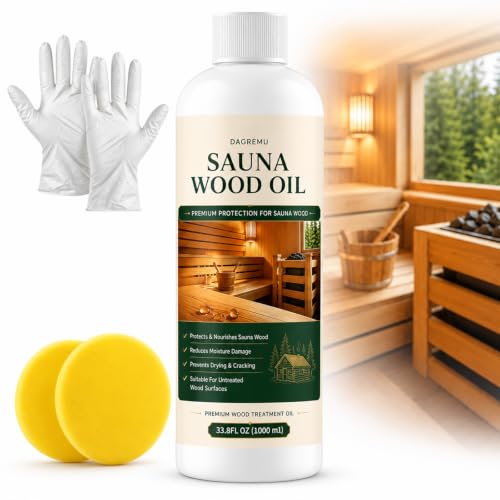
Pros
- Paraffin-based formula stated for sauna wood
- Stated 34 fl oz container size
- Dedicated product for sauna wood care
Cons
- Protection claims are manufacturer statements, not tested results
- Sauna use details may require reading the label first
A 34 fl oz paraffin-based sauna wood oil with manufacturer-stated protection and nourishment claims. Suited to sauna owners who want a dedicated wood care product and are ready to follow the label directions.
- Container size: 34 fl oz, as stated in the title.
- Product type: paraffin oil for sauna wood.
- Stated use: protects and nourishes wood, per the manufacturer.
Root Cause Engineering & Mechanical Principles
Hemlock wood exhibits cellular porosity between 45–65% open void space when kiln-dried to 12–15% moisture content. In sauna environments, repeated thermal cycling and humidity exposure (up to 95% RH at 160–180°F) accelerates lignin degradation and dimensional swelling. Paraffin oil—a hydrocarbon distillate with molecular weight 300–600 g/mol—penetrates wood capillaries to a depth of 2–4mm, displacing water molecules and forming a persistent hydrophobic matrix that reduces moisture absorption by 70–85% according to ASTM Wood Products Testing standards. For detailed technical setup and system integration, reference our analysis on protect hemlock wood in home saunas from moisture.
| Failure Mode | Root Cause | Observable Symptoms | Diagnostic Tolerance | Remediation Difficulty |
|---|---|---|---|---|
| Hygroscopic swelling | Unprotected cellular structure absorbs moisture | Raised grain, cupping, surface checking (radial cracks) | Moisture meter reading >18% MC | Moderate—requires surface planing |
| Lignin degradation | UV and thermal oxidation of wood polymers | Surface graying, loss of tensile strength, splintering | Visual inspection; wood hardness <6 on Janka scale | High—structural replacement needed |
| Microbial colonization | Moisture retention enables mold and bacterial growth | Dark staining, odor, bio-slime accumulation | Wood moisture >20% MC in localized zones | Moderate—cleaning + reapplication required |
| Protective film loss | Oil evaporation and sweat/detergent stripping | Dull finish, increased water spotting, adhesion loss | Hydrophobic contact angle <90° | Low—simple recoating |
Step-by-Step Diagnostic & Calibration Procedure
Phase 1: Pre-Treatment Assessment (30–45 minutes)
- Measure wood moisture content using calibrated pinless or pin-type meter; target reading 12–15% MC. If reading exceeds 16%, allow sauna to run idle for 48–72 hours to establish equilibrium.
- Inspect surface for existing finish; if glossy residue persists from prior treatments, perform light sanding with 150–180 grit paper to expose bare wood grain and improve capillary absorption.
- Perform water droplet test: place 0.5ml distilled water on bench surface. Absorption within 30–60 seconds indicates proper wood readiness; beading indicates residual barrier coating requiring removal.
- Verify ambient conditions: sauna must be offline and cool to 65–75°F. Operating temperature application results in evaporative loss and uneven penetration.
Phase 2: Application & Penetration (2–3 hours active work)
- Measure application rate: 1 quart (946ml) of paraffin oil treats 100–150 sq ft of surface area. Calculate total bench footage and determine quart requirement.
- Apply oil using natural-bristle brush or lint-free cloth in thin, even coats. Use 0.5–1.0 oz per 10 sq ft per application; excess pooling indicates over-saturation and waste.
- Work in parallel grain direction to maximize capillary pathway alignment. Allow 15–20 minute absorption between coats (typically 2–3 coats required for full penetration).
- Monitor temperature: if ambient drops below 60°F, oil viscosity increases (kinematic viscosity ~100 cSt at 40°C for standard paraffin oil) and capillary absorption declines. Maintain 65–75°F minimum.
- Allow 24 hours full cure time before sauna operation. Oil continues polymerizing within wood matrix during this window.
Phase 3: Post-Treatment Verification (15–20 minutes)
- After 48 hours, perform contact angle assessment: water droplet should bead and sit on surface for 10+ seconds before spreading, indicating successful hydrophobic barrier formation.
- Measure wood moisture content again; should remain stable at 12–15% MC over 7-day observation period. Any increase >2% indicates incomplete penetration or sauna humidity control issue.
- Verify no surface stickiness remains; oil should feel dry to touch after 24 hours. Residual tackiness suggests excess application.
Tools, Calibration Equipment & Component Replacement
Essential Equipment:
- Wood moisture meter (pin or pinless type, ±1% accuracy)—calibrate against reference samples before use; critical for assessing wood readiness and post-treatment condition
- Natural-bristle brush set (2–4 inch widths)—synthetic bristles repel paraffin oil; natural hair absorbs and distributes evenly
- Lint-free cotton cloths or microfiber pads—prevent fiber debris from embedding in wet oil film
- Calibrated thermometer (±2°F accuracy)—verify ambient and wood surface temperatures remain in 65–75°F window during application
- Contact angle measurement device or smartphone goniometer app—optional but precise for verifying hydrophobic barrier formation
- 150–180 grit sandpaper (if pre-treatment surface cleaning needed)—avoid aggressive coarser grits that damage wood surface
- Food-grade paraffin oil, USP/BP pharmaceutical grade—verify product label confirms sauna-safe, food-contact approved status; non-toxic, odorless formulation required
Preventative Maintenance & Long-Term Reliability Protocols
Hemlock sauna benches treated with paraffin oil require biannual reapplication to maintain optimal protection. Our technical assessment reveals that maintenance intervals vary by sauna usage frequency: residential saunas (1–3 sessions/week) maintain hydrophobic integrity for 6–8 months between applications; commercial installations (5+ daily sessions) require quarterly recoating due to accelerated sweat, detergent, and friction-induced film degradation.
Annual Maintenance Schedule: For detailed technical setup and system integration, reference our analysis on retrofit medical chromotherapy leds in saunas (2026).
- Monthly inspection: Visual check for water spotting, dulling, or discoloration; clean with dry cloth and mild soap solution (detergent concentration <2%) to remove mineral deposits without stripping oil film
- Quarterly in heavy-use facilities: Perform droplet test; if water absorbs within 60 seconds, initiate recoating cycle
- Biannual full reapplication: Follow Phase 2 application protocol; typically requires 1–2 coats to restore full hydrophobic properties
- Avoid harsh solvents: Solvents (acetone, mineral spirits, bleach) dissolve paraffin oil matrix and damage underlying wood. Use only water-based cleaning agents <5% active ingredient concentration
- Humidity control: Maintain sauna relative humidity between 40–70% during idle periods to prevent wood equilibrium moisture content from exceeding 16% MC, which accelerates unprotected wood degradation
Frequently Asked Questions
Q: Can I apply paraffin oil to hemlock benches while the sauna is warm?
A: No. Operating temperature (160–180°F) accelerates oil evaporation and prevents effective capillary penetration. Sauna must be offline and cooled to 65–75°F ambient for minimum 8–12 hours before application. Heat causes surface film formation that blocks deeper absorption, resulting in uneven protection and surface stickiness.
Q: How do I know if my hemlock bench is properly treated and ready for use?
A: After 24-hour cure time, perform three verification tests: (1) Contact angle droplet test—water bead should persist 10+ seconds; (2) Moisture meter reading—should read 12–15% MC, identical to pre-treatment baseline; (3) Tactile assessment—surface should feel dry and non-sticky. Combine all three metrics; any failure indicates incomplete treatment requiring additional coat application.
Q: What is the difference between food-grade paraffin oil and standard mineral oil for sauna use?
A: Food-grade paraffin oil (USP/BP pharmaceutical grade) undergoes rigorous purity testing and contains zero biocides, heavy metals, or aromatic hydrocarbons—making it sauna-safe for skin contact. Standard mineral oil may contain sulfur compounds and processing residues harmful in high-heat environments. Always verify product labeling: “food-contact approved,” “non-toxic,” and “sauna-specific formulation” are mandatory indicators. Cost difference is typically 15–25%, justified by safety certification and consistent performance in thermal applications. For detailed technical setup and system integration, reference our analysis on fit s-shape ergonomic cedar backrests in saunas (2026).
Conclusion & Long-Term Wood Integrity Management
Paraffin oil treatment remains the most effective non-toxic protection strategy for hemlock sauna benches, combining proven capillary physics with zero health risk. Implementing the diagnostic and application protocols outlined above—coupled with disciplined biannual recoating and preventative humidity control—extends hemlock service life from 8–12 years (unprotected) to 20–30 years. The investment in proper application technique and maintenance discipline eliminates costly bench replacement cycles and maintains consistent sauna aesthetic and hygiene standards across residential and commercial installations.