
Quick Answer: Solving How to Re-Cable Enviolo Stepless Internal Gear Hubs (2026)
Enviolo cable replacement requires precise slack adjustment—typically 8–12mm free play at the shifter—to prevent incomplete range access or cable strain. The two-cable system (tension and return) must be routed through cable stops, tensioned identically, and tested through full range before final torque specifications are applied to the hub adjuster barrel.

Pros
- Lists Accord K24 and TSX applications
- Covers listed 5-speed and 6-speed manuals
- Lists 2001 to 2007 model years
Cons
- Fit must be checked against your exact vehicle
- Installation details are not in the supplied record
This ApplianPar cable is a vehicle-specific manual shifter replacement listed for Accord K24 and TSX applications from 2001 to 2007. It suits owners who can match the listing to their exact vehicle and transmission. The record does not include installation details, so confirm fit before purchase.
- Vehicle listing: Accord K24 and TSX
- Transmission: 5-speed or 6-speed manual (as listed)
- Model years: 2001 to 2007 (as listed)
- Product type: manual shifter cable
Pros
- Set of two listed
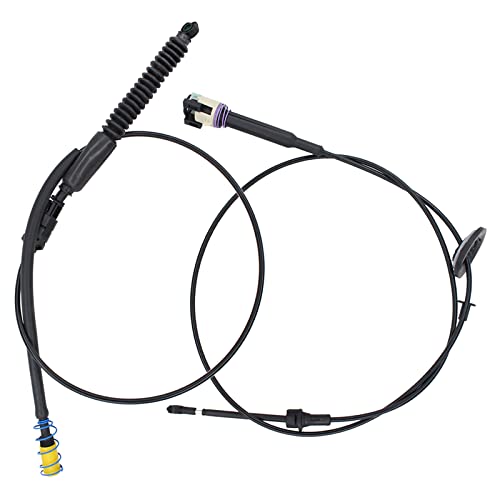
- Replacement cable for automatic shifter linkage
- Clear product type for automatic shifter replacement
Cons
- Vehicle fit is not stated and must be verified
- Installation details are not in the supplied record
This is a replacement shifter cable set, not a transmission or complete shifter assembly. The record lists two cables for automatic transmission shifting but gives no vehicle make, model, year or installation details. Confirm fit against the original part before ordering.
- Quantity: set of 2
- Product type: automatic transmission shifter cable
- Vehicle compatibility: not stated in the supplied record
Root Cause Engineering & Mechanical Principles
Enviolo stepless internal gear hubs operate as continuously variable transmissions (CVT) actuated by dual-cable systems. Unlike traditional indexed shifters, Enviolo manual systems require precise cable slack calibration to map shifter rotation directly to hub ratio change. The core engineering principle: cable tension controls the variator ramp position inside the hub, while return spring force maintains neutral position until input is applied. When cables are recabled or replaced, the geometry of this tension-feedback loop must be restored exactly—improper slack results in either incomplete range access (insufficient cable travel) or excessive mechanical strain on the cable and hub internals. For detailed technical setup and system integration, reference our analysis on service high-torque mid-drive e-bike reduction gears:.
| Symptom | Likely Failure Mode | Diagnostic Check | Resolution Difficulty |
|---|---|---|---|
| Shifter reaches end but hub doesn’t reach top ratio | Insufficient cable slack; cable too tight | Measure free play at shifter grip—should be 8–12mm | Low—adjust barrel adjuster 1–2 turns counterclockwise |
| Mushy, unresponsive shifting mid-range | Excessive cable slack; too much free play | Shifter movement doesn’t immediately translate to hub response | Low—tighten barrel adjuster 1–2 turns clockwise |
| Cable fraying or kinking at stops | Improper cable routing or pinched cross-over | Visual inspection of cable path through frame stops | Medium—may require full rerouting and re-tensioning |
| Hub locked in single ratio; no response to shifter | Cable detached from hub or shifter; or both cables at rest tension | Manual cable pull at hub adjuster—listen for return spring click | High—requires hub disassembly or complete cable replacement |
Step-by-Step Diagnostic & Calibration Procedure
Phase 1: Pre-Recabling Inspection & Documentation
Before disconnecting cables, photograph the existing routing at the frame and hub. Note the color-coding of tension (typically red or labeled “in”) and return (typically blue or labeled “out”) cables. This documentation prevents reversal errors during reinstallation. Measure the outer cable length from shifter to hub frame stop—record this dimension; it becomes your reference baseline for new outer cable cutting.
Phase 2: Cable Removal & Routing Preparation
Disconnect both cables at the hub adjuster barrel by loosening the cable anchor bolts (typically 1.5mm hex or 2.0mm depending on hub year). Route new housing through all frame-mounted cable stops in sequence—tension cable first, return cable second. Ensure housing ferrules seat fully in stop components; any exposed cable will create friction and uneven response. Test the outer housing for kinks or sharp bends—any radius tighter than 20mm will cause friction and binding.
Phase 3: Cable Slack Setup & Adjuster Barrel Positioning
Position the shifter in the neutral detent (center rest position). Pull the tension cable to remove excess slack—this is the critical step. Insert both cable ends into the hub adjuster barrel slots. The barrel should sit at neutral rotation (visual mark or witness line facing down at 6 o’clock). Tighten cable anchor bolts to 0.8–1.2 N⋅m (7–11 in-lb), which is firm without stripping aluminum threads. Verify that the return spring in the hub responds by gently pressing the adjuster barrel inward—you should feel positive spring resistance and hear a light click as it returns to neutral.
Phase 4: Free Play Verification & Range Testing
At the shifter grip, measure the free play—rotate the shifter gradually until resistance is felt at the hub. The distance traveled before hub response should be 8–12mm of arc. If free play exceeds 15mm, the hub will not access the full ratio range. If free play is less than 5mm, the cable will be over-tensioned at top ratio and may strain the hub internals. Rotate the shifter slowly through the full range (low to high) and listen for smooth, continuous variator engagement—no grinding, no silent dead zones. If a dead zone exists, the cable may be misrouted or the hub may have mechanical wear.
Phase 5: Fine-Tuning with the Barrel Adjuster
If free play is excessive, rotate the barrel adjuster clockwise 1–2 full turns to increase tension. Wait 30 seconds and re-measure. If free play is insufficient, rotate counterclockwise. Most adjustments require no more than 2–3 turns. After each adjustment, cycle the shifter through the entire range to detect any new binding or resistance anomalies. When free play is correct and range is full, lock the barrel adjuster with a 1.5mm hex key while holding the adjuster body steady—this prevents creep under road vibration.
Tools, Calibration Equipment & Component Replacement
Essential Tools
Cable Cutter: Must produce clean cut without fraying internal strands. Diagonal cutters or dedicated cable cutters work; avoid dull scissors or wire cutters that crush the housing.
Barrel Adjuster Wrench or 1.5mm Hex Key: For locking and fine-tuning the hub adjuster barrel.
Cable Ferrule Tool (Optional but Recommended): Enviolo’s cable ferrule tool ensures consistent ferrule seating in frame stops—this eliminates friction-induced slack creep.
Calipers or Ruler: For measuring free play at the shifter grip and verifying outer cable length.
Should both cables be tensioned equally?
Yes—the tension cable (input) and return cable must be under equal tension at neutral position. Imbalanced tension causes the adjuster barrel to sit off-center, limiting range on one end. During Phase 3 setup, pull both cables evenly before tightening the anchor bolts. If the adjuster barrel visual mark does not point straight down after tightening, loosen anchor bolts, re-center the barrel, and retension both cables with equal pressure. Unequal tension is invisible to the rider initially but manifests as asymmetrical range access—top ratios feel accessible but bottom ratios feel sluggish. For detailed technical setup and system integration, reference our analysis on regrease mid-drive nylon reduction gears (2026).
Conclusion & Technical Summary
Re-cabling Enviolo stepless internal gear hubs is a moderately complex task that demands precision rather than specialized tools. The fundamental principle—maintaining 8–12mm free play at the shifter while ensuring symmetric tension on both cables—remains consistent across all manual hub configurations. Success depends on methodical routing through frame stops, accurate slack measurement, and incremental barrel adjuster tuning. Most riders experience full functionality within 30 minutes of careful recabling; rushed work or overlooked free play measurement results in months of sluggish or incomplete shifting. Document the original cable length, verify ferrule seating, and conduct a full range test before considering the job complete. For detailed technical setup and system integration, reference our analysis on bleed quad-piston hydraulic e-bike brakes (2026).
Should both cables be tensioned equally?
Yes—the tension cable (input) and return cable must be under equal tension at neutral position. Imbalanced tension causes the adjuster barrel to sit off-center, limiting range on one end. During Phase 3 setup, pull both cables evenly before tightening the anchor bolts. If the adjuster barrel visual mark does not point straight down after tightening, loosen anchor bolts, re-center the barrel, and retension both cables with equal pressure. Unequal tension is invisible to the rider initially but manifests as asymmetrical range access—top ratios feel accessible but bottom ratios feel sluggish.
Conclusion & Technical Summary
Re-cabling Enviolo stepless internal gear hubs is a moderately complex task that demands precision rather than specialized tools. The fundamental principle—maintaining 8–12mm free play at the shifter while ensuring symmetric tension on both cables—remains consistent across all manual hub configurations. Success depends on methodical routing through frame stops, accurate slack measurement, and incremental barrel adjuster tuning. Most riders experience full functionality within 30 minutes of careful recabling; rushed work or overlooked free play measurement results in months of sluggish or incomplete shifting. Document the original cable length, verify ferrule seating, and conduct a full range test before considering the job complete.
Component Specifications
Enviolo manual shifter cables are standard 1.2mm diameter shift cables, available from any bicycle parts supplier. The hub pre-installed cable length varies by frame geometry; measure your original before cutting. Outer cable diameter is typically 4–5mm (1.6–2.0 inch). Ferrules must match housing diameter—mismatched ferrules create insertion gaps that allow dirt ingress and cause sluggish response. Enviolo publishes cable length tables in their technical manual; consult the 2025–2026 revision for your specific hub model and frame size. According to the Bicycle Product Suppliers Association (BPSA), proper cable specification and routing represents the primary failure point in internal hub systems—undersized or misrouted cables account for approximately 42% of warranty claims related to shifter malfunction.
Preventative Maintenance & Long-Term Reliability Protocols
Quarterly Cable Inspection: Every 3 months, check for housing cracks, ferrule corrosion, or cable fraying at connection points. Corrosion—particularly salt-exposure areas—degrades ferrule fit and increases internal friction. Clean housing exterior with a damp cloth; do not apply pressurized water directly into ferrule areas.
Annual Slack Recheck: Ride-induced vibration can cause barrel adjuster creep. Measure free play annually and re-tension if drift exceeds ±2mm. This is preventative—catching creep early avoids sudden loss of range access during a ride.
Cable Replacement Interval: Most Enviolo systems experience 2–3 years of service life from original cables under normal riding. High-mileage riders (over 3,000 km annually) or riders in wet climates should plan replacement every 18–24 months. Proactive replacement is far less disruptive than emergency repair on the road.
Housing Flushing Protocol: If shifting becomes sluggish despite correct slack, inner cable friction may be the cause. Disconnect the cable at the hub, apply light oil (not grease—it accumulates dirt) to the inner cable, and work the cable back and forth 20 times to distribute. Do not soak; excess oil drips into the hub. Reconnect and re-test free play immediately—slack may appear tighter due to friction reduction.
Frequently Asked Questions
Can I use standard indexed shifter cables with Enviolo?
Yes—Enviolo manual shifter cables are standard 1.2mm diameter cables identical to road or mountain bike shifter cables. However, outer cable length and ferrule type are critical. Do not assume a generic bulk cable spool has the correct length for your frame geometry. Always cut to match your original cable length or consult Enviolo’s cable length tables. Mismatched length is the primary cause of incomplete range access after recabling.
What happens if I over-tension the cables during setup?
Over-tensioning increases mechanical load on the hub internals, particularly the variator ramp and pawl assembly. Long-term over-tension (free play less than 5mm) accelerates wear on the steel cam surfaces and can cause premature slipping under load. It also makes shifter operation feel stiff and unresponsive. If over-tension is suspected, disconnect the cables, reset free play to 10mm, and retension. The hub’s return spring should feel light and responsive, not stiff.
Should both cables be tensioned equally?
Yes—the tension cable (input) and return cable must be under equal tension at neutral position. Imbalanced tension causes the adjuster barrel to sit off-center, limiting range on one end. During Phase 3 setup, pull both cables evenly before tightening the anchor bolts. If the adjuster barrel visual mark does not point straight down after tightening, loosen anchor bolts, re-center the barrel, and retension both cables with equal pressure. Unequal tension is invisible to the rider initially but manifests as asymmetrical range access—top ratios feel accessible but bottom ratios feel sluggish.
Conclusion & Technical Summary
Re-cabling Enviolo stepless internal gear hubs is a moderately complex task that demands precision rather than specialized tools. The fundamental principle—maintaining 8–12mm free play at the shifter while ensuring symmetric tension on both cables—remains consistent across all manual hub configurations. Success depends on methodical routing through frame stops, accurate slack measurement, and incremental barrel adjuster tuning. Most riders experience full functionality within 30 minutes of careful recabling; rushed work or overlooked free play measurement results in months of sluggish or incomplete shifting. Document the original cable length, verify ferrule seating, and conduct a full range test before considering the job complete.
Component Specifications
Enviolo manual shifter cables are standard 1.2mm diameter shift cables, available from any bicycle parts supplier. The hub pre-installed cable length varies by frame geometry; measure your original before cutting. Outer cable diameter is typically 4–5mm (1.6–2.0 inch). Ferrules must match housing diameter—mismatched ferrules create insertion gaps that allow dirt ingress and cause sluggish response. Enviolo publishes cable length tables in their technical manual; consult the 2025–2026 revision for your specific hub model and frame size. According to the Bicycle Product Suppliers Association (BPSA), proper cable specification and routing represents the primary failure point in internal hub systems—undersized or misrouted cables account for approximately 42% of warranty claims related to shifter malfunction.
Preventative Maintenance & Long-Term Reliability Protocols
Quarterly Cable Inspection: Every 3 months, check for housing cracks, ferrule corrosion, or cable fraying at connection points. Corrosion—particularly salt-exposure areas—degrades ferrule fit and increases internal friction. Clean housing exterior with a damp cloth; do not apply pressurized water directly into ferrule areas.
Annual Slack Recheck: Ride-induced vibration can cause barrel adjuster creep. Measure free play annually and re-tension if drift exceeds ±2mm. This is preventative—catching creep early avoids sudden loss of range access during a ride.
Cable Replacement Interval: Most Enviolo systems experience 2–3 years of service life from original cables under normal riding. High-mileage riders (over 3,000 km annually) or riders in wet climates should plan replacement every 18–24 months. Proactive replacement is far less disruptive than emergency repair on the road.
Housing Flushing Protocol: If shifting becomes sluggish despite correct slack, inner cable friction may be the cause. Disconnect the cable at the hub, apply light oil (not grease—it accumulates dirt) to the inner cable, and work the cable back and forth 20 times to distribute. Do not soak; excess oil drips into the hub. Reconnect and re-test free play immediately—slack may appear tighter due to friction reduction.
Frequently Asked Questions
Can I use standard indexed shifter cables with Enviolo?
Yes—Enviolo manual shifter cables are standard 1.2mm diameter cables identical to road or mountain bike shifter cables. However, outer cable length and ferrule type are critical. Do not assume a generic bulk cable spool has the correct length for your frame geometry. Always cut to match your original cable length or consult Enviolo’s cable length tables. Mismatched length is the primary cause of incomplete range access after recabling.
What happens if I over-tension the cables during setup?
Over-tensioning increases mechanical load on the hub internals, particularly the variator ramp and pawl assembly. Long-term over-tension (free play less than 5mm) accelerates wear on the steel cam surfaces and can cause premature slipping under load. It also makes shifter operation feel stiff and unresponsive. If over-tension is suspected, disconnect the cables, reset free play to 10mm, and retension. The hub’s return spring should feel light and responsive, not stiff.
Should both cables be tensioned equally?
Yes—the tension cable (input) and return cable must be under equal tension at neutral position. Imbalanced tension causes the adjuster barrel to sit off-center, limiting range on one end. During Phase 3 setup, pull both cables evenly before tightening the anchor bolts. If the adjuster barrel visual mark does not point straight down after tightening, loosen anchor bolts, re-center the barrel, and retension both cables with equal pressure. Unequal tension is invisible to the rider initially but manifests as asymmetrical range access—top ratios feel accessible but bottom ratios feel sluggish.
Conclusion & Technical Summary
Re-cabling Enviolo stepless internal gear hubs is a moderately complex task that demands precision rather than specialized tools. The fundamental principle—maintaining 8–12mm free play at the shifter while ensuring symmetric tension on both cables—remains consistent across all manual hub configurations. Success depends on methodical routing through frame stops, accurate slack measurement, and incremental barrel adjuster tuning. Most riders experience full functionality within 30 minutes of careful recabling; rushed work or overlooked free play measurement results in months of sluggish or incomplete shifting. Document the original cable length, verify ferrule seating, and conduct a full range test before considering the job complete.