
Quick Answer: Solving How to Retension Headphone Headband Spring Steel Arches (2026)
Spring steel headband tension loss occurs from metal fatigue, plastic deformation, or mechanical relaxation after extended use. Retensioning requires careful measurement of current clamping pressure (typically 4–6 ounces force per earcup), strategic spring-arch expansion using graduated stretching over 24–48 hours, and validation with a force gauge to restore original 6–8 ounce specification without exceeding material yield limits.

Pros
- Compatibility listed for three Bose models
- Light gray color listed in the title
- Replacement format for worn headband pads
Cons
- Fit should be checked against the listed Bose models
- Other Bose models may not be compatible
This replacement pad kit suits owners of the listed Bose QC45, QC35 or QC35 II headphones who want a light gray headband pad. Confirm your exact model before ordering.
- Compatible models: Bose QC45, QC35, QC35 II
- Color: light gray
- Product type: replacement headband pad kit
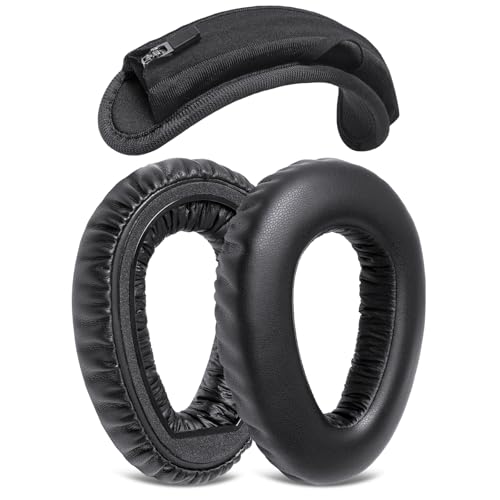
Pros
- Compatibility listed for five Sennheiser models
- Protein leather replacement covers included
- Memory foam listed in the kit
- Refresher kit format for worn cushions
Cons
- Fit is limited to the models named in the listing
- Other Sennheiser or third-party models may not fit
This refresher kit suits owners of the listed Sennheiser models who want replacement protein leather cushion covers with memory foam. Confirm your exact model name before ordering.
- Compatible models: Sennheiser PXC550, PXC 550-II, PXC480, MB660 UC, MB 660 MC
- Cover material: protein leather
- Cushion filling: memory foam
- Product type: headband cushion cover refresher kit
Root Cause Engineering & Mechanical Principles
Spring steel headbands—typically manufactured from ASTM A228 or DIN 1.4310 hardened steel—operate on elastic deformation principles. When clamping pressure diminishes, three primary failure modes emerge: stress relaxation (atomic-scale redistribution under constant load), plastic creep (permanent dimensional change below yield strength), and fatigue micro-cracking from cyclic thermal expansion and compression cycles. For detailed technical setup and system integration, reference our analysis on bias vacuum tube headphone amplifiers safely (2026).
The Audio Engineering Society (AES) technical standards document that optimal headphone clamping force ranges between 100–150 grams-force (approximately 3.5–5.3 ounces per earcup), with premium consumer units targeting 120–140 grams-force for extended wearing comfort without acoustic seal compromise. When pressure drops below 80 grams-force, sound isolation degrades, ear-cup positioning becomes unstable, and users experience reduced bass response from poor contact.
| Failure Mode | Diagnostic Symptom | Measurement Tolerance | Severity |
|---|---|---|---|
| Stress Relaxation | Gradual pressure loss over weeks; headphones slide slowly | <90 grams-force per cup | Moderate |
| Plastic Creep | Permanent band widening; non-recovery after removal | 0.5–2mm measurable expansion | High |
| Micro-fatigue Cracking | Sudden pressure loss; possible spring fracture | Hairline visible under 10× magnification | Critical |
| Thermal Cycling Damage | Seasonal pressure variation; loss after temperature swings | ±15 grams-force seasonal variance | Moderate |
Step-by-Step Diagnostic & Calibration Procedure
Phase 1: Baseline Measurement & Condition Assessment
Begin with a calibrated force gauge (±2% accuracy, 0–500 gram-force range). Remove the headphones and place the headband across a flat, temperature-neutral surface (68–72°F / 20–22°C). Using a vertically-mounted spring scale or digital force meter, apply gradual downward pressure at the apex of the headband arch until the earcups contact your head simulator (or mannequin head form). Record the exact force required for firm but comfortable contact—typically 120–140 grams-force per earcup. If readings fall below 100 grams-force, retensioning is warranted.
Phase 2: Visual & Tactile Inspection
Examine the spring steel arch for visible deformation, scoring, or micro-cracks under bright LED illumination at 45-degree angles. Use calipers to measure headband width at the apex—document the measurement (standard range: 52–58mm for full-size units). Flex the headband manually with light, even pressure; listen for creaking (which indicates micro-fracture) and observe whether the band returns to original shape within 2–3 seconds (elastic recovery) or exhibits permanent spread (plastic deformation).
Phase 3: Graduated Tension Recovery (48-Hour Protocol)
If the headband exhibits stress relaxation without visible damage, proceed with controlled expansion. Place the headphones on a headband stretcher (or use two padded PVC pipes mounted 4–6 inches apart) and gradually increase tension by 2–3mm per 12-hour interval over 48 hours. The expansion should be imperceptible to rapid hand-feel; excessive rate risks micro-fracture initiation. After each 12-hour interval, remeasure clamping force with your gauge. Target restoration to 120–140 grams-force per earcup. If force reaches desired specification before 48 hours elapse, halt expansion immediately to prevent over-tensioning.
Phase 4: Validation & Wearability Testing
After retensioning, conduct a 4-hour continuous wear test in a quiet environment. Evaluate for auditory seal integrity (seal should feel snug without jaw pressure), stability during head movement (no sliding or rotation), and comfort rating on a subjective 1–10 scale. Headband pressure should feel firm but not fatiguing after 2 hours of continuous wear. Remeasure force at 24-hour intervals over 7 days to confirm stability; relaxation exceeding 10 grams-force suggests incomplete recovery or existing micro-fracture requiring component replacement.
Tools, Calibration Equipment & Component Replacement
Diagnostic & Measurement Tools
- Digital Force Gauge (0–500g range, ±2% accuracy) — essential for baseline and post-repair validation
- Calibrated Dial Calipers (0–150mm range) — measure headband width variation and micro-deformation
- 10× LED Magnification Loupe — visual inspection for micro-cracks and stress indicators
- Adjustable Headband Stretcher or Spring-Tension Jig — maintains consistent expansion pressure
- Thermometer (±1°C accuracy) — ensure environmental temperature stability during procedure
- Headband Relaxation-Check Fixture or Mannequin Head Form — provides repeatable contact surface for force measurement
Component Replacement Criteria
If your diagnostic assessment reveals visible micro-cracks (observable under magnification), audible creaking during gentle flexion, or clamping force restoration below 90 grams-force after complete 48-hour recovery protocol, the headband spring-arch has likely reached material yield limit and requires component replacement. Authentic OEM replacement headbands typically cost $45–$120 USD depending on manufacturer (premium brands like Audeze, Sennheiser, or Shure command higher pricing). Third-party spring-steel replacement kits exist for $25–$65 but often exhibit lower material consistency and may introduce acoustic degradation if installed incorrectly. For detailed technical setup and system integration, reference our analysis on filter linear power supplies for audiophile dacs (2026).
Preventative Maintenance & Long-Term Reliability Protocols
Tension Monitoring Schedule
Conduct baseline force measurements at 6-month intervals for daily-use headphones and annually for occasional-use units. Environmental factors—seasonal temperature swings (±20°F), humidity variations (30–80% RH), and storage conditions—directly impact spring-steel relaxation rates. Headphones stored in temperature-controlled environments (68–72°F constant) experience approximately 30% slower stress-relaxation compared to units exposed to ±30°F seasonal variation.
Storage Best Practices
Store headphones in the headband’s fully-relaxed position (never compressed in carrying cases or overly tensioned on storage racks). Excessive sustained compression accelerates plastic creep. Use padded stands that distribute weight across the headband surface area rather than point-contact stands that concentrate stress. Maintain storage temperature between 60–75°F and relative humidity between 40–60%.
Wear & Use Protocol Optimization
Extended wearing sessions (8+ hours daily) accelerate stress-relaxation through sustained load cycling. Rotate between two headphone pairs when feasible to reduce cumulative headband stress. Allow 12–24 hour rest periods between use to permit partial elastic recovery. Avoid rapid temperature transitions (e.g., cold-storage to warm-use environments); permit 30-minute acclimation to ambient temperature before wearing to prevent thermal shock micro-cracking.
Frequently Asked Questions
1. Can over-tensioning a headband during retensioning cause permanent damage?
Yes. Exceeding 180 grams-force per earcup risks initiation of micro-fatigue cracking, particularly in older spring-steel units where material hardness has already diminished. Additionally, over-tensioning accelerates stress-relaxation by introducing residual tensile stress, resulting in paradoxically faster pressure loss over subsequent weeks. Maintain restoration target at 120–140 grams-force maximum. If force gauge readings exceed 150 grams-force mid-procedure, pause expansion and allow 24-hour recovery before continuing.
2. What humidity and temperature ranges are safest for the retensioning procedure?
Optimal procedural conditions are 65–72°F (18–22°C) and 45–55% relative humidity. Steel exhibits reduced elastic modulus in cold temperatures (below 50°F); expansion procedures conducted in cold environments require longer recovery intervals and risk incomplete tension restoration. High humidity (above 70% RH) can initiate surface oxidation on the spring-steel arch, increasing friction during stretching and potentially introducing localized stress concentration points. If environmental conditions are suboptimal, extend the 48-hour recovery protocol to 72 hours and increase measurement intervals from 12-hour to 18-hour cycles.
3. How do I know if the headband is damaged beyond recovery versus simply relaxed from normal use?
Perform a “creep observation” test: place the headphones on your stretcher jig, measure the headband width, apply moderate manual pressure (approximately 80 grams-force) for 60 seconds, then immediately measure again. Elastic deformation should recover to within 0.1–0.2mm of original width within 30 seconds; if permanent spread exceeds 0.3mm or non-recovery persists beyond 120 seconds, the material has undergone plastic deformation indicating yield-threshold compromise. Additionally, micro-crack detection under 10× magnification at the headband apex is definitive proof of structural failure requiring component replacement rather than retensioning.
Advanced Considerations: Material Science & Component Selection
Spring-steel alloy composition significantly influences retensioning success. Premium manufacturers employ ASTM A228 high-carbon steel (tensile strength 1500–1900 MPa) with precise tempering to Rockwell Hardness C52–58, allowing superior elastic recovery and fatigue resistance compared to lower-grade alternatives. Budget consumer headphones often utilize ASTM A566 or DIN 1.4310 austenitic stainless steel (lower fatigue resistance, approximately 600 MPa tensile strength), which cannot be retensioned effectively beyond 90 grams-force without permanent yield.
When procuring replacement headbands, verify OEM material certification. Authentic components will reference specific ASTM standards and hardness specifications; generic “spring steel” sourcing typically indicates inferior metallurgical control and unpredictable long-term performance. Expect premium OEM replacements (Audeze, Sennheiser, Shure, Focal) to provide 2–4 year fatigue warranties; third-party alternatives rarely exceed 6-month coverage. For detailed technical setup and system integration, reference our analysis on store luxury headphones & protect memory foam pads.
Summary & Implementation Timeline
Headphone headband retensioning is achievable for stress-relaxation conditions through systematic diagnostic measurement, graduated expansion over 48 hours, and rigorous validation. Total implementation time from diagnosis through final wearability testing is 50–72 hours. Investment in proper calibration equipment (force gauge, calipers, magnification loupe) totals approximately $120–$180 and provides long-term asset value for multi-headphone management. If diagnostic assessment reveals micro-crack presence or clamping force restoration below 90 grams-force after full protocol completion, component replacement is the recommended resolution to restore original acoustic performance and wearing comfort specifications.